

Procurement in manufacturing is how a manufacturer sources and buys the raw materials, components, packaging and MRO supplies it needs to keep production running, connecting production plans and inventory with suppliers, purchase orders, delivery tracking, receiving and invoice matching.
A factory can lose an entire day over something that takes five minutes to order.
The missing part might be a raw material, an important component, or a spare sitting with a supplier who has suddenly pushed the delivery date. By the time production feels the impact, the procurement problem has already happened.
That is why procurement in manufacturing goes far beyond placing purchase orders. It connects production plans with materials, suppliers, inventory, costs, and delivery, making it one of the functions that keeps manufacturing moving.
Key takeaways
- Procurement in manufacturing covers materials, components, MRO supplies, equipment, and other goods and services needed to keep production running.
- A good manufacturing procurement process connects demand, inventory, suppliers, purchasing, receiving, and payment.
- Direct, indirect, and MRO procurement have different requirements and should not be managed in exactly the same way.
- The lowest supplier quote does not always mean the lowest overall cost.
- Outdated lead times, fragmented supplier data, and emergency buying can create problems long before a production line actually stops.
- Manufacturing procurement software can bring purchasing, inventory, supplier, contract, and spend information together.
- AI is becoming useful for analyzing procurement data and flagging exceptions, but its value still depends on the quality of the underlying data.
What is Procurement in Manufacturing
Manufacturing procurement is how a manufacturer gets the materials and supplies it needs to keep production running. This includes things that become part of the final product, such as steel, electronic components, castings, and packaging, as well as supplies that keep the plant running, such as lubricants, spare parts, and safety equipment.
The process starts with knowing what is needed, checking what is already in stock, and finding the right suppliers. Procurement teams then handle purchasing, delivery tracking, and supplier follow-ups to make sure materials arrive when they are needed.
A small procurement decision can have a much bigger impact on the factory floor. Buy too little and production can run short. Buy too much and money gets tied up in inventory. A supplier delay can hold up an entire production schedule.
That is why procurement in manufacturing is not simply about getting the lowest price. It is about getting the right materials at the right time, without needless cost or disruption.
How the process works
The manufacturing procurement process usually starts with a requirement rather than a purchase order.
A production plan may create a material requirement. An MRP system may flag a shortage. Inventory may fall below its reorder point. A maintenance team may need a spare part. Engineering may introduce a new component.
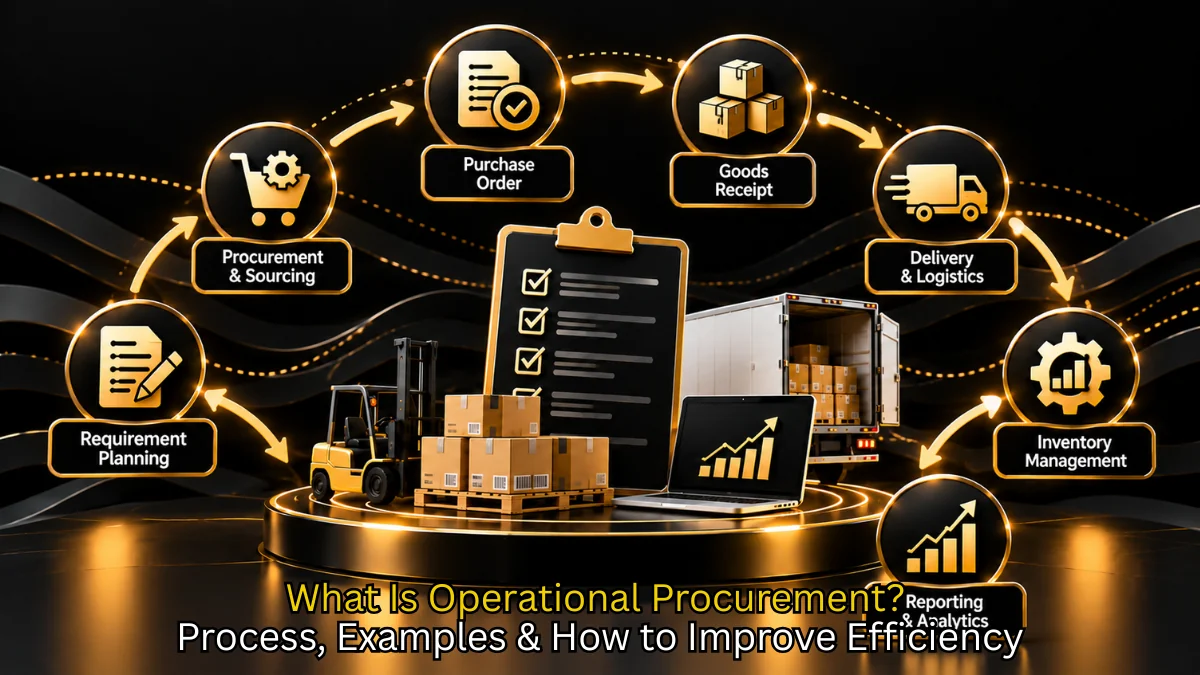
From there, the cycle typically looks like:
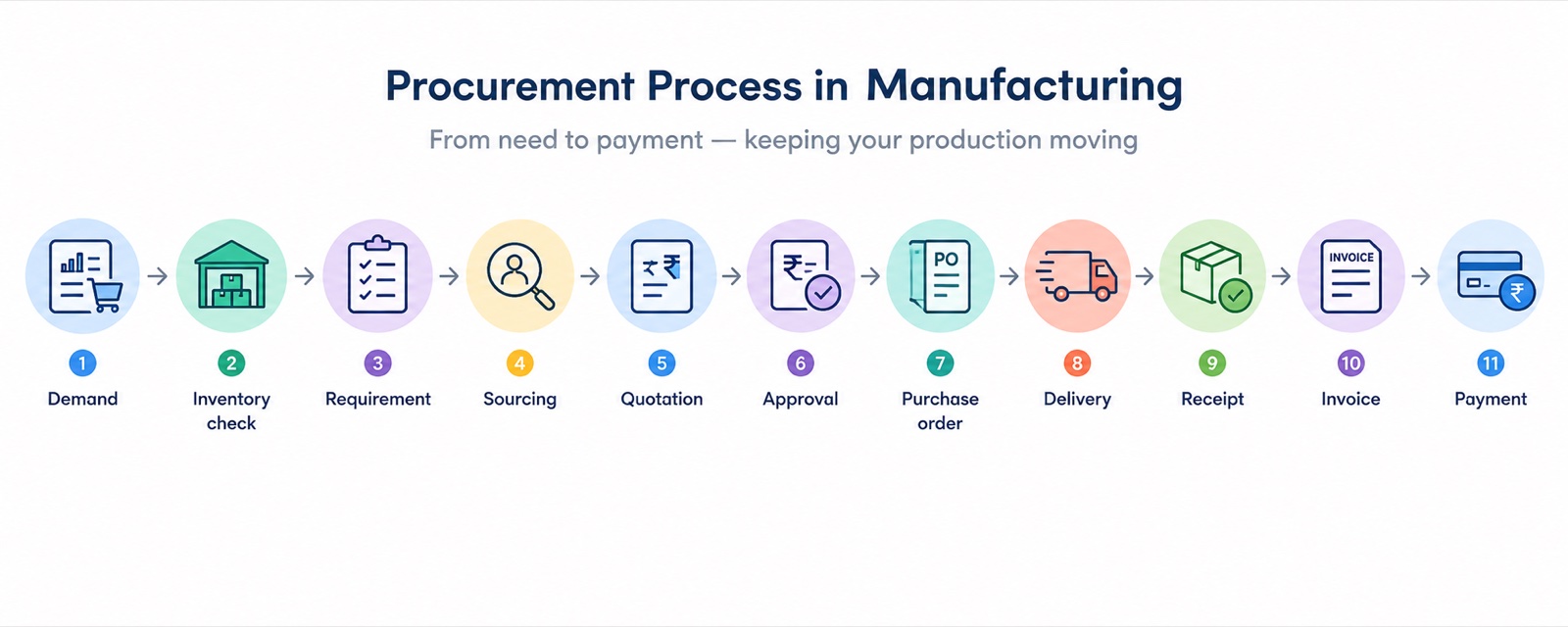
The exact workflow varies between manufacturers, but the decisions are broadly the same.
1. Identify the requirement
First, procurement needs to know what is needed, how much is needed, and when it is required.
For direct materials, that information may come from a bill of materials, production schedule, sales forecast, or MRP calculation.
For MRO purchases, it may come from stock levels or a maintenance requirement.
The timing matters. A component needed tomorrow is a very different purchasing problem from one needed three months from now.
2. Check inventory first
Before ordering something new, procurement needs to know what is already available.
That means checking current stock, open purchase orders, material in transit, and, for manufacturers with several plants, inventory at other locations.
This can prevent a surprisingly common problem: one site places an urgent order while another has the same part sitting unused.
Zapro AI’s approach to inventory management connects stock levels with procurement so teams can see what is available before deciding what to buy.
3. Source and compare suppliers
For established materials, the business may already have approved suppliers and negotiated contracts.
For new requirements, procurement may need to find suppliers, send RFQs, check technical capabilities, and evaluate quotations.
The comparison should go beyond unit price.
Lead time, minimum order quantities, payment terms, freight, quality history, capacity, certifications, and previous delivery performance can all change the real value of a supplier.
4. Approve and place the order
Once the supplier and commercial terms have been agreed, the purchase moves through the relevant approval workflow.
The purchase order records what is being bought, from whom, at what price, and for when.
5. Track the delivery
This is where procurement often becomes less about buying and more about chasing.
A supplier may confirm only part of an order. A promised date may move. A shipment may be delayed. A component may suddenly become unavailable.
The buyer needs to know about these changes early enough to do something about them.
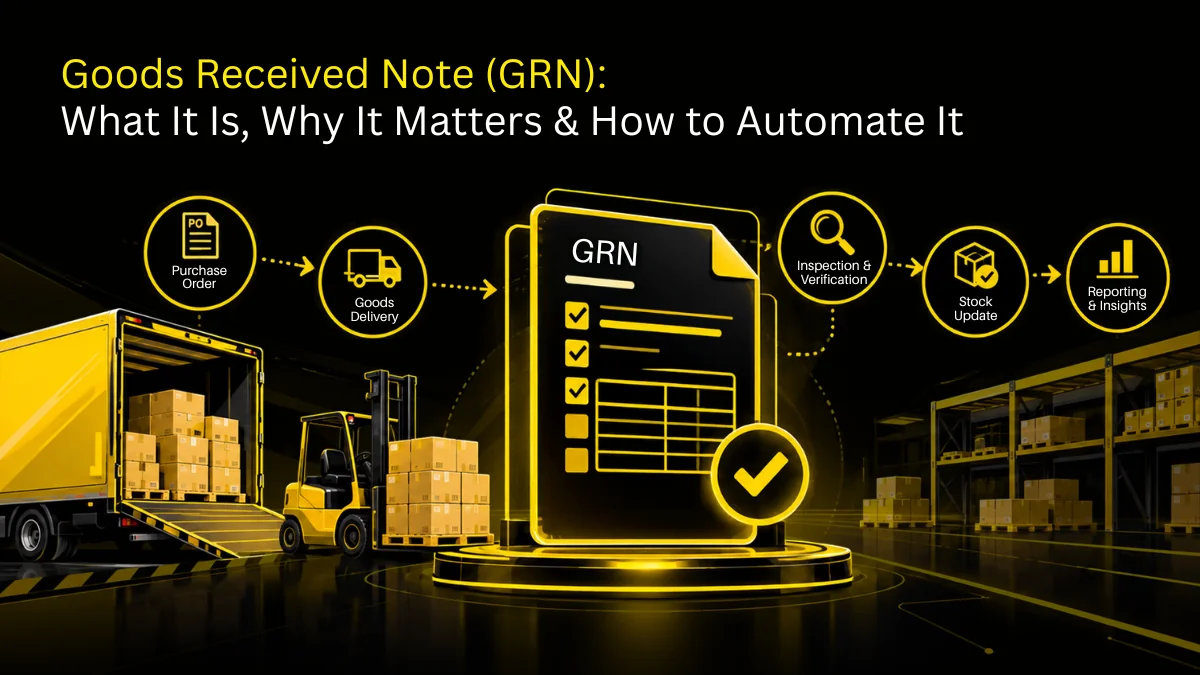
6. Receive and reconcile
Once the goods arrive, the manufacturer needs to confirm what was actually delivered and whether it meets requirements.
The receipt can then be matched against the purchase order and supplier invoice.
This closes the loop from the first request to payment and gives procurement better data about what suppliers actually delivered.
For a deeper look at the complete procurement process, see Zapro AI’s guide to how procurement moves from request through execution.
Direct, indirect, and MRO
A manufacturer does not buy everything for the same reason.
Direct procurement
Direct procurement covers materials and components that go into the finished product.
Examples include:
- Metals
- Plastics
- Electronic components
- Machined parts
- Castings
- Packaging
- Subassemblies
Because these purchases are tied to production, procurement has to work closely with forecasts, bills of materials, inventory, and supplier capacity.
Indirect procurement
Indirect procurement covers purchases that support the business but do not become part of the finished product.
Think IT equipment, office supplies, professional services, cleaning, facilities, or software.
Individual purchases may not be particularly large, but indirect spend can become difficult to control when different departments and plants buy independently.
Zapro AI’s guide to direct vs. indirect procurement explains why these two categories need different controls even when they run through the same procurement system.
MRO procurement
MRO stands for maintenance, repair, and operations.
These are the supplies used to keep the plant and its equipment running.
A replacement bearing might never appear on a finished product’s bill of materials, but if the bearing fails and there is no replacement available, production can still stop.
That makes MRO procurement particularly dependent on equipment criticality, consumption history, stock levels, substitute parts, and supplier lead times.
It is also an area where emergency buying can quietly become expensive. Zapro AI’s research on MRO buying looks at emergency purchases, inter-plant transfers, supplier usage, and other indicators that show where plants are losing control of this spend.
Inventory and procurement
Procurement and inventory are often treated as separate functions, but the two are making decisions about the same thing: how much stock the business should have and when it should replenish it.
Suppose an important component takes 90 days to arrive.
Holding two weeks of stock might leave the plant exposed to a delay. Holding twelve months might protect production but tie up a significant amount of cash.
The right answer depends on demand, supplier reliability, lead time, safety stock, minimum order quantities, storage constraints, and how easily the part can be replaced.
This is why inventory management in procurement matters. Procurement needs to know not only what is in the warehouse, but what is already on order, what is sitting at another plant, and what is likely to be needed next.
For manufacturers with multiple locations, inter-plant transfers can sometimes solve a shortage faster than placing another supplier order. Zapro AI’s manufacturing work on stockouts and overstock looks specifically at this relationship between spare-parts inventory, plant transfers, downtime, and emergency purchasing.
Price is only part of the cost
Imagine two suppliers quote for the same component.
| Supplier A | Supplier B | |
|---|---|---|
| Unit price | ₹95 | ₹101 |
| Lead time | 60 days | 20 days |
| Delivery record | Inconsistent | Consistent |
| Emergency freight risk | Higher | Lower |
On price alone, Supplier A wins.
But what happens if its longer lead time forces the manufacturer to hold more stock? What if late deliveries require expedited freight? What if a missed delivery pushes back production?
Suddenly, the ₹6 difference is not the most important number.
This is why procurement teams often look at total cost rather than simply comparing supplier quotations.
The idea is hardly new. Peter Kraljic made the case for moving purchasing beyond routine price negotiation in his influential 1983 Harvard Business Review article, Purchasing Must Become Supply Management.
“The days of no surprises”
Peter Kraljic
Kraljic’s point was that supply markets could change quickly because of shortages, political conditions, competition, and technological change. His argument was that purchasing needed to become a part of supply management rather than operate as an isolated transaction function.
That thinking still fits manufacturing today. A supplier decision can become a production decision surprisingly quickly.
Where things usually go wrong
Manufacturing procurement problems are not always dramatic.
They start with information that is slightly wrong, slightly late, or sitting somewhere nobody is looking.
Lead times stop matching reality
The system says a component takes 45 days.
Recent orders are taking 65 days.
If planning continues to use 45 days, the manufacturer may keep ordering too late and carrying too little safety stock.
Lead times therefore need to be reviewed against actual supplier performance rather than treated as permanent master data.
Supplier performance is unclear
A supplier may be considered reliable because buyers have worked with them for years.
The actual receiving data might tell a different story.
Useful supplier measures include on-time delivery, in-full delivery, defect rates, response times, and invoice discrepancies.
Check Zapro AI’s manufacturing guide on supplier performance.
Engineering changes create purchasing problems
A product specification changes after an order has already been placed.
Now procurement may need to renegotiate with the supplier, cancel or modify the existing order, deal with obsolete stock, and source the replacement component.
The earlier procurement knows about engineering changes, the easier the problem is to contain.
Emergency buying becomes routine
When the normal procurement process feels too slow, people find workarounds.
That may solve an immediate production problem, but it can also mean higher prices, unapproved suppliers, weaker contract compliance, and less reliable spend data.
A high emergency-purchase rate is therefore worth treating as a process problem, not simply as a list of urgent orders.
Why spreadsheets eventually become painful
Spreadsheets work surprisingly well when the operation is small.
The trouble starts when procurement has to coordinate hundreds of suppliers, multiple plants, thousands of parts, changing delivery dates, approval rules, and large numbers of purchase orders.
Then buyers can end up spending more time maintaining information than using it.
Typical warning signs include duplicate supplier records, manual PO updates, email-based delivery chasing, different prices for the same part, slow approvals, and difficult invoice reconciliation.
This is one reason manufacturing procurement software has become more relevant as manufacturers scale.
Where Manufacturing Procurement Software Fits
Manufacturing Procurement Software gives the procurement team one place to handle the buying process and see what is happening around it.
A buyer can check stock before placing an order, see whether another PO is already on the way, look at a supplier’s previous prices, or check their delivery record. If the business operates across several plants, the same system can also show what different locations are buying and what they have available.
They are designed to cover:
- Purchasing: Requisitions, approvals, POs, and supplier confirmations
- Suppliers: Supplier details, contracts, documents, and performance records
- Inventory: Current stock, incoming materials, and open orders
- Spend: Supplier prices, category spend, and contract usage
- Integrations: ERP, finance, inventory, and other systems already in use
- Analytics: Purchasing, supplier, cost, and inventory data
- Audit trail: A record of the purchase from request through payment
AI in manufacturing procurement
AI is becoming useful in procurement, but the most useful applications are less flashy than the marketing often suggests.
It can help process invoices, classify spend, extract information from contracts, compare large amounts of supplier data, identify unusual prices, and flag transactions that deserve a closer look.
For a manufacturing buyer, the value is often in the exception.
If the same component is being purchased at significantly different prices across plants, that is worth investigating.
If a supplier that normally delivers in 30 days has started taking 50, that deserves attention.
If invoices repeatedly arrive with quantity mismatches, the system should be able to spot the pattern.
The buyer still decides what to do. AI simply makes it easier to find the things worth looking at.
Zapro AI’s work on AI in procurement covers practical use cases such as document processing, invoice matching, spend analysis, and anomaly detection.
There is one important catch: AI is only as useful as the procurement data underneath it. If supplier records are duplicated or lead-time information is outdated, better analysis cannot completely fix the underlying data problem.
Procurement KPIs
Manufacturers do not need fifty numbers to understand whether procurement is working.
A focused set can tell a much more useful story:
| KPI | What it tells you |
|---|---|
| Purchase price variance | Whether actual prices differ from expected prices |
| Supplier OTIF | Whether suppliers deliver on time and in full |
| Defect rate | Whether supplier quality is holding up |
| Lead-time variance | Whether supplier lead times match planning assumptions |
| PO cycle time | How quickly purchases move through the process |
| Maverick spend | How much purchasing happens outside approved channels |
| Inventory turnover | How efficiently stock is being used |
| Stockout frequency | How often insufficient stock causes problems |
| Supplier concentration | How dependent the business is on key suppliers |
The numbers become more useful when they are read together.
A supplier with excellent pricing but poor delivery performance tells a very different story from one that costs slightly more but consistently meets production requirements.
Zapro AI’s current procurement KPIs guide also recommends focusing on metrics including supplier lead time, cost savings, procurement ROI, and process performance rather than tracking numbers simply for the sake of having a dashboard.
Manufacturing procurement in 2026
Manufacturing procurement is becoming more connected to the rest of the business.
Production planning affects purchasing. Inventory affects ordering. Supplier performance affects sourcing decisions. Engineering changes affect material requirements. Finance needs visibility into commitments and invoices.
At the same time, manufacturers are paying closer attention to supplier risk, multi-site inventory, traceability, and the quality of the data behind procurement decisions.
AI is becoming part of that picture, particularly for analysing large volumes of transactions and identifying exceptions.
But the underlying job has not changed.
Manufacturers still need the right materials, in the right quantity, at the right time, from suppliers that can actually deliver them.
The difference is that better procurement systems can give teams a much clearer view of what is happening before a small purchasing issue turns into a production problem.
Why Choose Zapro AI for Manufacturing Procurement?
Zapro AI brings purchasing, supplier management, inventory, and spend into the same workflow, so buyers can see what they are buying and why before an order goes out. Manufacturers can track stock across plants, manage suppliers, automate approvals, compare spend, and match invoices against POs and receipts. Its AI also helps with repetitive work such as invoice matching and identifying unusual price or purchasing patterns. For manufacturers trying to move beyond spreadsheets without replacing their entire ERP, Zapro AI provides a more connected way to manage procurement.
FAQs
How does the procurement process work in manufacturing?
A typical process starts with a production requirement, inventory level, or purchase request. The procurement team checks what is needed, identifies a supplier, requests or compares pricing, gets the necessary approval, and issues a purchase order. From there, the order is tracked through supplier confirmation, delivery, receipt, and invoice processing.
What information does procurement need from a manufacturing business?
Procurement needs more than a list of materials to buy. Useful inputs include the bill of materials, production plans, current and committed inventory, supplier lead times, minimum order quantities, open purchase orders, expected demand, and supplier capacity. These details help buyers decide what to order, how much to order, and when to place it.
How can manufacturers prevent stockouts without overbuying?
Start with accurate inventory data and realistic supplier lead times. Procurement teams can then use reorder points, safety stock, demand forecasts, and MRP recommendations to decide when to replenish. It is also important to account for open orders and committed stock rather than looking only at the quantity currently sitting in the warehouse.
What is the difference between procurement and purchasing in manufacturing?
Purchasing is mainly concerned with placing and managing orders. Procurement is broader and can include sourcing suppliers, negotiating terms, managing supplier relationships, analysing spend, assessing risk, and improving the purchasing process. In a manufacturing business, procurement is also closely tied to production, inventory, and supplier planning.
Can procurement software replace an ERP for manufacturing?
Usually, procurement software and an ERP serve different purposes. An ERP may manage finance, production, inventory, and purchasing across the business, while procurement software can provide deeper functionality for sourcing, supplier management, purchasing workflows, spend analysis, and procurement automation. The important consideration is whether the systems can exchange the data procurement needs.
How can manufacturers improve supplier performance?
Start by measuring suppliers against consistent criteria such as on-time delivery, quantity delivered, quality, lead-time accuracy, and responsiveness. Supplier scorecards can then show which suppliers are repeatedly missing commitments and where corrective action is needed. Looking only at the price paid does not tell you whether a supplier is actually performing well.
When should a manufacturer consider procurement software?
There is no single transaction count that makes software necessary. It becomes more relevant when buyers are managing large numbers of suppliers or POs, relying heavily on spreadsheets and email, struggling to track supplier confirmations, working across multiple plants, or spending too much time finding basic purchasing information. Recent procurement discussions repeatedly describe manual follow-up and fragmented information as major sources of wasted time.
Don’t miss our weekly updates
We’ll email you 1-3 times per week—and never share your information.
Ready to Transform Your Manufacturing Procurement?
Automate workflows, reduce costs, and gain full supply chain visibility with Zapro.

About the Author

Md. Kafil


About the Reviewer

Zapro is dedicated to helping businesses of all sizes make informed decisions. We adhere to strict editorial guidelines to ensure that our content meets and maintains our high standards.
Our editorial standards help keep every article accurate, useful, and trustworthy.