

PPV (purchase price variance) is the difference between the price a company actually pays for an item and the standard or budgeted price it expected to pay, multiplied by the quantity purchased. In procurement and finance PPV always means purchase price variance, not pay-per-view. A favourable PPV means the buy came in under standard cost.
In a volatile commercial landscape, keeping corporate profit margins secure requires absolute control over your procurement outflows. When a finance team maps out its annual budget, they assign an expected or baseline cost to every material, component, and operational asset the company plans to buy. However, when the actual supplier invoices arrive at the accounts payable desk, the prices stated rarely line up perfectly with those initial expectations. AP Automation Software can surface this gap the moment the invoice is captured, flagging a variance against the PO before it is approved rather than waiting for a later PPV report to catch it.
This financial misalignment introduces a critical metrics concept: ppv meaning and oversight. Tracking this pricing delta allows corporate sourcing and finance teams to determine exactly where their cash flow is bleeding, evaluate their forecasting accuracy, and protect gross margins before cost overruns permanently damage the company’s financial bottom line.
What Does PPV Stand For?
PPV Meaning in Procurement
PPV means purchase price variance. It is a finance and procurement metric that shows whether an item was bought above or below its standard cost, and it is used to explain gross margin movement and to measure sourcing performance. If you’re still sorting out how a purchase order differs from a sales order, our Sales Order vs Purchase Order guide clears up the distinction before you dig into pricing variance.
The ppv full form stands for Purchase Price Variance. In an enterprise procurement context, it functions as a core performance metric used to measure the efficiency of the sourcing department and the financial predictability of the supply chain.
While procurement teams view PPV primarily as a strategic purchasing metric to evaluate vendor negotiation success and contract compliance, it also holds substantial weight in corporate finance. In ppv accounting, it serves as a critical tracking mechanism within a standard costing system to record discrepancies between estimated manufacturing costs and real-world supply market expenditures.
Learn about Purchase order tracking

Stop Letting Price Variance Erode Your Margins
Track standard vs. actual pricing, automate three-way matching, and catch unfavorable PPV before it hits your bottom line.
Frequently Asked Questions About PPV
1. What does PPV mean in procurement?
In procurement, PPV stands for Purchase Price Variance. It is a vital operational performance metric that measures the absolute financial difference between the budgeted, expected price of an asset and the actual price billed by the supplier.
2. What is the difference between favorable and unfavorable PPV?
A favorable PPV occurs when the actual price paid to a vendor is lower than the pre-set standard cost, indicating operational savings. An unfavorable PPV occurs when the real-world invoice price finishes higher than the standard baseline, representing an unbudgeted cost overrun.
3. How do you calculate purchase price variance?
To calculate the metric, subtract the standard baseline unit price from the actual invoice unit price, and multiply that resulting figure by the total actual quantity of units purchased: $\text{PPV} = (\text{Actual Price} – \text{Standard Price}) \times \text{Actual Quantity}$.
4. How is PPV recorded in accounting?
Under a standard costing accounting framework, inventory assets are logged strictly at their standard cost baseline. Any difference between that baseline and the actual supplier invoice is isolated and posted as a separate debit or credit entry inside a dedicated general ledger PPV variance account.
5. What is the difference between PPV and invoice price variance?
PPV measures the price variance at the point of receipt or initial purchase based on standard costs established during budgeting. Invoice Price Variance (IPV) isolates the delta between the agreed financial rate stated on the approved Purchase Order and the final price billed on the incoming supplier invoice.
What does PPV mean?
In procurement and finance, PPV means purchase price variance – the difference between the actual price paid for an item and the standard price budgeted for it, multiplied by the quantity bought.
Watch Price Variances Get Flagged Instantly

What Is Purchase Price Variance?
By definition, what is purchase price variance? It is the mathematical difference between the standard (expected) price of a material or service and the actual price paid to the supplier, multiplied by the total volume of units purchased.
To properly analyze PPV, you must track three separate operational variables:
- Actual Price (AP): The exact baseline dollar amount per unit billed by the supplier on the final invoice.
- Standard Price (SP): The benchmark baseline cost assigned to an asset by the finance and procurement teams during budget setting or product design phases.
- Actual Quantity (AQ): The total volume of units ordered, received, and processed during the specific transaction timeline.
Organizations typically track PPV across multiple reporting cadences. While automated procurement systems flag deviations on a per-purchase basis, executive teams review consolidated monthly, quarterly, and annual PPV statements to uncover macroeconomic spending trends.
How to Calculate Purchase Price Variance
The PPV Formula
To isolate your pricing variances cleanly, use the standard algebraic formula:
PPV = (Actual Unit Price – Standard Unit Price) x Actual Quantity Purchased
A positive result is an unfavourable variance: the item cost more than budgeted. A negative result is a favourable variance: it cost less. Always calculate PPV on the quantity actually purchased, not the quantity forecast, or the variance will not reconcile to the ledger.
| Input | Value |
|---|---|
| Standard unit price | 10.00 |
| Actual unit price paid | 10.75 |
| Quantity purchased | 4,000 units |
| Calculation | (10.75 – 10.00) x 4,000 |
| PPV | 3,000 unfavourable |
PPV Calculation Examples
Example 1: An Unfavorable Outcome
An electronics manufacturer establishes a Standard Price of $50.00 per unit for a specialized micro-component. Due to a sudden global shipping bottleneck, the procurement team is forced to buy an Actual Quantity of 200 components at an Actual Price of $55.00 per unit.
PPV = ($55.00 – $50.00) x 200
PPV = $5.00 x 200 = +$1,000 \text{ (Unfavorable)
Because the resulting figure is positive, it represents an unbudgeted cost overrun of $1,000.
Example 2: A Favorable Outcome
The same manufacturer renegotiates a contract tier later in the year, sourcing an Actual Quantity of 500 components at an Actual Price of $46.00 per unit, while the budgeted Standard Price remains $50.00.
PPV = ($46.00 – $50.00) x 500
PPV = (-$4.00) x 500 = $2,000 (Favorable)}$$
The negative output indicates that the organization successfully generated a $2,000 cost savings windfall against its initial projections.
Favorable vs. Unfavorable PPV — What’s the Difference?
Favorable PPV (Negative Variance)
A favorable PPV occurs when the real-world price paid to a supplier lands below the pre-set standard budget baseline. This operational win directly translates into immediate cash conservation and expanded corporate gross margins.
Common internal and external drivers include:
- Securing bulk volume discounts by consolidating corporate orders.
- Capitalizing on temporary wholesale market price drops or commodity crashes.
- Sourcing teams successfully negotiating superior long-term contract terms.
- Suppliers extending promotional or early-payment discount windows.
Unfavorable PPV (Positive Variance)
An unfavorable PPV occurs when the invoice price finishes higher than the standard baseline budget. It represents a direct corporate cash drain that erodes product profitability.
Common causes include:
- Macroeconomic spikes, vendor inflation, or sudden tariff implementations.
- Global logistics failures forcing expensive emergency spot purchasing.
- Maverick spend, where employees purchase items outside of pre-vetted corporate contract channels.
- Missing critical contract renewal deadlines, forcing purchases back onto standard, non-discounted catalog rates.
Why You Shouldn’t Chase Favorable PPV at All Costs
While a deeply negative, favorable PPV looks exceptional on a purchasing report, chasing it blindly can expose your enterprise to hidden downstream operational risks. For instance, a buyer might over-order thousands of unneeded units simply to hit a vendor’s bulk discount price tier. While the individual unit cost drops, the company’s warehouse carrying costs skyrocket, tying up critical operational capital in dead stock.
Similarly, buying from an unvetted, low-cost vendor might cut immediate procurement costs but introduce severe quality defects that cause your assembly lines to grind to a halt. Therefore, PPV must always be analyzed alongside quality metrics, inventory turns, and supplier on-time delivery KPIs.
Why Is Purchase Price Variance Important in Procurement?
Cost Control
PPV functions as an early-warning radar for your corporate treasury. Instead of waiting for quarterly financial audits to realize your operations are over budget, reviewing weekly PPV alerts lets sourcing managers identify pricing drift instantly and change course before minor overcharges compound into multi-million dollar losses.
Budgeting and Financial Planning
The reliability of an enterprise’s future financial roadmaps depends entirely on the accuracy of its standard costing models. If a company consistently logs massive purchase price variances, it signals that their baseline budgeting assumptions are disconnected from commercial realities. Tracking PPV allows financial analysts to recalibrate standard costs, ensuring future pricing models stay highly accurate.
Supplier Evaluation
When a specific vendor consistently generates unfavorable purchase price variances, it reveals that their real-world billing practices are drifting away from your master service agreements. Armed with granular, historical PPV reports, procurement professionals can enter vendor evaluation reviews with hard data, using it to enforce contract compliance or terminate relationships with non-compliant suppliers.
Bringing that PPV-by-vendor history together with the rest of a supplier’s scorecard—delivery performance, quality issues, contract terms—is exactly what an AI Vendor Management platform is built for, giving procurement teams one place to decide which relationships to renegotiate or exit.
How Is PPV Treated in Accounting?
PPV in Standard Costing Systems
In corporate accounting, inventory valuation models typically record incoming assets at their pre-determined standard cost to keep general ledger entries uniform. The variable delta—the actual purchase price variance—is systematically stripped out and posted to a dedicated, separate PPV variance account.
When an invoice arrives with an unbudgeted cost discrepancy, the balanced bookkeeping entry requires a debit or credit allocation to balance the general ledger:
- Debit Inventory: Value logged strictly at the predetermined Standard Cost.
- Debit/Credit PPV Account: Unfavorable variances are logged as a Debit (increasing corporate expense), while favorable variances are logged as a Credit (reducing overall corporate expenses).
- Credit Accounts Payable: The actual financial liability owed to the vendor, recorded at the true Invoice Cost.
Purchase price variance is a real ledger account, and seeing it recorded in a T-account makes the favourable-versus-unfavourable sign convention much easier to hold onto.
Where PPV Appears on Financial Statements
The accumulated balance inside your PPV variance account flows directly into your corporate financial statements. If the underlying goods purchased are sold during the current reporting period, the associated purchase price variance shifts out of the inventory ledger and directly impacts the Cost of Goods Sold (COGS) line item on your Income Statement. If the materials remain unconsumed, they continue to sit as a variance adjustment on the Balance Sheet under current inventory assets.
Favorable vs. Unfavorable PPV Impact on Profit
A favorable PPV acts as a direct booster to net profitability because it reduces the absolute cost of running your business, widening your gross margin percentages. Conversely, unfavorable PPV line items act as an immediate drag on profitability by inflating operational expenses. Crucially, the true profit realization timing depends on sales velocity: the variance impact hits your bottom line the exact moment the related physical inventory is finalized and sold to the end customer.
What Causes Purchase Price Variance?
Purchase price variance is rarely caused by one factor alone. Separating price causes from standard-cost causes matters, because an outdated standard cost creates variance that no sourcing action can remove.
| Cause | Effect on PPV | Typical owner |
|---|---|---|
| Supplier price increase | Unfavourable | Procurement |
| Buying off-contract or maverick spend | Unfavourable | Budget holder |
| Rush or expedited orders | Unfavourable | Planning |
| Volume discount achieved | Favourable | Procurement |
| Successful renegotiation | Favourable | Procurement |
| Currency movement on imports | Either | Finance / treasury |
| Outdated standard cost | Either | Finance |
PURCHASE PRICE VARIANCE DRIVERS
INTERNAL CAUSES EXTERNAL CAUSES
• Maverick Spend (Unapproved Buys) • Macroeconomic Inflation
• Disjointed ERP Data Silos • Supply Chain & Route Disruption
• Inaccurate Demand Forecasting • Raw Material & Commodity Spikes
• Rushed Emergency Orders • Geopolitical Tariff Shifts
How to Reduce Unfavorable Purchase Price Variance
Negotiate Fixed-Price Contracts with Suppliers
Shield your operational budget from sudden market swings by executing structured master purchase agreements that lock in fixed unit pricing for a set time window (e.g., 12 to 24 months). Ensure these agreements include predefined volume-discount tiers and clear price-adjustment boundaries linked to public commodity indexes. This kind of agreement is usually formalized as a blanket PO rather than a series of one-off standard POs, so pricing stays locked without renegotiating every release.
Consolidate Purchases Across Departments
Eliminate internal fragmentation. When separate geographic branches or corporate divisions place independent orders with the same supplier, they lose all bargaining power. By routing all department requests through a unified purchasing framework, you can aggregate order volumes to trigger top-tier enterprise bulk discounts.
Eliminate Maverick Spend with Approval Workflows
Rogue corporate spending outside of contracted vendor channels is a leading source of unfavorable variance. Implement strict digital procurement rules that require all purchase requests to be automatically checked against pre-negotiated supplier catalogs and vetted before any funds are approved.
Use Procurement Software to Monitor PPV in Real Time
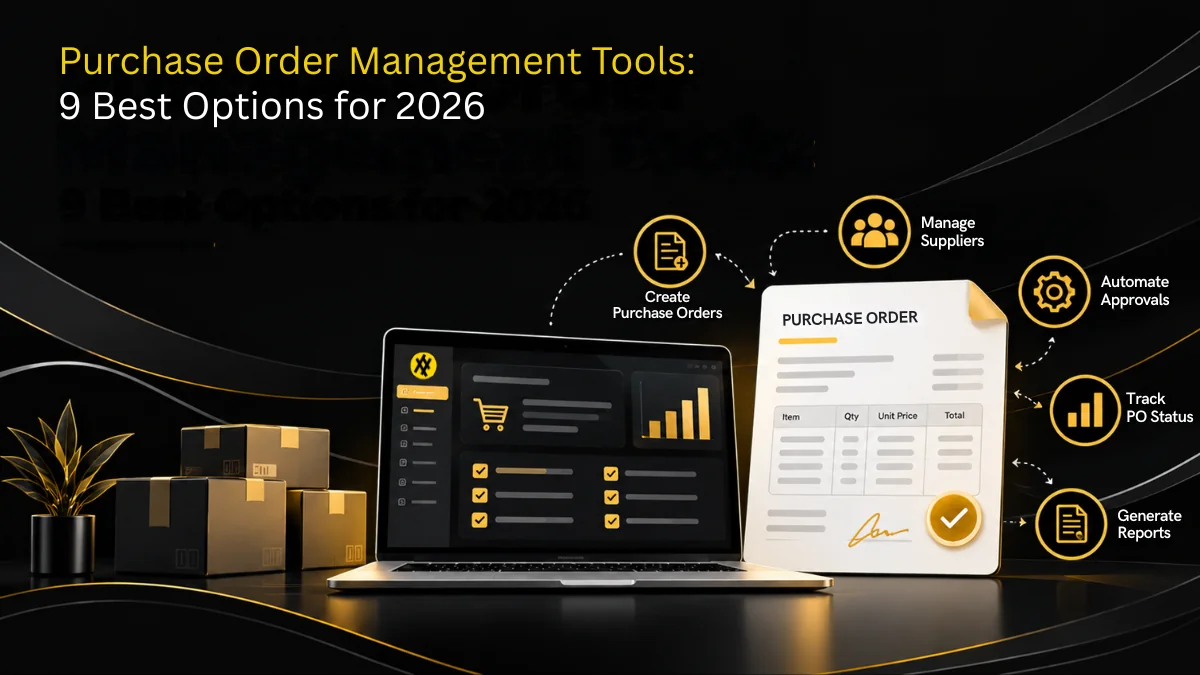
Ditch retrospective spreadsheet auditing. Deploying dedicated, modern procurement systems lets you run automated checking processes, manage live spend tracking dashboards, and receive automated system alerts the moment an external vendor invoice deviates from your internal purchase order guidelines.
Because so many of these controls—three-way matching, catalog enforcement, spend dashboards—live in one place, most finance and procurement teams end up centralizing PPV monitoring inside an AI procurement platform rather than stitching it together across spreadsheets and email.
How Zapro Helps You Track and Manage PPV
Manually tracking purchase price variance across thousands of paper invoices and disparate email chains makes it virtually impossible to maintain margin control. Zapro gives your finance and procurement leaders the real-time visibility, automation, and structural guardrails needed to eliminate unfavorable pricing variances.
- Real-Time Spend Visibility Across All Purchases: Zapro centralizes your end-to-end purchasing operations into a single cloud dashboard. Sourcing leaders can effortlessly monitor and compare standard vs. actual pricing models across all corporate categories, subsidiaries, and vendors from a single view.
- Automated Three-Way Matching to Catch Price Discrepancies: Protect your cash margins before payment processing happens. Zapro automatically runs exhaustive compliance cross-checks by matching incoming supplier invoices against your original purchase orders and warehouse receiving logs, instantly flagging any price or quantity deviation before funds leave your account.
- Approval Workflows That Prevent Maverick Spend: Build ironclad corporate spending boundaries. Zapro’s flexible, automated approval engine forces all purchase requests through custom-tailored management approval paths, ensuring your employees buy exclusively from authorized suppliers at pre-negotiated contract rates.
- Supplier and Category Reporting for PPV Analysis: Leverage deep, data-driven insights. Zapro’s built-in analytics suites generate comprehensive reporting arrays, enabling financial teams to identify exactly which vendor relationships or purchasing categories are driving unfavorable variances so you can renegotiate terms before it impacts your fiscal close.
Stop Letting Price Variance Erode Your Margins
Track standard vs. actual pricing, automate three-way matching, and catch unfavorable PPV before it hits your bottom line.
Frequently Asked Questions About PPV
1. What does PPV mean in procurement?
In procurement, PPV stands for Purchase Price Variance. It is a vital operational performance metric that measures the absolute financial difference between the budgeted, expected price of an asset and the actual price billed by the supplier.
2. What is the difference between favorable and unfavorable PPV?
A favorable PPV occurs when the actual price paid to a vendor is lower than the pre-set standard cost, indicating operational savings. An unfavorable PPV occurs when the real-world invoice price finishes higher than the standard baseline, representing an unbudgeted cost overrun.
3. How do you calculate purchase price variance?
To calculate the metric, subtract the standard baseline unit price from the actual invoice unit price, and multiply that resulting figure by the total actual quantity of units purchased: $\text{PPV} = (\text{Actual Price} – \text{Standard Price}) \times \text{Actual Quantity}$.
4. How is PPV recorded in accounting?
Under a standard costing accounting framework, inventory assets are logged strictly at their standard cost baseline. Any difference between that baseline and the actual supplier invoice is isolated and posted as a separate debit or credit entry inside a dedicated general ledger PPV variance account.
5. What is the difference between PPV and invoice price variance?
PPV measures the price variance at the point of receipt or initial purchase based on standard costs established during budgeting. Invoice Price Variance (IPV) isolates the delta between the agreed financial rate stated on the approved Purchase Order and the final price billed on the incoming supplier invoice.
What does PPV mean?
In procurement and finance, PPV means purchase price variance – the difference between the actual price paid for an item and the standard price budgeted for it, multiplied by the quantity bought.
Don’t miss our weekly updates
We’ll email you 1-3 times per week—and never share your information.
Unsure Why Your Costs Keep Drifting?
Get expert guidance on tracking purchase price variance and tightening supplier pricing control with Zapro.

About the Author

Md. Kafil


About the Reviewer

Zapro is dedicated to helping businesses of all sizes make informed decisions. We adhere to strict editorial guidelines to ensure that our content meets and maintains our high standards.
Our editorial standards help keep every article accurate, useful, and trustworthy.