

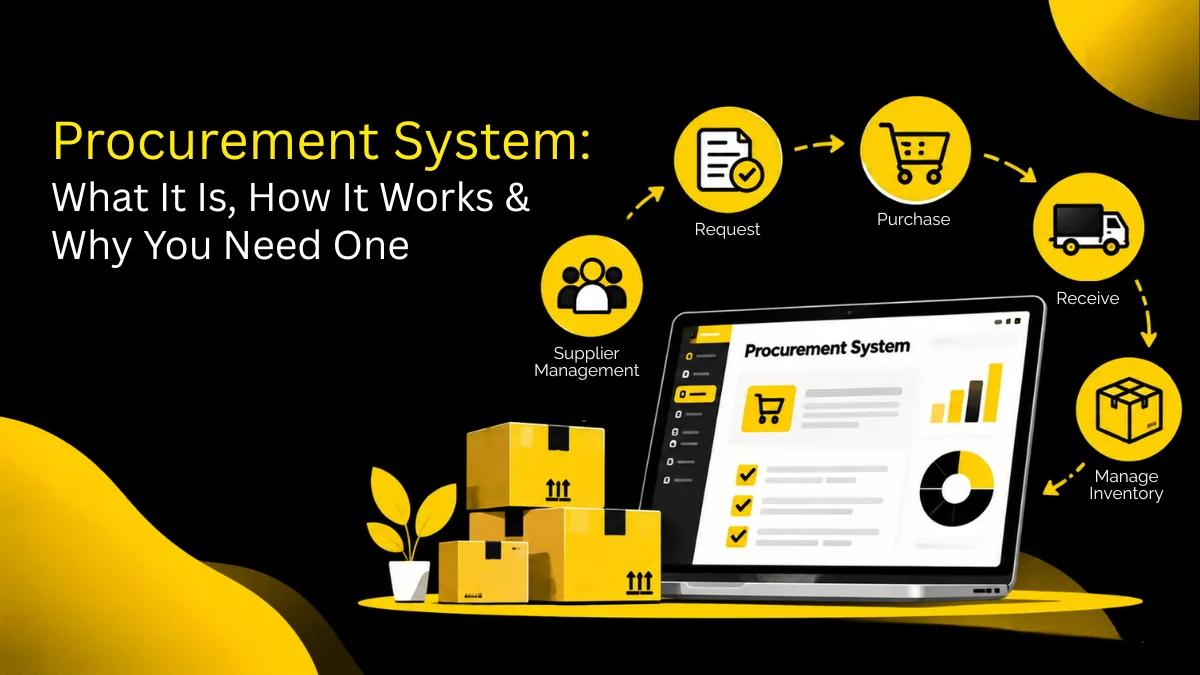
A procurement system is the combination of processes, policies, and software that a company uses to control its purchasing activities. It puts purchase requests, approvals, orders, vendor management, contracts, invoice matching, and more under one roof, giving finance departments better insight into authorized spending before payments leave the company.
Key takeaways
- A procurement system combines rules and software to control the purchase process.
- The key objectives of a procurement system are to enforce purchasing policies and provide finance departments with real-time spend visibility.
- Uncontrolled buying can waste 5%-16% of targeted savings.
- Enterprise buyers require depth and breadth of integration capabilities; lower-level spend management demands speed and ease of use.
- Adoption and data quality are more important than features in getting value out of a procurement system.
What Is a Procurement System?
Procurement systems are the processes, policies and software an organisation uses to control purchasing, from purchase requests and approvals to supplier management, purchase orders, contracts, invoice matching and payment. Common types include e-procurement, procure-to-pay, source-to-pay and ERP procurement modules.
A procurement system is a single purchasing portal where employees submit requests, approvals flow in, and orders are created and sent to vendors, with invoice matching happening before finance departments pay invoices. Email chains and Excel spreadsheets are no longer needed to track what and when something was bought.
The definition of a procurement system has two sides: the process and the software. On the process side, policies dictate who can approve what and which vendors are allowed. On the software side, these policies are turned into code. Software without policies is ineffective; policies without software are easily bypassed. Both sides serve the wider goals of procurement: buying the right goods and services on the right terms.
How a Procurement System Works?
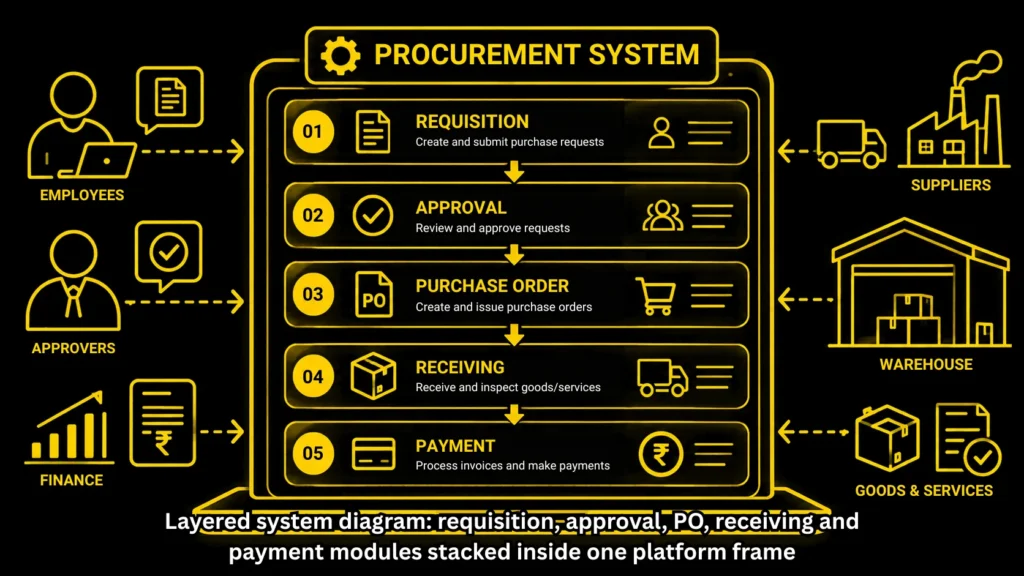
A procurement system follows a purchase through a series of steps known as the procure-to-pay process.
- Request: An employee fills out a purchase requisition, ideally with budget approval at the start.
- Approval: Automated routing rules route the request to the appropriate approver, depending on the amount, department, and other criteria.
- Sourcing and vendor selection: Buyers choose a supplier from a predefined list or issue a request for quotation.
- Purchase order: Create and send a purchase order to the chosen vendor.
- Goods receipt: The ordered goods are received and checked in.
- Invoice match: Invoices are matched to purchase orders and goods received notes in a three-way match before being sent to finance for payment.
The last step, invoice match, is particularly important, as it serves as the control point, flagging any discrepancies between what was ordered, received, and invoiced. This stage catches invoices that qualify as duplicates, inflations, or unapproved supplier additions.
Modern procurement systems add artificial intelligence (AI) to the mix. Zapro’s procurement system, for example, uses an AI layer to classify documents, flag outliers, and analyze contract language. The purchasing system’s website mentions a “prompt to buy” feature to initiate purchase requisitions. All these tools add up to make the procure-to-pay process faster and more accurate.
Core Features to Expect
The main features of a procurement system tend to overlap, with vendors differentiating on the quality and quantity of available options. Procurement software listings mention spend analysis, supplier management, contract management, purchasing, invoice processing, and inventory management as basic elements.
- Purchase request and approval rules: Approval routing rules replace informal email approvals.
- Vendor management: Vendors have a centralized, formal, and searchable presence with onboarding checklists, documents, and performance information.
- Contract management: Contracts are stored in one place with alerts about expiration dates.
- Invoice automation: Data is extracted from invoices, and three-way matching occurs against purchase orders and receipt documents.
- Spend analytics: Spend dashboards track supplier spend and categories.
- Integration: ERP and accounting software integrations are two-way, roles and permissions use single sign-on methods, and users have customizable views.
A good feature to test when reviewing a procurement system is viewing an end-to-end purchase flow in one procurement platform without switching screens or products. If there is an integration gap, that is where manual process steps will be added.

By 2027, 50% of organizations will support supplier contract negotiations through the use of AI‑enabled contract risk analysis and editing tools.
Types of Procurement Systems
Procurement systems vary from simple spend management tools for small companies to source-to-pay systems for larger concerns. An enterprise procurement system, therefore, represents the higher end of this spectrum, addressing multitenant concerns with multiple currencies and approval levels.
Enterprise-level tools would incorporate spend analytics, supplier management, and purchase order processing, with end-to-end visibility from sourcing to payments.
| Type | Best for | Typical strength | Typical limit |
|---|---|---|---|
| Point solution (for example, e-procurement only) | Small teams with one pain point | Fast setup | Gaps between tools |
| Mid-market suite | Growing companies | Balance of cost and coverage | Fewer advanced controls |
| Enterprise procurement system | Large, multi-entity organizations | Governance, deep ERP integration | Longer rollout, higher cost |
| AI-native platform | Teams wanting automation over manual entry | Agents handle routine tasks | Newer category, so check maturity |
Enterprise buyers should consider three major criteria in addition to software qualities: multi-entity readiness, approval auditing, and ERP integration. The procurement system purchase, or the act of acquiring the system, should involve finance, procurement, and IT departments right from the start.
Why Do You Need a Procurement System?
A procurement system prevents erosion of negotiated savings, speeds up the purchase process, and provides spend analytics. The primary justification for investing in a procurement system is maverick spend – money wasted on unplanned, unauthorized, or uncontracted purchases. The Hackett Group research mentions a 5%-16% range of maverick spend as a percentage of targeted savings.
Other Benefits
- Visibility: Finance teams have a better idea of authorized spending.
- Compliance: Policies coded into the system reduce errors and ensure adherence to procurement rules.
- Efficiency: A vendor mentioned 20% headroom with regard to manual processes, an easy way to describe savings. (Note that this figure comes from a vendor and should be treated as such.)
- Audit: Every approval leaves a paper trail visible to auditors and approvers.
Procurement System Management
Procurement system management refers to the process of maintaining the system after implementation to ensure accuracy, adoption, and adherence to policies. A poorly implemented or received procurement system will not yield the promised benefits.
Practices That Keep It Working
- One owner: Someone should be responsible for configuration management, vendor master data quality, and user support.
- Vendor data: Stale or incorrect vendor data defeats the purposes of a procurement system.
- Maverick spend rate: Divide maverick spend by total company spend and multiply by 100 to get a spend visibility metric.
- Approval rules: Approval thresholds and routing rules should be reviewed periodically.
- Renewals: Contract renewals should generate alerts to avoid surprise renewals.
A good rule of thumb is that if approvers keep asking for email approvals, the approval routing is too slow or too confusing. It should be fixed.
How to Choose the Right System?
Choosing the right system depends on the biggest pain point, integration requirements, and team size rather than the length of a vendor’s feature list. There is a world of difference between tools for a 50-person company and manufacturers with a global presence. Running a procurement software demo with your own approval chains and a sample of real invoices is the clearest way to judge that fit.
Try the following approach when comparing procurement systems:
- Decide on the three most important problems that a procurement system should solve.
- Ensure that integration to ERP and accounting software is possible – in writing.
- Ask the vendor how its pricing model works for additional users and vendors.
- Test the approval rules in a sample purchase scenario.
- Ask how suppliers are onboarded and monitored for risk.
Where Zapro AI Fits?
Zapro AI fits teams that want request-to-payment automation without the complexity of implementing multiple tools. This procurement system handles approvals, purchase orders, supplier onboarding, and three-way invoice matching, with Zapro pricing starting at $699 per month.
It is a good fit for teams where procurement is not the largest spend category. The tool covers all the bases (vendor, purchase, invoice, contract, spend management) in one subscription with an unlimited number of users.
Zapro’s strength lies in its ability to integrate with existing ERP systems rather than replace them, a crucial consideration for companies that cannot change financial systems. As always, confirm pricing and plan details directly with the vendor.

Effortless Vendor Management
Keep vendor data organized, onboard suppliers easily, and track performance in one place.
FAQ
What is a procurement system?
A procurement system is a combination of processes, policies, and software that control the purchasing activities of a business. A procurement system consolidates purchase requests, approvals, orders, supplier management, contracts, and invoice matching in one place, providing finance departments with real-time spend visibility.
What is the difference between procurement and purchasing?
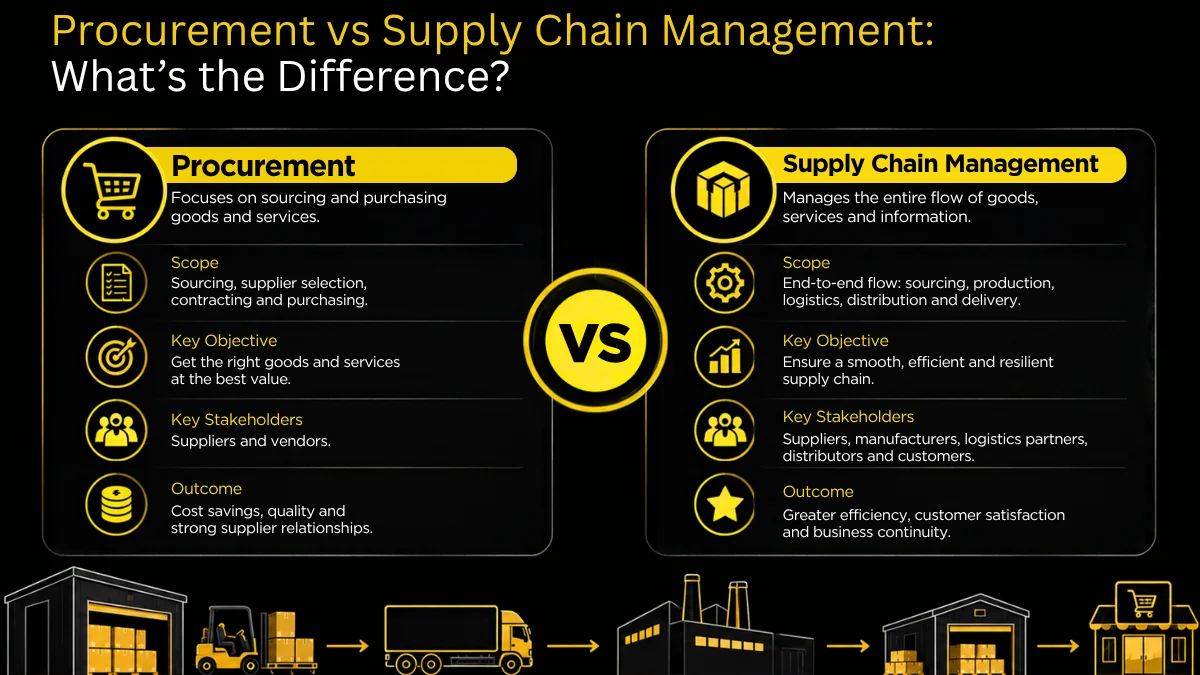
Purchasing is a subset of procurement, but the latter involves a wider range of activities, from sourcing and negotiation to supplier management and spend analysis.
What is an enterprise procurement system?
An enterprise procurement system is a large-scale system meant for enterprises with multiple entities, currencies, and approvers. Suite solutions typically cover sourcing, contracting, supplier management, and payments.
How much does a procurement system cost?
Procurement system cost varies significantly between vendors and system sizes. Zapro AI, for example, has an entry-level plan at $699 per month, while enterprise suites typically include a quote-based pricing model.
How does a procurement system reduce maverick spend?
A procurement system tracks all purchases against negotiated contracts and approved suppliers and automatically flags or denies purchases that fall outside agreements. In addition, a procurement system can reduce maverick spend by having user-specific policies.
References
Don’t miss our weekly updates
We’ll email you 1-3 times per week—and never share your information.
Ready to take control of your procurement?
One platform. Smarter procurement. Get a personalized walkthrough and pricing details tailored to your business.
About the Author

Md. Kafil


About the Reviewer

Zapro is dedicated to helping businesses of all sizes make informed decisions. We adhere to strict editorial guidelines to ensure that our content meets and maintains our high standards.
Our editorial standards help keep every article accurate, useful, and trustworthy.