

Last updated: November 10, 2026
A centralized procurement system is an organizational model where one dedicated team manages all purchasing, supplier selection, contract negotiation and vendor management across the enterprise. Instead of each department or regional office buying on its own, every request runs through one unified system and policy framework.
In a young company, buying is usually informal. Marketing buys a SaaS tool on a corporate card, facilities orders furniture from a local shop, and IT adds a new hardware vendor. It feels fast, but nobody can see total spend, the same item costs different prices in different offices, and contracts sit in inboxes.
This guide shows how a centralized procurement system works, with an example, its advantages and disadvantages, how it compares with decentralized and hybrid models, and how to set one up in 2027.
What a Centralized Procurement System Covers
The central team, usually procurement or finance, owns four jobs that would otherwise be spread across departments:
- Purchasing: Every request for goods or services comes to one place and follows one set of buying rules.
- Supplier selection: The team keeps a preferred vendor list so employees buy from vetted suppliers at agreed prices.
- Contract negotiation: Large or repeat purchases are negotiated once for the whole company, using total volume as leverage.
- Vendor management: Supplier records, documents and performance sit in one shared vendor master.
Behind those jobs sits the procurement system itself: one request portal, one approval path, one vendor list and one spend report that covers every department, location and subsidiary.
How a Centralized Procurement System Works
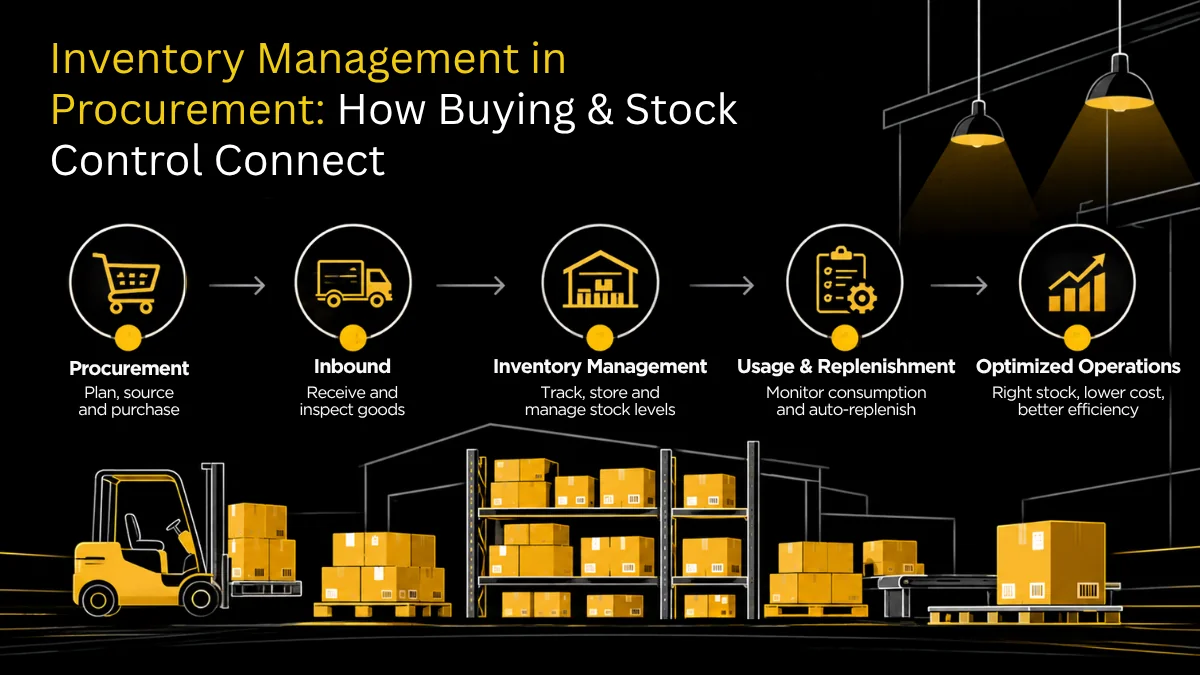
Every purchase follows the same procurement process, whoever asks for it:
- Request: An employee submits a purchase request through the central portal or catalog.
- Approval: The system routes it to the budget owner and, above a set amount, to procurement.
- Supplier check: The central team buys from a preferred vendor under an existing contract where one exists, or runs a quote.
- Purchase order: A PO is issued with the agreed price and terms.
- Receipt and invoice match: When the invoice arrives, it is checked against the PO and goods receipt in a 3-way match before finance approves payment.
Automate purchase requisitions and approvals

Centralized Procurement System Example
Take a company with six offices that each buy their own laptops. Every office buys about 40 a year from a local reseller at around $1,200 each, so the company spends about $288,000 with six different suppliers and six sets of terms.
After centralizing, procurement runs one quote for all 240 laptops a year and signs a contract at $1,080 each. The saving is the total quantity times the price difference: 240 × $120 = $28,800 a year. Employees still request laptops from their office, but the request goes to the contracted supplier, warranty and returns follow one policy, and finance sees laptop spend in one report. These figures are an illustration; your saving depends on your volumes and the discount you negotiate.
Advantages and Disadvantages of Centralized Purchasing
Advantages
- Cost savings and bulk pricing: Pooling volume across teams gets larger discounts and better contract terms from suppliers.
- Spend visibility and control: All spend runs through one system, which cuts maverick spend (buying off-contract) and shows company-wide spend by supplier and category.
- Standardization: One set of rules covers product quality, vendor vetting and contract compliance, which makes audits easier.
- Efficiency: Teams stop duplicating quotes and supplier set-up, so fewer people spend time on routine buying.
- Stronger supplier relationships: Suppliers treat a company-wide account as a key customer, which helps with service levels and priority support.
Disadvantages and how to reduce them
| Disadvantage | What happens | How to reduce it |
| Decision bottlenecks | One central team approves everything, so urgent local requests wait | Set approval limits by amount and category so small, routine buys are approved by the budget owner alone |
| Lack of local nuance | Central planners miss what a site or region actually needs | Bring regional buyers into category plans and allow approved local suppliers for some categories |
| Stakeholder resistance | Teams push back on losing control of their budgets | Make the official way the easiest way: one request form, catalogs and clear status on every request |
Centralized vs. Decentralized vs. Hybrid Procurement
Most companies sit somewhere between full central control and full local freedom. The decentralized purchasing model trades savings for speed, while a hybrid tries to keep both.
| Factor | Centralized | Decentralized | Hybrid (center-led) |
| Who buys | One central team | Each department or site | Central team sets contracts; sites order against them |
| Cost savings | High (pooled volume) | Low (local prices) | High on contracted categories |
| Speed | Slower without approval limits | Fast | Fast for routine buys |
| Control and compliance | Strong | Weak, uneven | Strong on policy, local on execution |
| Spend visibility | Company-wide | Scattered | Company-wide |
| Best for | Multi-site companies buying the same items | Small teams or very different local needs | Growing multi-entity companies |
When to Use a Centralized Procurement Model
Start from the problem you need to solve and your size:
| Your situation | Model that usually fits |
| Costs are high because sites buy the same items separately | Centralized, at least for shared categories |
| Finance cannot see total spend by supplier | Centralized system with one request and PO process |
| Approvals are slow and teams work around them | Hybrid with approval limits, not more central control |
| Sites need very different, local suppliers | Decentralized or hybrid |
| Regulated industry where every vendor must be vetted | Centralized vendor onboarding and approvals |
How to Implement a Centralized Procurement System
- Map current spend: Pull a year of invoices and card spend to see who buys what from whom.
- Clean the vendor master: Merge duplicate suppliers and agree on one spend category list.
- Set governance: Decide who can buy what, and the amount at which procurement must be involved.
- Move the top categories first: Put the largest shared categories, such as IT, software and office supplies, on central contracts.
- Standardize supplier onboarding: Collect tax, bank and security documents through one portal.
- Roll out by entity: Launch the request and approval process one site or entity at a time, then track spend under contract each month.
How Zapro Supports a Centralized Procurement System
Zapro is an AI-native source-to-pay platform for mid-market teams. Its procurement software covers intake, approvals, sourcing, contracts, purchase orders, receipts, invoice matching, payment preparation and spend analytics in one platform, so central control does not mean more manual work.
- One intake for every request: A general intake form, catalogs and punch-out, including Amazon Business punch-out with orders running through Zapro’s approvals and budgets.
- Approval routing: Routes approvals by amount, category or vendor, in series or in parallel, so small buys do not wait on the central team.
- Central vendor onboarding: Onboarding workflows and templates keep one vendor list across legal entities.
- Invoice control: 2-way and 3-way matching with an exception queue.
- Spend analytics: Configurable dashboards and scheduled reports show spend across departments and entities.
- Unlimited users on every plan: Every requester can use the official process without extra licences.
See how central approvals work for your departments in a procurement software demo.

Effortless Vendor Management
Keep vendor data organized, onboard suppliers easily, and track performance in one place.
Frequently Asked Questions
What is the difference between centralized and decentralized procurement?
In centralized procurement, one team buys for the whole company, sets the supplier list and signs the contracts. In decentralized procurement, each department or site buys for itself. Centralized gives better prices, control and visibility; decentralized gives speed and local fit. Many companies end up with a hybrid that keeps both.
What are the four main types of procurement?
The four types usually named are direct procurement (materials and parts that go into what you sell), indirect procurement (goods that keep the business running, such as IT and office supplies), goods procurement and services procurement (consultants, contractors, cleaning). Most companies centralize indirect spend and services first.
What are the disadvantages of centralized purchasing?
The main disadvantages are slower approvals when one team handles every request, buying rules that miss local needs, and pushback from teams that lose budget control. You can reduce all three with value-based approval limits, regional input on contracts and an easy request process, so central control does not have to mean waiting.
When should a company centralize procurement?
Centralize when several sites or entities buy the same items on their own, when prices for the same item differ across locations, when the supplier count grows faster than spend, or when finance cannot report total spend by supplier. Growing from one legal entity to several, or opening new offices, is the usual trigger for most companies.
What software supports a centralized procurement system?
You need a procurement platform with one intake form or catalog for all requests, approval routing by amount and category, purchase orders, a shared vendor list, invoice matching and spend reports across entities. Source-to-pay suites such as Zapro, Coupa or SAP Ariba cover all of these; small teams often start with POs and approvals.
Don’t miss our weekly updates
We’ll email you 1-3 times per week—and never share your information.
Ready to take control of your procurement?
One platform. Smarter procurement. Get a personalized walkthrough and pricing details tailored to your business.

About the Author

Md. Kafil


About the Reviewer

Zapro is dedicated to helping businesses of all sizes make informed decisions. We adhere to strict editorial guidelines to ensure that our content meets and maintains our high standards.
Our editorial standards help keep every article accurate, useful, and trustworthy.