

A construction project can have hundreds of purchases moving at the same time. Materials need to arrive on schedule, subcontractors need to be selected, purchase orders need approval, and finance eventually needs to match invoices to what was actually ordered and received.
The problem is keeping all those decisions connected.
A purchase that looks fine on its own can still create a project problem if it arrives late, exceeds the budget, goes to the wrong site, or gets invoiced differently from what was ordered.
That is where construction procurement software becomes useful. The right system connects requests, suppliers, approvals, orders, deliveries, invoices and project costs instead of leaving each step in a different place.
Key Takeaways
- Construction procurement covers materials, equipment, subcontractors and services, along with the sourcing and commercial decisions behind them.
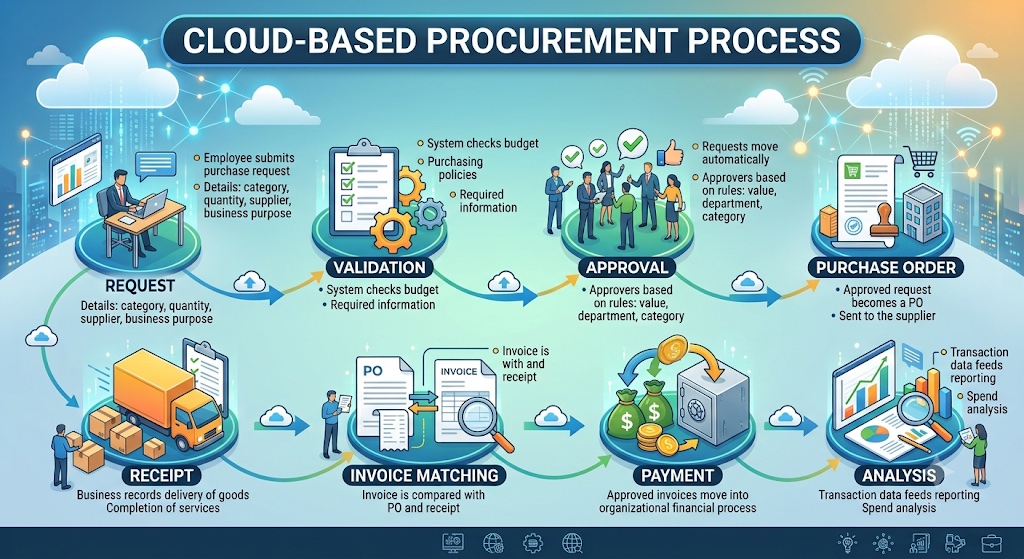
- The construction procurement process typically moves from a requirement and supplier search through quote comparison, approval, ordering, delivery and invoice matching.
- Good procurement software connects those stages to project budgets and committed costs.
- Material and subcontractor procurement need different controls around lead times, delivery, scope and compliance.
- The best procurement software for construction should work for both office and site teams.
- AI is most useful when it reduces document work, identifies exceptions and makes procurement data easier to use.
What Is Construction Procurement?
Construction procurement is the process of obtaining the materials, equipment, subcontracted work and services needed to complete a project.
That might mean sourcing structural steel, comparing electrical subcontractor bids, renting equipment or bringing in a specialist consultant. Procurement can begin long before a purchase order is issued.
This is also why procurement and purchasing are not exactly the same.
Purchasing is the transaction. Procurement covers the decisions around it: what is needed, who should provide it, what it should cost, when it needs to arrive and how the purchase affects the project.
On a small project, one person may handle most of this. On a larger one, estimating, procurement, project management, site teams, subcontractors and finance may all touch the same purchase.
A quote can sit in email, an approval can happen in a chat, the PO can live in a spreadsheet and the delivery record can stay at the site.
Construction procurement software brings those pieces into one workflow.

AI-enabled risk and editing solutions will help procurement expedite business decision making, decreasing time spent on the contracting process and increasing capacity for additional tasks.
Why Is Procurement Different in Construction?
Construction procurement has a timing problem.
A project may need a specific material, in a specific quantity, at a specific site, at a specific stage of the schedule. If it arrives too early, it may need storage. If it arrives too late, the crew waiting for it may have nothing to install.
The same applies to subcontractors. The lowest bid is not necessarily the best choice if the contractor cannot meet the schedule, has compliance gaps, or has misunderstood the scope.
Long-lead items make the issue even more obvious. McKinsey has reported lead times of 50 to 150 weeks for some critical equipment used in large capital projects.
That makes procurement closely connected to scheduling, project budgets, and site coordination.
What Are the Main Procurement Methods in Construction?
The procurement method determines how responsibilities are divided between the owner, designer, contractor, and other parties.
Design-Bid-Build: The design is completed before contractors bid on the work. Procurement tends to follow a more defined sequence.
Design-Build: Design and construction sit under one contract, allowing the contractor to become involved earlier and potentially make procurement decisions while design is progressing.
Construction Management at Risk: A construction manager becomes involved earlier and takes responsibility for managing trade contractors, often under a guaranteed maximum price.
Integrated Project Delivery: The owner, designer and contractor work under a more collaborative structure with shared risks and rewards.
The method matters because approval authority, subcontractor selection, tendering and contracting can change depending on the project structure.
What Is the Construction Procurement Process?
The exact workflow varies by contractor, but most construction procurement follows a similar path.
1. Define the requirement
The project identifies what it needs, including quantity, specification, required date, delivery location, and project or cost code. A purchase requisition gives the request a formal starting point.
2. Source suppliers or subcontractors
Procurement identifies suitable vendors and decides whether to request one quote, run an RFQ, or conduct a more formal tender.
3. Compare quotes
Price is only one factor. Lead time, delivery charges, payment terms, specifications, and exclusions can change the real cost of an offer.
4. Approve the purchase
The request moves through the relevant approval workflow based on its value, project, and company policies.
5. Issue the PO or contract
The approved decision becomes a formal commercial commitment, with the relevant pricing, quantities, terms, and delivery requirements.
6. Receive and verify
The site or warehouse records what actually arrived. Partial deliveries, shortages, damage, and backorders need to remain visible.
7. Match the invoice
Three-way matching compares the purchase order, receipt and invoice so finance can identify discrepancies before payment.
This end-to-end workflow is increasingly central to construction procurement software. Current construction procurement guidance similarly emphasizes requisitions, RFQs, quote comparison, approvals, POs, delivery matching and invoice matching as connected activities.
What Are the Biggest Construction Procurement Challenges?
Most procurement problems happen in the gaps between these steps.
A request can sit waiting for approval while the schedule moves on. A supplier can confirm a delivery date that never reaches the project team. A site can make an emergency purchase because the central process is too slow. Finance can receive an invoice without enough information to understand what it relates to.
The recurring problems include:
- Fragmented communication: Procurement information is spread across email, spreadsheets, messaging apps, and project systems.
- Poor commitment visibility: A project can appear under budget when significant POs have already been issued but not invoiced.
- Long-lead materials: Waiting until an item is urgently needed leaves little room for supplier delays.
- Delivery discrepancies: Partial deliveries and shortages are easy to lose track of when receiving records are separate from the PO.
- Subcontractor risk: A low bid does not automatically mean a low-risk contractor.
- Uncontrolled site purchasing: Local purchases may solve an immediate problem but create duplicate orders and weak cost visibility.
Software cannot fix poor planning. It can make these issues visible while there is still time to respond.
How Does Construction Procurement Software Work?
Think of it as the thread connecting a purchase from the first request to the final invoice.
A site manager raises a requirement. Procurement sources it and compares quotes. An approver reviews the request against budget and policy. The approved purchase becomes a PO. The site records the delivery. Finance matches the invoice against the same record.
The value comes from keeping those events connected.
If only part of an order arrives, the outstanding quantity should remain visible. If a PO pushes a project over budget, the team should see that before the invoice arrives. If an invoice does not match the order, someone should be able to see why without searching through several systems.
That is more useful than simply replacing a paper form with a digital one.
What Features Should Construction Procurement Software Have?
Purchase Requisitions and Approval Workflows
Requests should capture what is needed, how much, where it is needed, when it is needed and which project or cost center should pay for it.
Approval rules should then route the request to the right people without relying on manual email forwarding.
RFQs and Supplier Quote Comparison
Procurement teams should be able to request pricing from multiple suppliers and compare more than the headline number.
Lead time, payment terms, delivery costs, specifications, and exclusions can all affect the decision.
Vendor and Subcontractor Management
Supplier records should not live in separate spreadsheets maintained by individual buyers.
For subcontractors, the record may also need scope information, compliance documents, certifications, contract values and performance history.
Purchase Orders and Contracts
The system should turn an approved decision into a controlled PO or contract while retaining the commercial information behind it.
Delivery, Goods Receipt and Inventory
A PO tells you what was ordered. It does not tell you what arrived.
Site teams should be able to record receipts, shortages, damage, returns and transfers. This also creates a stronger connection between procurement and inventory.
Three-Way Invoice Matching
The system should compare what was ordered, what was received and what the supplier billed.
This becomes particularly useful when there are partial deliveries or multiple invoices against one PO.
Project Budgets and Committed Costs
A project manager needs visibility into more than paid invoices. Open POs are future costs that have already been committed.
Connecting procurement to project budgets and job costing makes those commitments easier to see.
Procurement Reporting and Spend Analytics
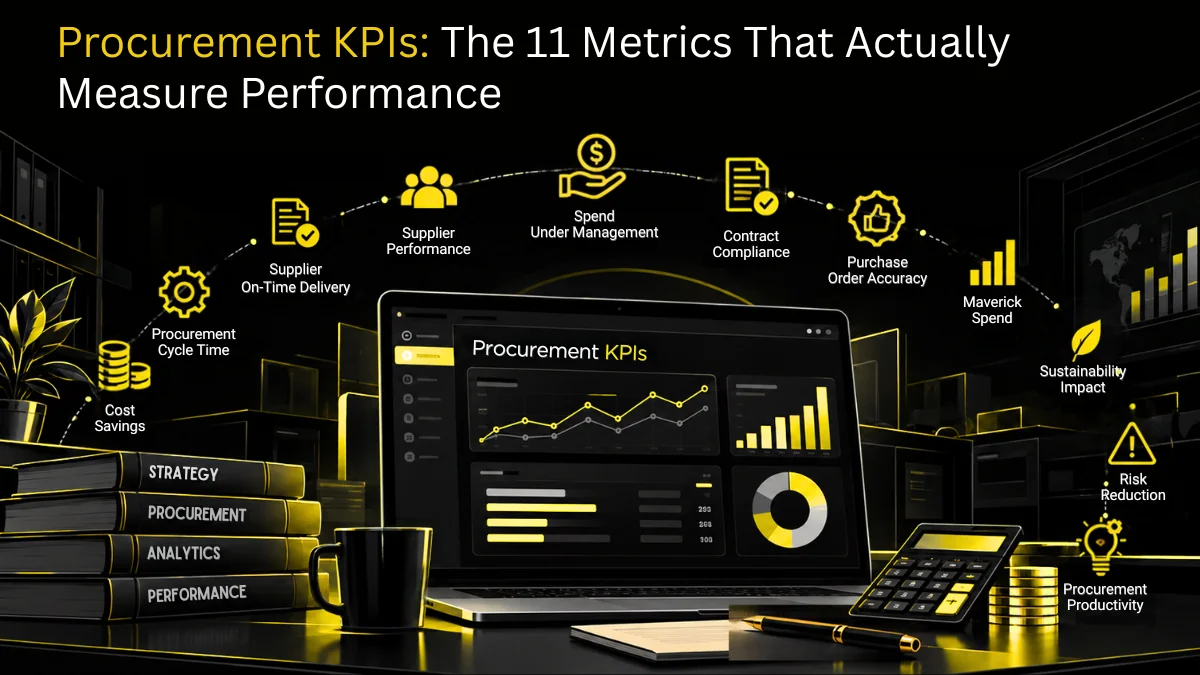
Useful reporting should answer practical questions: Which suppliers are being used most? Where are purchases taking longer than expected? Which projects have large open commitments? Where are invoice discrepancies occurring?
The best dashboard is the one that helps someone decide what to do next.
Your next project deserves smarter procurement.

How Does Procurement Software Help Control Construction Costs?
Cost control starts before the invoice.
Suppose a project has a $100,000 budget for a material category. If only $35,000 has been invoiced, the project may appear to have plenty of budget remaining.
But if another $50,000 has already been committed through open POs, the picture is very different.
That is why construction procurement software should connect requisitions and purchase orders to project budgets and cost codes.
It can also expose less obvious costs. A supplier may offer a lower unit price but charge more for delivery. A cheap quote may involve a longer lead time. Repeated emergency purchases may indicate that demand planning is not working.
The software does not make those decisions for the team. It gives them the information to make better ones.
How Does Construction Material Procurement Work?
Material procurement brings together availability, timing, cost and project sequencing.
Teams may need to know:
- What is already in stock?
- What has already been ordered?
- When is the material actually needed?
- What is the supplier’s lead time?
- Can it be delivered directly to the site?
- What happens if only part of the order arrives?
- Is surplus material available at another project?
Long-lead materials deserve particular attention because the cost of waiting can extend beyond the material itself. McKinsey’s research on capital projects shows how extended lead times for critical equipment can affect project delivery.
A useful system should give procurement and project teams a shared view of orders, expected deliveries, receipts and outstanding quantities.
How Does Subcontractor Procurement Work in Construction?
Subcontractor procurement is more than collecting three bids and choosing the cheapest.
The team needs to define the scope, invite suitable contractors, compare bids on a like-for-like basis, check qualifications and compliance, negotiate terms and establish the commercial commitment.
That record still matters after the subcontract is awarded. Changes to scope, variations, milestones, and payment applications can all affect the final project cost.
Keeping the original bid, contract and later changes connected makes that history much easier to follow.
What Is Cloud-Based Procurement Software for Construction?
Cloud-based procurement software for construction allows project, procurement, finance and site teams to work from the same records without being tied to one office.
That matters because procurement happens in different places.
A project manager may approve a request from a jobsite. A site team may record a delivery from a phone. Procurement may work from headquarters while finance checks an invoice elsewhere.
Mobile access is therefore more than a convenience. If recording a delivery requires someone to return to a desktop later, important information can be delayed or lost.
Construction Purchasing Software vs Procurement Software: What Is the Difference?
Construction purchasing software generally focuses on the transaction: creating POs, placing orders, receiving goods, and processing invoices.
Procurement is broader. It includes sourcing, supplier selection, quote comparison, approvals, contracts, compliance, and commercial control.
This distinction matters when evaluating software. A system that creates POs efficiently may still leave procurement teams managing sourcing and approvals through spreadsheets and email.
For many construction teams, the better approach is to connect both purchasing execution and the wider procurement workflow.
How to Choose the Best Procurement Software for Construction
Do not start with the longest feature list. Start with one real purchase.
Take something the team actually buys and run it through the system. Raise the request, send an RFQ, compare responses, route the approval, create the PO, record a partial delivery, and introduce an invoice that does not perfectly match the order.
That test will reveal more than a product presentation.
Check whether the software can:
- connect purchases to projects and cost codes
- support your approval rules
- compare supplier quotes
- work for site and mobile users
- track partial deliveries and outstanding quantities
- manage supplier and subcontractor records
- show committed costs before invoices arrive
- match invoices against orders and receipts
- integrate with accounting, ERP or job-costing systems
- maintain a clear audit trail
The best procurement software for construction is ultimately the one teams can use consistently without creating another layer of administrative work.
How Is AI Used in Construction Procurement?
AI has a practical role in procurement because construction teams deal with large amounts of unstructured information.
It can extract data from quotes and invoices, match invoice lines to POs, classify spend, identify unusual prices or quantities and surface exceptions for review.
It can also make historical procurement data more useful. If the same material has been purchased repeatedly, procurement teams can look at previous prices, lead times and supplier performance instead of treating every purchase as a new decision.
The useful approach is to let AI handle document-heavy work and pattern recognition while people retain control over commercial decisions and approvals.
How Zapro AI Supports Construction Procurement
Zapro AI brings purchase requests, approvals, purchase orders, vendor management, contracts, spend visibility, and invoice-related workflows into one procurement system.
For a construction team, that means a purchase can begin with a structured request rather than an email, move through the relevant approval workflow, and remain connected to the resulting PO and procurement record.
Zapro AI’s purchase requisition workflow captures information such as quantity, need-by date, cost center, and justification before the request moves through validation, budget checks, approval, and procurement review.
Its purchase order approval workflow can similarly route approvals according to factors such as value, entity, and policy while retaining the approval trail.
Zapro AI also applies AI to procurement tasks such as invoice reading and matching. The aim is not to remove people from procurement decisions. It is to reduce the manual work around those decisions and give teams a clearer record of what was requested, approved, ordered, and billed.
Frequently Asked Questions About Construction Procurement Software
What is construction procurement software?
Construction procurement software manages sourcing and purchasing activities for construction projects. It can connect requisitions, supplier sourcing, approvals, POs, deliveries, invoices, inventory and project costs.
What does construction procurement include?
It can include materials, equipment, subcontracted work and professional services, along with supplier selection, bidding, contracts, compliance, delivery and payment.
What are the main procurement methods in construction?
Common methods include Design-Bid-Build, Design-Build, Construction Management at Risk and Integrated Project Delivery.
What is the construction procurement process?
A typical process moves from identifying a requirement through supplier sourcing, RFQs or bids, quote evaluation, approval, ordering, delivery and invoice matching.
What features should construction procurement software have?
Important capabilities include purchase requisitions, approvals, RFQs, quote comparison, vendor management, POs, delivery tracking, invoice matching, budget visibility, committed-cost reporting and accounting or ERP integrations.
How does construction procurement software reduce costs?
It can improve approval controls, supplier comparison, commitment visibility and invoice accuracy while helping teams identify delivery and purchasing issues earlier.
What is construction purchasing software?
Construction purchasing software focuses primarily on executing purchases, while procurement software covers the wider process of sourcing, supplier selection, approvals and commercial control.
How does procurement software manage subcontractors?
It can centralize subcontractor information, bids, compliance documents, scopes, contracts, commitments and changes.
What is cloud based procurement software for construction?
It is procurement software hosted in the cloud so office, project and site teams can access shared procurement records remotely.
How do you choose the best procurement software for construction?
Test the system using a real purchase, including sourcing, approval, PO creation, partial delivery and invoice matching. Also check project-cost visibility, mobile access and integrations.
How is AI used in construction procurement?
AI can extract information from procurement documents, match invoices, classify spend, identify anomalies and surface useful pricing or supplier patterns.

Smarter procurement starts today.
Set up Zapro in minutes and give your construction team full visibility over every purchase order, invoice, and vendor contract.
Don’t miss our weekly updates
We’ll email you 1-3 times per week—and never share your information.
Not sure where to start? Let us show you.
Book a live demo and see exactly how Zapro fits into your construction procurement process — from POs to vendor payments.
About the Author

Md. Kafil


About the Reviewer

Zapro is dedicated to helping businesses of all sizes make informed decisions. We adhere to strict editorial guidelines to ensure that our content meets and maintains our high standards.
Our editorial standards help keep every article accurate, useful, and trustworthy.