

Most purchasing issues do not start with an unreliable supplier. They often begin with uncoordinated collaboration. The finance department might approve a budget that procurement can’t see, while the legal department might review the contract after the terms have already been discussed with the supplier. These gaps can lead to delays, confusion and costly mistakes.
Procurement collaboration fixes these problems. It brings together everyone involved in a purchase, both inside and outside the company, so everyone is on the same page at the same time.
Now, let’s look at how it works, what it provides, which tools are useful, and how to get started without disruption.
Key Takeaways
- Procurement collaboration connects procurement with finance, IT, legal, operations and suppliers.
- Shared workflows improve purchasing speed, visibility and decision-making.
- Supplier collaboration helps manage orders, performance, risks and relationships.
- Collaboration tools connect requests, approvals, POs, contracts and invoices.
- Zapro AI helps teams manage procurement workflows, suppliers and spend in one platform.
What Is Procurement Collaboration?
Procurement collaboration is the active alignment of information, processes, and decision-making among purchasing departments, internal business functions (such as, Finance, Legal, IT), and external suppliers through the entire purchasing process.
Instead of passing documents back and forth over email or working in isolated spreadsheets, all stakeholders work inside a single shared workflow.
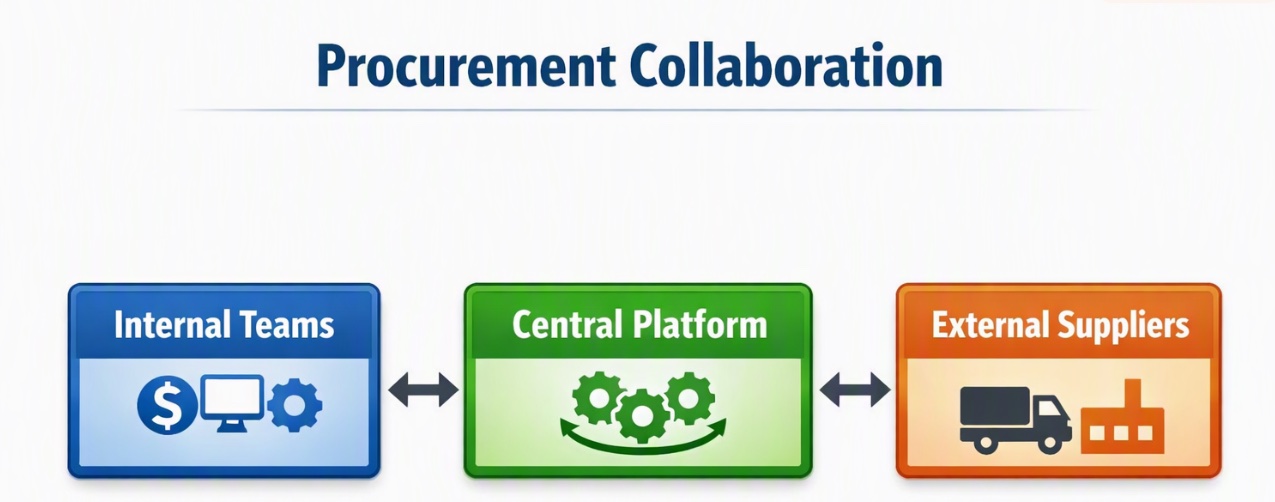
Three layers help you spot where your own process breaks:
- Internal Teams: Work with finance IT and operations to make sure that procurement goals and processes are in line.
- Central Platform: Acts as the place where workflows, approvals and data sharing happen between everyone involved.
- External Suppliers: Collaborate through the platform to achieve timely delivery and compliance.
Why It Matters in 2026
Procurement collaboration was once considered an extra. Now it is something that people expect. The numbers explain why:
- Gartner research found that the importance of supplier collaboration grew for 88% of respondents over 24 months.
- Deloitte’s benchmarks suggest that a more integrated approach to procurement and finance can lift realized savings by 20–40% and improve operational efficiency or cost by 10–30%. Deloitte also says tight integration is still the exception rather than the norm.
- The Hackett Group and GEP found that 78% of procurement leaders at large enterprises rate orchestration as highly or very important, partly to strengthen their work with finance, legal, IT, and other functions.
- Ramp reports that fewer than 2% of U.S. businesses employ a dedicated procurement team.
That last figure matters. In many companies, collaboration will not happen on its own. Someone has to design it.

Buying procurement software is buying change. Your change-management capabilities matter more than features.
[Founder, Procurement Leaders Forum; featured in Supply Chain Quarterly]
Key Benefits of Procurement Collaboration You Can Expect
1. Drastic Reduction in Purchasing Cycle Times
Manual approval chains can take weeks when done through back-and-forth emails. Shared workflows give finance, legal, and department managers access to purchase approvals in real time. Automated routing speeds up purchase approvals by as much as forty per cent.
2. Reduced Tail Spend
The centralization of the procurement process will ensure that teams have visibility of all purchases made. Procurement can direct employees to use approved suppliers and contracts that ensure that the organization gets better prices and eliminates unnecessary costs.
3. Lower Supply Chain Risk
The risk faced by suppliers tends to differ rapidly in volatile markets. Supplier collaboration in the procurement process enables vendors to share information regarding their shortages, delayed deliveries, or noncompliance through a common platform.
4. Better Working Capital Management
Coordinating finance and procurement reduces the likelihood of unforeseen problems with cash flow. Finance can anticipate purchase orders and plan accordingly. They will be better able to negotiate discounts for early payments.
5. Better Contract Compliance
A shared contract database will help to follow all of the supplier’s contract terms agreed upon by the team members. The order form should include agreed prices, payment terms, and services. There will be no unexpected price changes then.
6. Stronger Vendor Relationships
The suppliers will appreciate clear communication and a reliable process. Automation and the availability of relevant information can eliminate delays and facilitate collaboration. Good relations with suppliers may help businesses gain more support in case of a shortage of supplies.
Start Your Smarter Procurement Journey Today

How Does Procurement and Supplier Management Work Together?
Procurement and supplier management are often kept in spreadsheets. One sheet tracks prices and agreements and the other tracks quality and delivery. When you bring them together you know everything from the very first talk with a supplier. No more guessing. No missing pieces. Just full picture, right, from the start.
Gartner’s Miguel Cossio says best-in-class companies take a segmented approach, focusing on the most important suppliers and creating shared roadmaps for how each side will invest. He also says executive reviews and supplier summits will not drive collaboration, and that companies win trust by thinking about what is in it for the supplier.
That is supplier collaboration in procurement at its most practical. Choose your ten most critical suppliers, meet each one every quarter, share your forecast, and ask what slows them down.
Tools That Make Procurement Collaboration Work
The right tools make procurement collaboration easier by solving specific process issues. Use workflow tools for slow approvals, supplier portals for delivery tracking and shared platforms to keep purchasing information in one place.
| Tool | Best for | What it does for collaboration |
|---|---|---|
| Zapro AI | Teams that want buyers, finance, and suppliers in one place | A shared layer for purchase requests, approvals, purchase orders, and invoices. Requests route automatically to the right approver, suppliers use a self-service portal, and dashboards show company-wide spend. It connects with your accounting system. |
| Ramp | Finance-led teams | Intake flows into approvals, approvals trigger purchase orders, and purchase orders reconcile against accounts payable in one connected system. |
| Spendflo | Software and SaaS buying | Real-time spend visibility, shared vendor insights, and approvals managed directly through Slack. |
| Coupa and SAP Ariba | Large, end-to-end programs | Integrated platforms that support procurement automation and collaboration across departments. |
| Oracle iSupplier Portal | Purchase order collaboration | Suppliers view order details, acknowledge orders, and submit change or cancellation requests. |
| SourceDay | Keeping open orders current | A supplier portal that centralizes confirmations, changes, and delivery updates on open purchase orders. |
| Slack and Microsoft Teams | Everyday conversation | Dedicated channels for specific vendors, tools, or ongoing negotiations keep everyone in the loop. |
Most teams combine two or three of these. Vendors describe their own products, so test any shortlist with a demo built on your real approval flow.
Internal vs. External Collaboration Frameworks
Effective procurement collaboration works in two areas. One area is internal alignment. The other area is external integration. Both areas are important for procurement. Each part needs attention and effort.
| Collaboration Front | Who Is Involved | What They Do |
|---|---|---|
| Internal Alignment (Inside Your Business) | • Finance • Legal • IT • End Users | Validates budgets and funding. Reviews and approves contract terms. Checks security and software compliance. Defines requirements and product specs. |
| External Integration (Outside With Partners) | • Suppliers • Vendors • Logistics • Partners | Confirms purchase orders. Handles invoice matching and payments. Tracks shipments and delivery times. Shares capacity updates and inventory status. |
Internal: Cross-Functional Alignment
Internal success depends on cross-functional procurement collaboration. Procurement should not be the bottleneck in terms of time; rather, it should be an enabler for others.
- Finance & Procurement: While finance handles budget allocation and cash goals, procurement manages negotiation and vendor implementation. The combination of both ensures that there will be no budget overrun in advance.
- IT & Procurement: IT deals with software security, compliance and API integrations while Procurement handles user tiers and licensing.
- Legal & Procurement: Legal prepares contract templates while Procurement manages vendor compliance and approvals within automation processes.
External: Supplier Integration
External success depends on procurement and supplier management. Traditional buyer-vendor relationships depend completely on PDF purchase orders and late invoices. In contrast strategic relationships rely on interactive vendor portals where both sides access the operational data and work together in real time.
Through automated purchase order collaboration, the vendor can confirm or amend the order information, change delivery instructions, and even upload shipping notes to your system without calling or mailing you at any point.
Make Procurement Collaboration Easier
Effective procurement collaboration helps teams make faster purchasing decisions, control spending and build stronger supplier relationships. The right processes and tools connect procurement with finance, legal, operations and suppliers while keeping everyone informed at each stage.
Zapro AI brings purchase requests, approvals, purchase orders, supplier management, contracts and invoices into one platform. This gives teams better visibility and reduces the manual work involved in coordinating purchases.
Ready to improve how your teams work together? See how Zapro procurement software can simplify your procurement process and improve collaboration. Book a Demo or Get Started

Kickstart Your Smarter Procurement Journey
Experience how AI-powered platforms like Zapro bring clarity and automation to your entire procure-to-pay cycle.
Frequently Asked Questions About Procurement Collaboration
What is procurement collaboration?
Procurement collaboration is a shared purchasing process where procurement, finance, legal, operations, business teams and suppliers work with the same information across the purchasing lifecycle, from the initial request to payment.
What is cross-functional procurement collaboration?
Cross-functional procurement collaboration is when procurement works closely with finance, IT, legal, operations and business teams to manage purchasing decisions. It connects requirements, approvals, supplier selection, contracts and spending data, helping teams make faster decisions, reduce risks and control costs.
Which tools help with procurement collaboration?
The right tool depends on the business needs. A procurement platform such as Zapro AI can connect purchase requests, approvals, purchase orders, supplier management and invoices in one system. Dedicated supplier tools can focus more specifically on supplier communication, order updates and performance.
How do you measure procurement collaboration?
Measure parameters like approval duration, purchase orders made prior to spending, on-time deliveries by the supplier, invoice discrepancies, contract adherence, and proven cost savings. Such metrics indicate if the level of cooperation is increasing efficiency and control.
Why is procurement collaboration important?
Procurement collaboration helps teams make better purchasing decisions by bringing the right stakeholders into the process at the right time. It can reduce approval delays, improve spending visibility, manage supplier risks and strengthen coordination between procurement and other departments.
How can businesses improve procurement collaboration?
Businesses can enhance their ability to collaborate through the development of effective workflows, giving stakeholders access to common procurement data, engaging suppliers in advance, and automation of processes where possible. All of these processes can be linked through an integrated procurement management system.
References
- Spendflo, “What Is Collaborative Procurement? Key Benefits & Tools”: https://www.spendflo.com/blog/collaborative-procurement
- Ramp, “Procurement and finance collaboration: A practical guide”: https://ramp.com/blog/procurement-and-finance-teams
- Ramp, “Early procurement involvement: What it is and how to make it work”: https://ramp.com/blog/early-procurement-involvement
- Deloitte Middle East, “Synergizing procurement and finance: Unlocking Middle East opportunities”: https://www.deloitte.com/middle-east/en/our-thinking/mepov-magazine/smooth-transitions/synergizing-procurement-and-finance-unlocking-middle-east-opportunities.html
- Vizibl, Gartner reports page (88% supplier collaboration finding): https://www.vizibl.co/gartner-reports
- SupplyChainBrain, “Supplier Collaboration: Now a Permanent Priority”: https://www.supplychainbrain.com/articles/44307-watch-supplier-collaboration-now-a-permanent-priority
- The Hackett Group and GEP, “The 2026 Procurement Executive Insight Report”: https://www.gep.com/research-reports/2026-procurement-executive-insight-report
- Oracle, “Oracle iSupplier Portal Implementation Guide”: https://docs.oracle.com/cd/E26401_01/doc.122/e48971/T392236T392239.htm
- SourceDay, “Supplier Portal”: https://sourceday.com/supplier-portal/
Don’t miss our weekly updates
We’ll email you 1-3 times per week—and never share your information.
Need Help Choosing the Right Procurement Tool? Let’s Talk.
Our experts are ready to guide you to the best-fit solution.

About the Author

Md. Kafil


About the Reviewer

Zapro is dedicated to helping businesses of all sizes make informed decisions. We adhere to strict editorial guidelines to ensure that our content meets and maintains our high standards.
Our editorial standards help keep every article accurate, useful, and trustworthy.