

Finance can have a clear view of what a company has already spent and still miss a large part of what it has committed to spend.
A contract may be signed, a purchase order approved, or a multi-year vendor agreement entered into without that commitment showing up in the financial picture until much later. By then, the room to change the decision is limited.
This is where procurement finance comes in. It connects purchasing decisions with budgets, commitments, payment terms, cash flow, savings, and financial risk while those decisions are still being made.
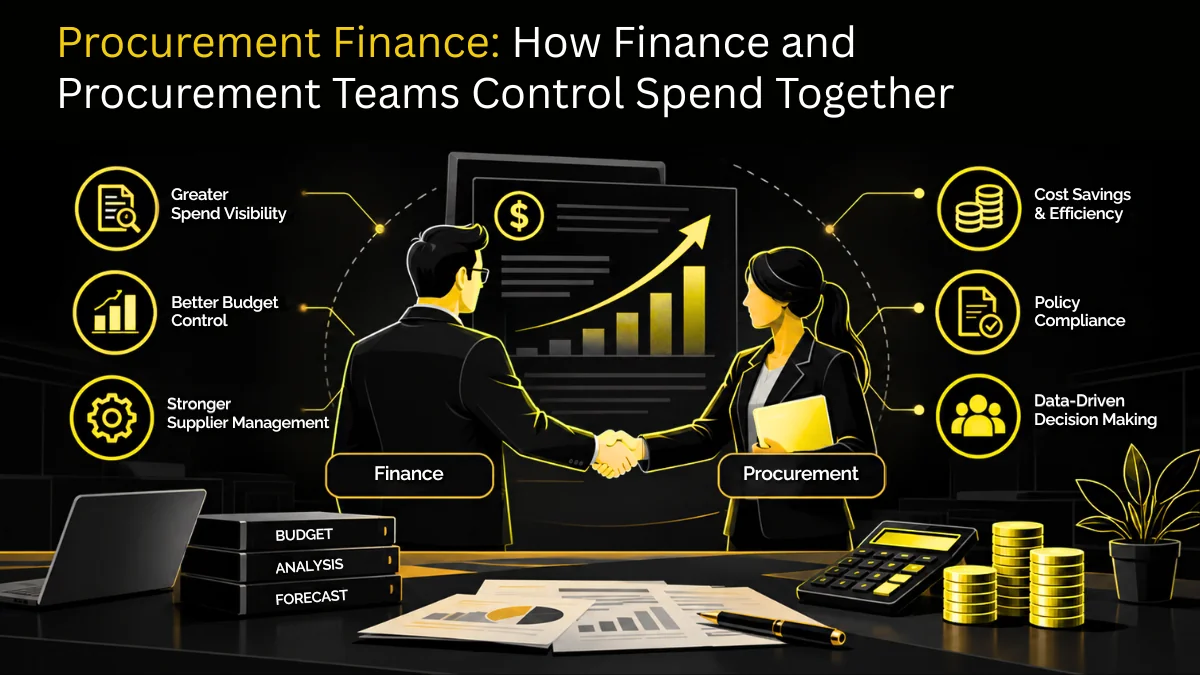
The goal is not to give Finance control over Procurement. It is to make sure both teams are working with the same financial picture before a purchase becomes an expense.
The real procurement finance problem: Finance often sees the money too late
Consider a company with a $2 million annual software budget. By September, Finance has received $1.1 million in invoices and, on paper, $900,000 appears to remain.
The problem is that Procurement has already approved another $500,000 in contracts that have not been invoiced yet. The business does not really have $900,000 left to commit. It has $400,000.
That $500,000 difference is committed spend.
This distinction is becoming harder for Finance to ignore. Zone & Co’s September 2026 research, based on 257 finance leaders, found that fewer than 20% of teams see a commitment before a purchase is requested, while more than half gain visibility only at purchase approval or later. Even among finance leaders who said they were confident in their committed-spend visibility, 89% had experienced a late-visibility outcome in the previous year.
The issue, then, is not simply whether Finance can see committed spend. It is whether that information reaches Finance early enough to affect a decision.
That is where procurement finance becomes important.
Procurement finance: bridging the gap
A request can be triggered to answer questions about available budget, approval authority, commitment size, payment terms, and any longer-term costs the contract creates. Those questions arise well before an invoice reaches Accounts Payable.
The purchasing process can involve several teams, but Finance does not need to own every stage. What matters is having visibility into the stages that create a financial commitment.
If Finance only sees the invoice, it can determine what the company owes. If it can see the request, approval, contract, and purchase order earlier, it has more opportunity to assess what the company is about to commit to.
That is the practical role of procurement finance.
Related numbers to keep in mind
A useful way to connect Procurement and Finance is to stop treating “spend” as a single number.
| Number | What it tells you |
|---|---|
| Budget | What the organization planned to spend |
| Committed spend | What it has already agreed to spend |
| Actual spend | What has been invoiced or paid |
| Forecast | What it expects to spend in the future |
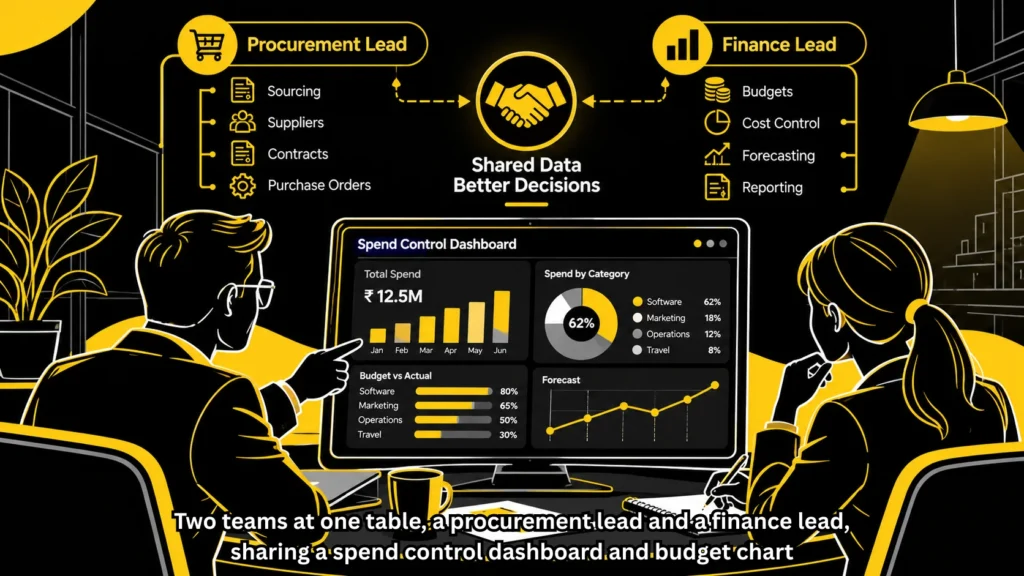
The difficulty is that these figures often come from different places. Finance may own the budget, Procurement may hold the purchase orders, Accounts Payable may manage invoices, and FP&A may maintain the forecast.
Each team can have accurate information and still arrive at a different view of the company’s financial position.
Better procurement finance is therefore not mainly about producing another report. It is about connecting the events and data that make that report meaningful.
Where procurement decisions become finance decisions
Procurement does not need to become an accounting function. It does, however, need to recognize where a purchasing decision can change the company’s financial position.
A lower price can create a larger commitment
A vendor offers a 15% discount if the company signs a two-year agreement. From a sourcing perspective, that may look like a clear win.
Finance still needs to know whether the company needs that volume for two years, whether the contract includes a minimum commitment, when payments are due, and whether the expected usage is realistic.
A lower unit price does not automatically mean lower financial exposure.
Payment terms can be a working-capital decision
Consider two vendors offering the same product at the same price. One requires payment within 30 days, while the other offers 60 days.
The purchase price has not changed, but the timing of the cash outflow has. That makes payment terms relevant to both Procurement and Finance.
Procurement may negotiate the terms, while Finance needs to understand what they mean for cash flow and working capital.
Contract terms can create costs after the purchase
The headline price is only one part of a contract. Auto-renewal clauses, minimum volumes, implementation fees, price escalators, termination charges, and usage-based pricing can all affect the eventual cost.
This is particularly relevant to SaaS and cloud spending, where usage can change considerably after the first purchasing decision.
The financial question is therefore not just, “What is the price?” It is also, “What financial obligation are we creating?”
Procurement finance real-world use case
The difference becomes easier to understand when you look at a typical purchase.
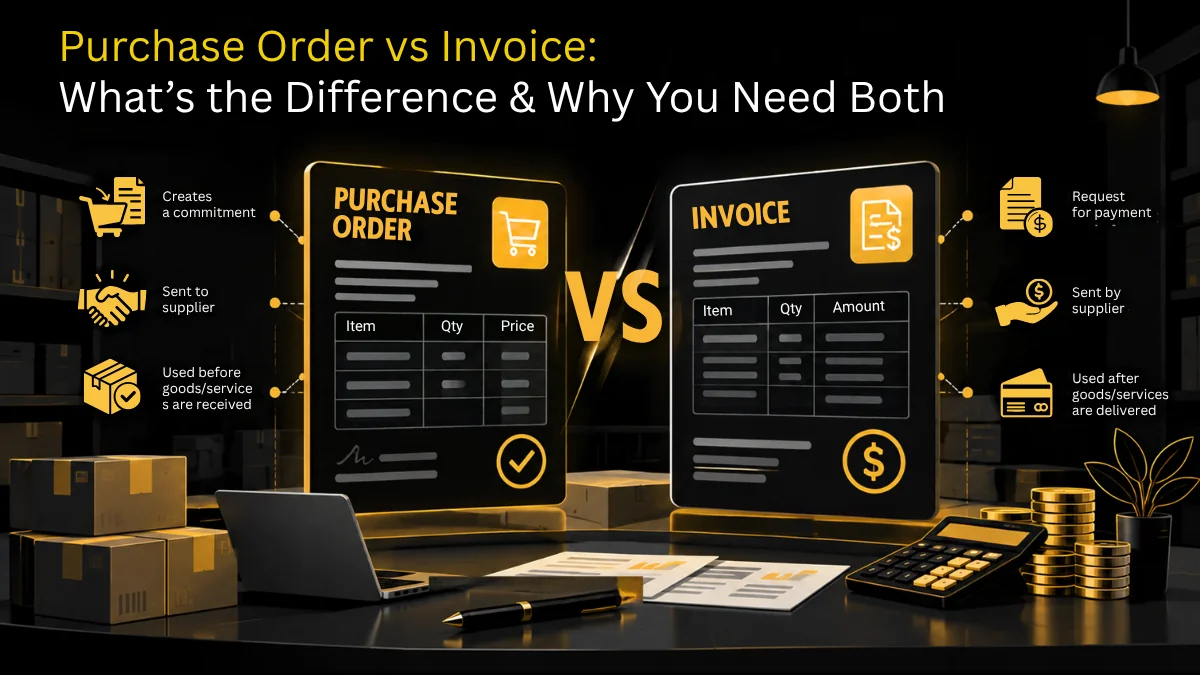
Take a $75,000 purchase for new cybersecurity software. In a disconnected process, the request, approval, vendor negotiation, contract, purchase order, invoice, and payment may be handled by different people and systems. Finance may not see the commitment until weeks after the commercial decision has been made. If the invoice then fails to match the PO, another round of manual follow-up begins.
Multiply that across hundreds of purchases and it becomes difficult to maintain a reliable picture of what the business has committed to.
A connected process changes that. The request can be checked against the available budget and routed for the required approval. Once Procurement negotiates the commercial terms, the approved purchase becomes a visible commitment. When the invoice arrives, it can be matched against the relevant purchasing records before payment.
The benefit is not simply fewer emails or faster processing. The business has a better defined financial trail for the purchase, from the first request through to the eventual payment.
That is the practical value of procurement finance.
Who’s in charge of procurement finance?
This is where organizations may create unwarranted confusion.
Procurement owns the commercial decision. Finance owns financial control. Accounts Payable handles invoice processing and payment, while the business owns the underlying demand.
No single team owns the entire chain.
That does not mean an organization needs a separate “procurement finance” department. It means the handoffs between these teams need to be clear.
| Decision | Primary owner | Finance involvement |
|---|---|---|
| Is the purchase needed? | Business | Budget context |
| Which vendor should we use? | Procurement | Financial and risk input |
| Is the purchase affordable? | Finance/Business | Budget validation |
| What terms should we negotiate? | Procurement | Cash and financial impact |
| Is the commitment recorded? | Procurement/Finance | Shared visibility |
| Should the invoice be paid? | AP/Finance | PO and receipt evidence |
| Did the purchase deliver the expected value? | Procurement/Business | Financial validation |
This is also why Procurement should not be treated as a function that simply “cuts costs for Finance.”
The same issue came up in a February 2026 Reddit discussion, where a procurement professional questioned how teams could be expected to reduce software spend without visibility into the purchases themselves.
It is anecdotal rather than formal industry research, but it illustrates a practical problem: a team cannot efficiently manage spending it cannot see or influence.
How to build a procurement finance model
A procurement finance model starts by connecting purchasing activity with the financial information needed to make decisions. It does not have to begin with new software. The first step is deciding what Finance and Procurement need to see, and when.
1. Track commitments before invoices arrive
Start with the financial events that create an obligation: purchase requests, approvals, contracts and purchase orders. Finance should be able to see these commitments alongside actual spend instead of waiting for invoices to appear.
2. Connect procurement and finance data
Bring budgets, vendors, contracts, purchase orders, invoices and payments into a connected view. This makes it easier to compare what was planned, what has been committed and what has actually been spent.
3. Set clear financial controls
Define approval thresholds, budget checks, purchasing policies and the points where Finance needs to review a decision. The controls should sit within the purchasing process rather than depend on manual checks after the fact.
4. Agree on how savings are measured
Procurement and Finance should use the same definitions for negotiated savings, cost avoidance, realized savings and budget reductions. This prevents a negotiated discount from being treated as a financial saving before the business has actually reduced its spend.
5. Build forecasting into the process
A procurement finance model should help Finance see future obligations, not just historical spend. Open purchase orders, contracts, recurring purchases and approved requests can all affect the forecast before they appear as expenses.
6. Automate the routine work
Once the process and data are in place, automation can handle tasks such as invoice matching, spend classification, approval routing, contract checks and reporting. AI can add another layer of analysis, but it works best when the underlying procurement and finance data is already connected.
AI is changing procurement finance
AI is already being used to automate a bulk of the routine work around procurement, from extracting invoice data and classifying spend to checking contracts, spotting duplicates, and flagging unusual transactions.
GEP’s 2026 Procurement Executive Insight Report found that 17% of organizations surveyed had moderate-to-large-scale agentic AI deployment, while another 44% were piloting it. The report also found that data quality remains a major barrier to wider adoption.
That is particularly relevant to procurement finance. If vendor, contract, PO, invoice, and payment data sit in different systems, there is only so much AI can do with it.
The technology is useful, but the data it works with still matters.
Procurement finance KPIs that empower savings goals
A procurement dashboard can contain dozens of metrics. Finance usually needs fewer, more meaningful measures.
| KPI | What it tells you |
|---|---|
| Committed spend | How much future spending has already been agreed |
| Budget variance | Whether spending is moving away from plan |
| Realized savings | Whether negotiated savings translated into actual financial impact |
| Spend under management | How much purchasing is covered by Procurement |
| Contract leakage | Where purchases are failing to follow negotiated terms |
| PO compliance | Whether purchases are following the controlled process |
| Invoice exception rate | How often invoices require manual intervention |
| Procurement cycle time | How efficiently requests move through the process |
| Supplier concentration | How dependent spending is on individual vendors |
The most useful KPI is not necessarily the one showing the largest percentage improvement. It is the measure that helps Procurement and Finance make a better decision about money, risk, or future commitments.
How Zapro AI fits into procurement finance
The role of procurement technology is not to create another layer between Procurement and Finance. It should make the existing financial trail easier to follow.
Zapro AI connects purchase requests, approval workflows, vendor management, contracts, purchase orders, invoice processing, spend analytics, and financial integrations within a procurement workflow. Its platform also offers real-time spend monitoring, automated spend categorization, vendor insights, and three-way invoice matching.
For procurement finance, the important part is the connection.
A request can be approved with the monetary context. A purchase order can become a visible commitment. An invoice can be matched against the relevant purchasing records. Spend data can then feed the analysis used by Procurement and Finance.
Ultimately, procurement finance is about giving the business a clearer view of the financial impact of purchasing decisions before those decisions turn into economic surprises.
Experience a smarter approach to procurement finance
FAQs
What does procurement finance mean?
Procurement finance means managing the financial impact of purchasing decisions from the point of request through payment. It includes budget control, approval, committed spend, vendor terms, savings measurement, invoice matching, cash flow, and financial reporting.
What is the difference between procurement finance and procurement financing?
Procurement finance is about controlling and managing procurement-related spending. Procurement financing is about obtaining funding for purchases. Supply chain finance is a related financing model involving buyers, vendors, and financial institutions.
How does procurement affect Finance?
Procurement affects Finance through the size and timing of purchases, vendor payment terms, contracts, committed spend, realized savings, working capital, and financial risk.
Why is committed spend important?
Committed spend shows what the organization has already agreed to spend even if the vendor has not sent an invoice. Without this information, Finance can overestimate the amount of budget that remains available.
How can Procurement and Finance work together better?
They need shared visibility into budgets, commitments, contracts, purchasing activity, and actual spend. They also need agreed definitions for savings and clear ownership of each stage from purchase request to payment.
What does procurement finance software do?
Procurement finance software connects purchasing workflows with financial controls. Depending on the platform, it can support budget checks, approvals, purchase orders, vendor management, contracts, invoice matching, spend analytics, and financial-system integrations.
Don’t miss our weekly updates
We’ll email you 1-3 times per week—and never share your information.
Simplify Procurement Finance with Zapro
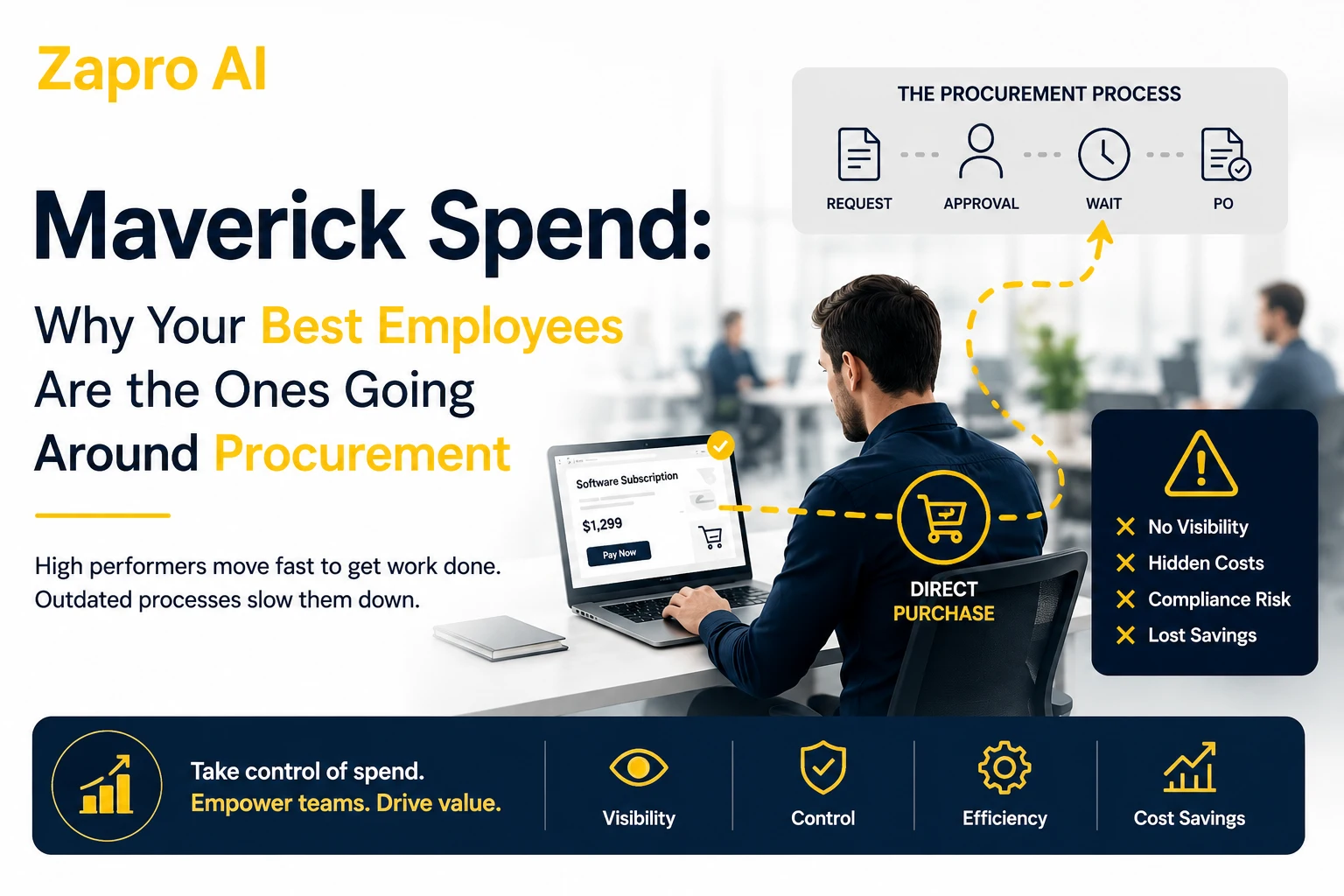
Track every dollar, prevent maverick spend, and improve budget accuracy using Zapro’s cloud-based procurement solution.

About the Author

Md. Kafil


About the Reviewer

Zapro is dedicated to helping businesses of all sizes make informed decisions. We adhere to strict editorial guidelines to ensure that our content meets and maintains our high standards.
Our editorial standards help keep every article accurate, useful, and trustworthy.