

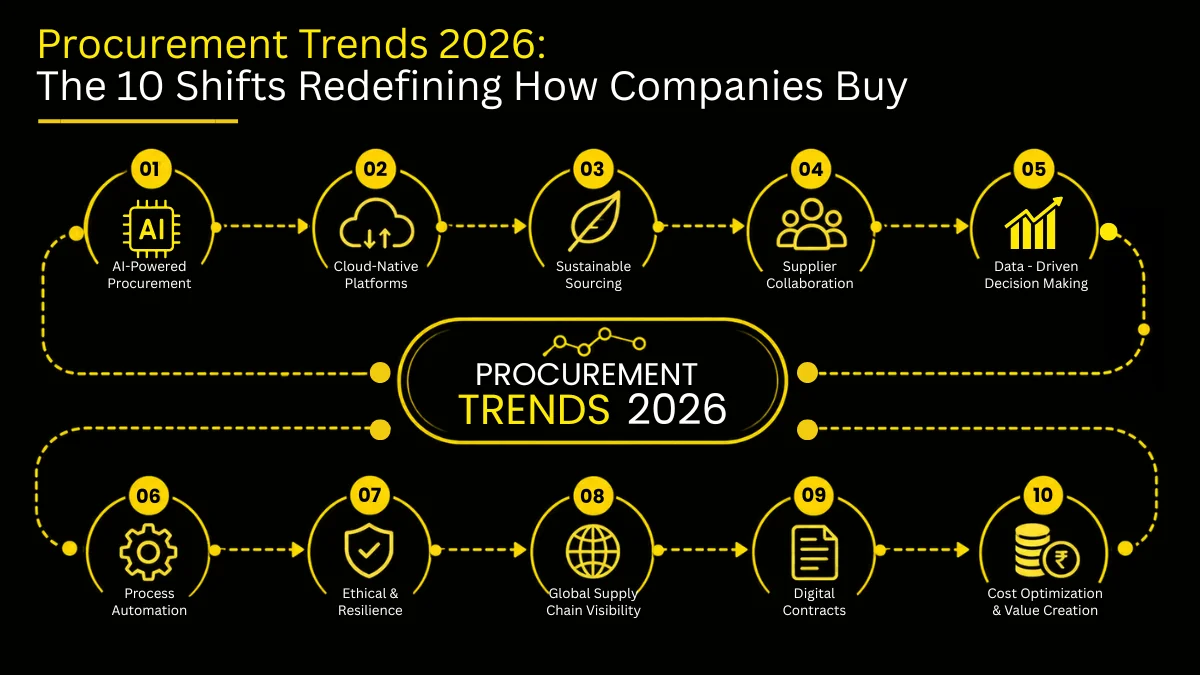
The biggest procurement trends in 2026 are agentic AI that handles tasks like RFQ creation and spend classification, touchless procure-to-pay, AI-native procurement teams, continuous supplier risk monitoring, Scope 3 and ESG data in sourcing, resilience over lowest cost, and KPIs that measure more than savings.
As AI becomes central to every industry, businesses are adopting AI and automation across almost every facet. Procurement is no exception; in 2026, procurement teams are focused on improving productivity, managing costs, managing supplier risk, and improving supply chain visibility. In this article, we will explore procurement trends for the year and how they will help procurement teams.
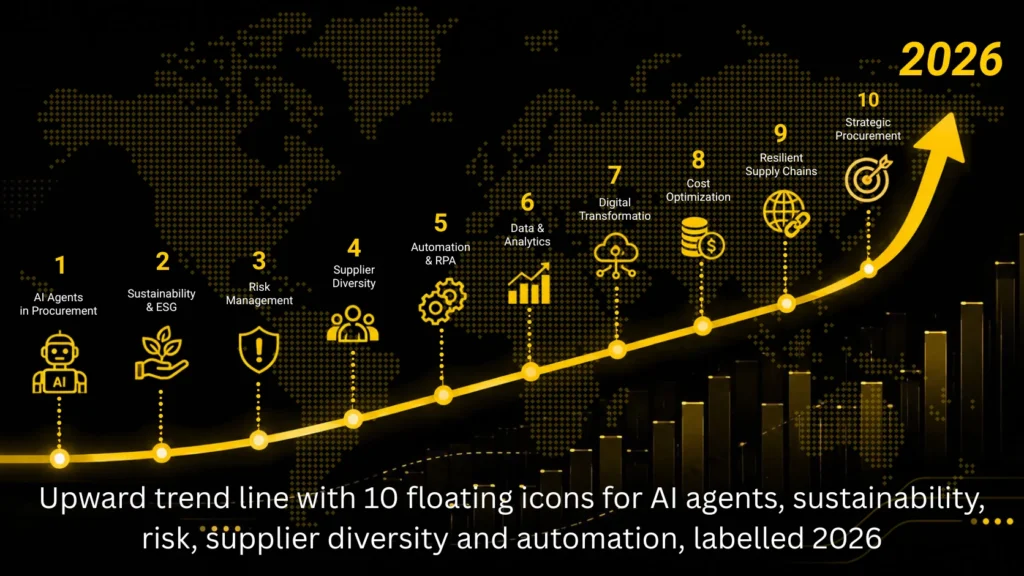
Key Takeaways:
- AI is a key procurement feature because it automates tasks and boosts productivity.
- Supplier intelligence continuously monitors everything, giving teams real-time information about a purchase order.
- Predicting risks early prevents costly disruptions and helps procurement teams address them.
- Sustainability is a core factor of sourcing decisions, with ESG data, supplier emissions, and Scope 3 being integrated into the procurement process.
- Procurement and finance departments are connecting with each other for better business outcomes.
- Procurement decisions are going to be more data-driven to improve the end results.
7 Procurement Trends To Look For In 2026
Procurement is stepping into a new chapter with AI helping automate workflows so procurement teams can take on bigger responsibility. Businesses are investing in procurement tools to digitize the whole process, redefining what the future of procurement looks like.
Agentic AI Will Transform Procurement
One of the noticeable increasing trends in procurement is witnessing how AI is transforming it beyond automation. AI agents are becoming well-versed in handling tasks like RFQ creation, spend classification, and so much more, reducing human effort considerably.
Touchless Procure-to-Pay Is The New Normal
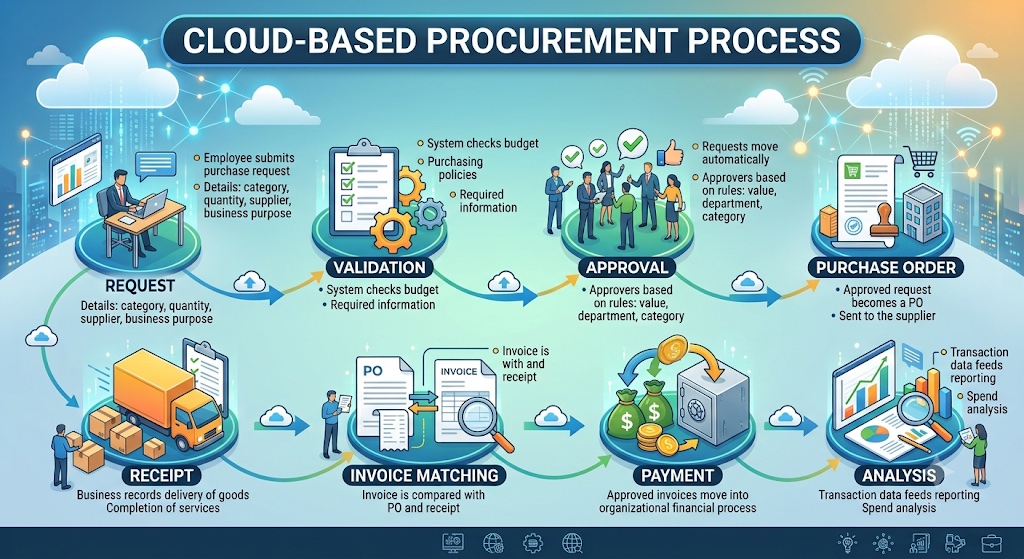
Procurement automation is moving toward a more connected procure-to-pay process, as touchless procure-to-pay is one of the fastest-emerging trends in procurement. Employees no longer have to do things manually as businesses are starting to automate their workflows. Touchless procure-to-pay combines every step of a system with technological advancement.
The goal is to make monotonous, repetitive tasks faster and reduce the frequency of manual handoffs.
It is especially beneficial for low-value, high-volume transactions when regular purchases can move through set rules without much interruption, and the teams can focus on more significant activities.
AI-Native Procurement Teams Will Become More Common
You cannot create an AI-driven procurement system by simply integrating AI into an existing process. Current trends in strategic procurement management show that businesses are not using AI just as another feature. An AI-integrated procurement team connects every step in a single chain. This potentially increases the efficiency of an organization, as studies have shown that global businesses are likely to deploy generative AI in the upcoming years.
But technology is not enough, as procurement teams also need to access steady and clear data alongside AI.
Supplier Risk Monitoring Will Grow
Monitoring supplier risk management will no longer happen at intervals; with the help of technology, it will be easy to monitor and manage supplier information/risks constantly.
This will not only improve performance but also prevent massive disruptions from happening at an advanced stage.
Resilience is one of the most needed characteristics in procurement, as surveys have found that some of the most effective risk mitigations were identified by respondents.
Continuous supplier intelligence also encourages better decisions, as it constantly updates itself on what is changing across the chain.
Sustainability and Scope 3 Data Will Move Further Into Procurement
Sustainability is becoming a larger part of supplier and sourcing decisions. Procurement teams are responsible for choosing suppliers, negotiating contracts, and managing third parties that are directly impacting a business.
To make such decisions, it is necessary to have access to accurate data and details, and as part of the procurement trends 2026 scenario, sustainability will be a huge factor in evaluating suppliers.
Scope 3 emissions reporting is among other sustainability requirements that procurement teams need data to support.
The downside is constantly collecting accurate information consistently, and that is why procurement platforms can help by bringing sustainability data into sourcing and supplier management workflows instead of treating it as a separate process.
Resilience Over Low Cost
For several years, procurement teams were heavily focused on saving money and consolidating suppliers, but there have been many challenges that changed how businesses approached sourcing.
Instead of going for the lowest-cost option, it is shifting to more resilient options
One of the key emerging trends in procurement is the shift from lowest-cost sourcing to more resilient supply chains, and it could mean understanding where any factor is creating an unacceptable risk.
This is changing how procurement value is measured. The cheapest supplier may not deliver the lowest overall cost if a disruption causes production delays, expedited shipping, lost sales, or expensive supplier switching.
Procurement KPIs Are Not About Savings
One of the main procurement goals for 2026 is still cost savings, but it is not the only goal. Future teams will track data to reflect on the growing role of procurement along with the business.
McKinsey notes that procurement leaders are increasingly focused on resilience, sustainability, innovation, and speed alongside cost control.
These are some trends in procurement that point to a bigger picture to compare performance instead of just asking how much procurement saved.
Conclusion
As procurement teams move towards a more AI-powered and data-driven approach, success will be measured by way more factors than just saving money.
Efficiency, compliance, supplier performance, resilience, risk management, and overall financial impact will become increasingly important procurement KPIs.
Keeping up with these procurement trends can help businesses improve their processes, reduce risk, and create more value from every purchase.
As AI and procurement automation continue to evolve, choosing the right procurement software will be key to turning these trends into measurable results.
Keeping up with these procurement trends can help businesses improve their procurement processes and make better purchasing decisions.
For teams looking to put these changes into practice, Zapro AI brings AI-powered procurement automation, supplier management, and accounts payable workflows together in one platform, helping businesses streamline purchasing while gaining greater visibility and control.
Frequently Asked Questions
1. What are procurement trends?
Procurement trends are emerging practices shaping how businesses purchase goods and services.
2. What are the top procurement trends to watch in 2026?
Key procurement trends for 2026 include AI automation, data-driven analytics, sustainable sourcing, supplier collaboration, and supply chain resilience.
3. How is AI changing procurement in 2026?
AI automates routine tasks, analyzes procurement data, improves sourcing decisions, and helps teams manage suppliers more efficiently.
4. Why is sustainability important in procurement?
Sustainable procurement helps businesses meet ESG goals, respond to regulations, and choose suppliers with responsible environmental and ethical practices.
Don’t miss our weekly updates
We’ll email you 1-3 times per week—and never share your information.
Ready to Stay Ahead of Procurement Trends?
Built for tomorrow's procurement. Lead trends, don't follow
About the Author

Md. Kafil


About the Reviewer

Zapro is dedicated to helping businesses of all sizes make informed decisions. We adhere to strict editorial guidelines to ensure that our content meets and maintains our high standards.
Our editorial standards help keep every article accurate, useful, and trustworthy.
Related Blogs

Wait! Don't Leave Without This Free Guide
How AI Is Replacing Manual Procurement And What Your Team Should Do Next