

A business might negotiate a good price with a supplier and still end up spending more than planned. One team orders from a new vendor, another buys the same item elsewhere, and finance has no easy way to see what the company has spent.
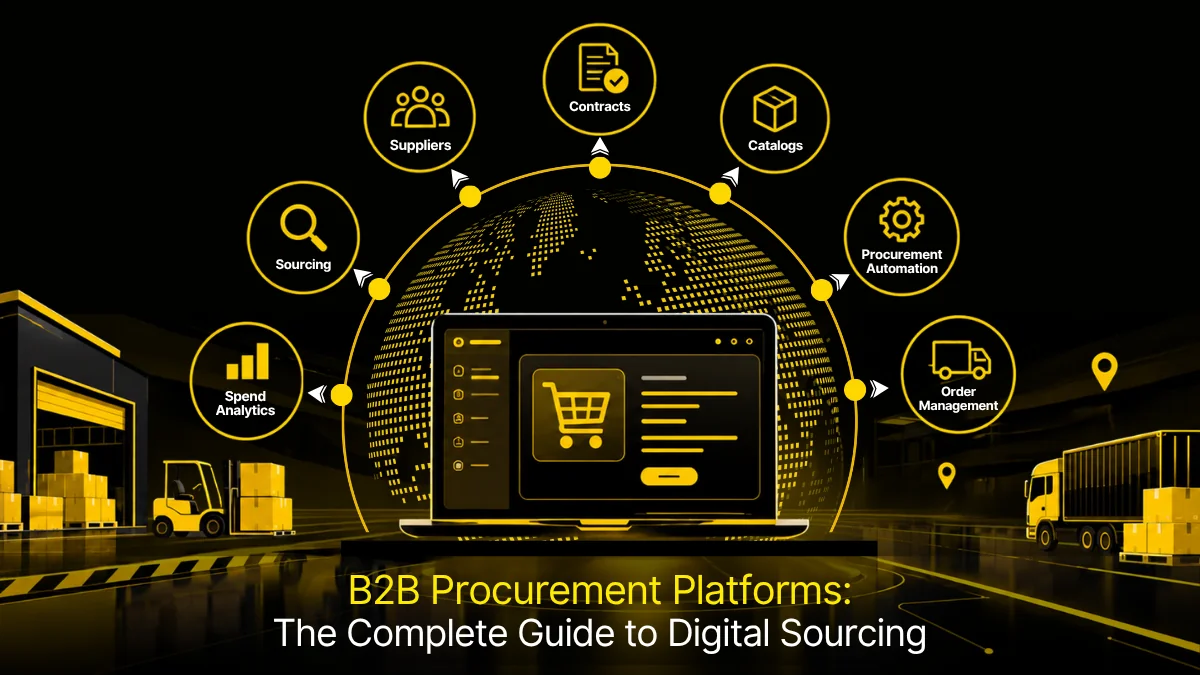
B2B procurement platforms can help fix these problems, but they don’t all do the same job. Some help businesses find suppliers and buy products in bulk. Others manage purchase requests, approvals, orders, and invoices.
Choosing between them starts with a simple question: Do you need help finding what to buy, or do you need better control over how your company buys it?
Key Takeaways
- B2B procurement platforms help businesses manage purchasing, supplier relationships, approvals, and spending.
- Different platforms serve different needs. Marketplaces help businesses find products and vendors, while procurement software manages internal purchasing and controls.
- Compare platforms based on your purchasing process, supplier requirements, existing software, and total cost.
- Look beyond subscription fees. Implementation, training, data migration, and integrations can add to the overall cost.
- Test real purchasing scenarios before choosing a platform, including approval delays, incorrect invoices, and incomplete deliveries.
- The right platform should give your team better spending visibility, reduce manual work, and fit into existing workflows.
What is a B2B procurement platform?
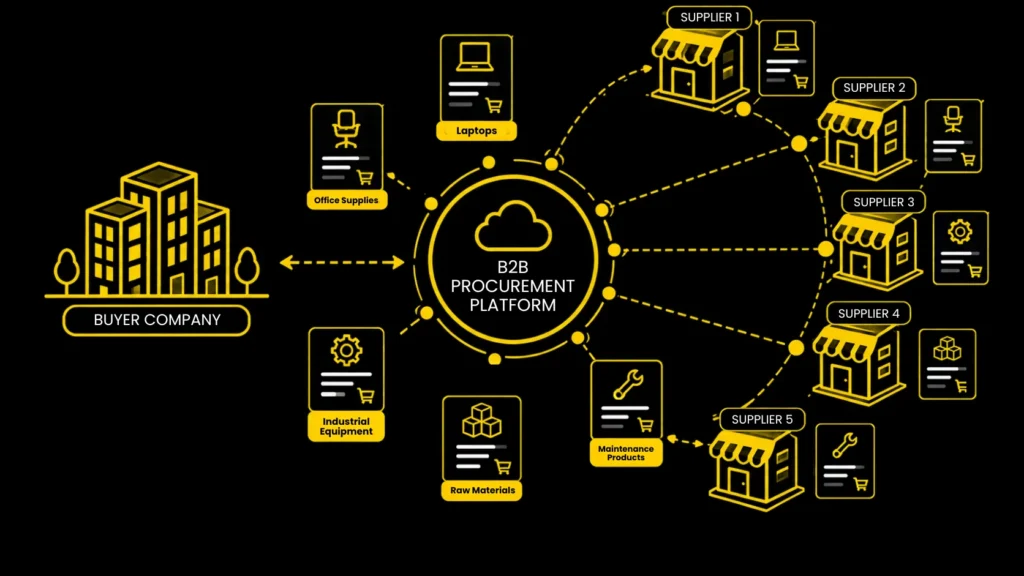
A B2B procurement platform is a digital tool that helps businesses buy goods or services from other businesses. Depending on the platform, it can help with supplier searches, price comparisons, purchase orders, approvals, contracts, and invoices.
For example, a furniture company looking for a timber supplier may use a marketplace to compare manufacturers. A company with several offices may need software that lets employees request purchases, sends those requests for approval, and keeps a record of every order.
Both involve procurement, but the needs are different. Some businesses need one type of platform. Others may need a combination.
Types of B2B procurement platforms
Before comparing products, it helps to know what each type does.
| Platform type | What it does | Best for |
|---|---|---|
| B2B marketplace | Helps you find suppliers and compare products | Businesses sourcing goods or buying in bulk |
| Sourcing platform | Helps you request bids and compare supplier offers | Businesses handling tenders or large purchases |
| Procurement software | Manages requests, approvals, purchase orders, and supplier records | Businesses that need control over internal purchases |
| Procure-to-pay platform | Connects purchasing with invoice processing and payment workflows | Businesses that want procurement and finance to work together |
Some platforms offer features from more than one category. The key is to check what you actually get rather than assume every product covers the entire process.

Buying procurement software is buying change. Your change-management capabilities matter more than features.
[Founder, Procurement Leaders Forum; featured in Supply Chain Quarterly]
B2B procurement platforms to consider
Not every business needs the same kind of procurement platform. A company importing products from overseas has different priorities from one managing purchases across several offices. Here are six options to look at, depending on how your business buys.
1. Alibaba.com: Find manufacturers and wholesale suppliers
Alibaba.com is a useful starting point for businesses looking for manufacturers, wholesalers, and products in bulk. It gives buyers access to suppliers across many industries, including those based overseas.
If you’re developing a new product, you can compare manufacturers, ask about minimum order quantities, and request quotes. You’ll still need to do your checks before committing. Request samples, confirm specifications, and work out the total cost of shipping and import duties.
A good fit for: Businesses that need to find manufacturers or source products in bulk.
2. Amazon Business: Buy everyday supplies
Amazon Business caters to companies buying items such as office supplies, equipment, and workplace essentials. Depending on the account and location, buyers may have access to business pricing, quantity discounts, and purchasing controls.
It’s especially handy for routine orders. If several employees regularly buy supplies, a business account can help bring those purchases into a more organized process.
A good fit for: Companies that regularly buy standard products for their teams.
3. SAP Business Network: Work with suppliers at scale
When a business works with a large supplier base, keeping orders and other documents moving between both sides can become difficult. SAP Business Network helps buyers and suppliers exchange business documents and coordinate transactions.
Its value depends on the services a company uses and how well they fit its existing systems. Before choosing it, find out which transactions it supports and what your suppliers will need to do to participate.
A good fit for: Businesses that need to coordinate transactions with many suppliers, particularly within an enterprise environment.
4. Coupa: Manage spending across teams
Coupa offers procurement and spend management software for businesses that want a clearer view of purchasing across their organization.
This can matter when different departments follow different processes or finance struggles to get a complete picture of company spending. When evaluating Coupa, focus on the workflows you need, its fit with your current systems, and the work involved in implementation.
A good fit for: Organizations looking to manage procurement and spending across multiple departments or business units.
5. Order.co: Bring purchasing and payment tasks together
Order.co focuses on business purchasing and procure-to-pay workflows. It’s worth exploring if your team spends too much time managing orders, coordinating suppliers, and handling the financial work that follows a purchase.
Look at how the platform handles your regular buying process, from placing an order to dealing with the invoice. Those details will help you judge whether it can reduce the manual work your team does today.
A good fit for: Businesses looking to organize recurring purchases and the work connected to them.
6. Zapro AI: Manage the purchasing process internally
Zapro AI covers several parts of procurement, including purchase requests, approvals, purchase orders, vendor management, contracts, sourcing, spend analytics, accounts payable automation, and inventory management. It also supports ERP integrations.
For example, a business may have employees raising requests, managers approving them, procurement placing orders, and finance processing invoices. Zapro AI brings these activities into connected workflows, making it easier to track a purchase and see how it moves through the process.
If your main concern is managing purchases across departments rather than finding new suppliers, this is the distinction worth exploring.
A good fit for: Businesses that want to manage purchasing from request and approval through to orders, vendor records, and related financial workflows.
Learn more about Zapro AI’s procurement platform.
How can B2B procurement platforms reduce costs?
Buying software doesn’t guarantee lower spending. The savings depend on the problems it helps your business solve.
See where the money goes
Imagine that the marketing, HR, and operations teams all buy laptops separately. Each team uses a different vendor, and nobody has a complete record of what the company spends on laptops each year.
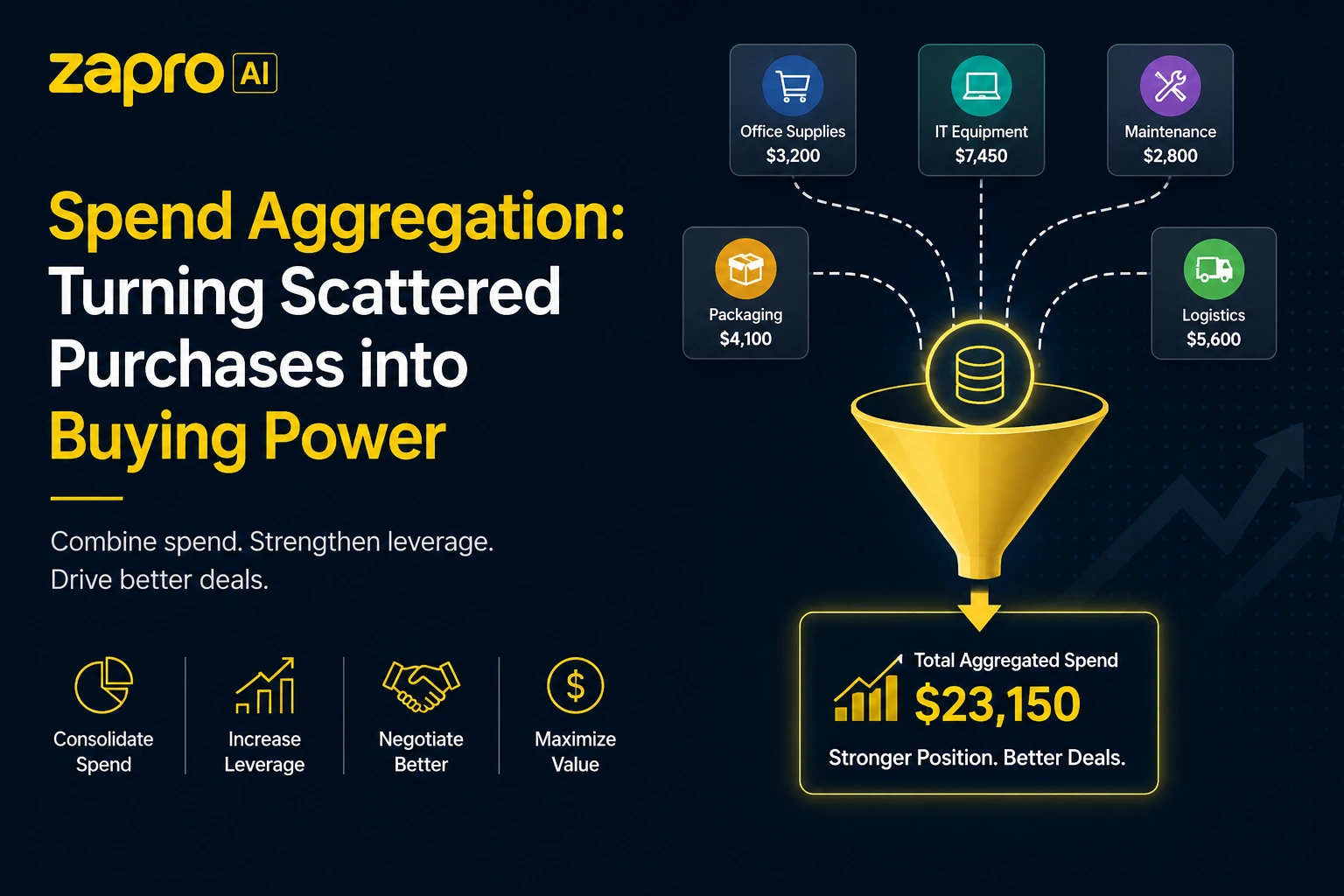
When purchasing data is kept together, procurement can compare prices and supplier performance. It may also find that combining orders leads to better terms.
The company doesn’t have to use one supplier for everything. It simply has the information needed to make a better choice.
Compare the full cost, not just the price
One supplier quotes $90 per unit. Another quotes $96, including delivery. The first supplier charges extra for shipping and requires a larger minimum order.
The cheaper quote may end up costing more.
When comparing suppliers, account for delivery, duties, payment terms, order quantities, and quality. These details matter even more when you’re buying from overseas.
Make negotiated prices easier to use
A procurement team might negotiate a discount with a supplier, but employees may keep buying elsewhere because they don’t know about the agreement.
An approved supplier list or product catalog makes it easier to find the agreed option. Purchasing rules can also help prevent orders from going to unapproved vendors.
This only works if employees can follow the process without unnecessary effort. If the approved route is difficult to use, they may find another way to place the order.
Catch invoice errors
Suppose a company orders 100 units but receives an invoice for 120. If the purchase order, delivery record, and invoice are stored separately, someone has to spot the difference and investigate it.
Software that checks these records against each other can flag the mismatch before payment. It may also help identify duplicate invoices or prices that differ from the agreed terms.
For more detail, see Zapro AI’s guide to the procure-to-pay process.
What should you look for when choosing a platform?
Before you commit to a platform, think about what your team needs it to handle. If employees keep ordering from unapproved vendors, purchase controls should be a priority. If finance spends hours checking invoices, look closely at how the software handles order and invoice records.
Your suppliers are part of this decision, too. Find out whether they can continue working as they do now or will need to learn a new system. A change that seems simple internally can create delays if vendors struggle with it.
Then look at your existing software. If purchase orders and invoices still have to be entered manually into your accounting system, you may not save as much time as you expect. Ask the vendor to show you exactly how the integration works.
Get the full cost before comparing quotes. Along with the subscription, ask about setup, training, data migration, and any extra integration fees.
Finally, try something that goes wrong. Reject a purchase request, change an order, or submit an invoice with an incorrect amount during the demo. See how easy it is to find the problem and put it right. That will tell you more about the software than watching a routine order go through without a hitch.
How do you measure whether the platform is working?
Before introducing new software, record how your current process performs. That gives you something to compare against later.
Choose measures that match the problems you’re trying to fix:
- Purchase order processing time: Are requests approved and turned into orders faster?
- Purchasing compliance: Are employees following the required approval process?
- Invoice errors: Are fewer invoices being sent back for corrections?
- Contract compliance: Are teams buying at the agreed prices?
- Administrative workload: Is your team spending less time chasing approvals and checking records?
- Actual savings: Has the company reduced its spending compared with a fair baseline?
Don’t rely on one number to tell the whole story. Faster approvals, for example, don’t prove that invoice errors have fallen. Measure the results that matter to your business.
Also account for implementation and running costs when calculating savings. A discount negotiated with a supplier isn’t a saving if employees rarely use it.
Choose a platform that fits your business
The right platform depends on what you need to fix. If your main challenge is finding manufacturers, a B2B marketplace may be enough. If purchases are scattered across departments and finance struggles to track them, procurement software may be a better fit.
Write down the problems you want to solve, compare platforms against those needs, and test how they handle your actual purchasing process before committing.
If you want to connect purchase requests, approvals, vendor management, purchase orders, and financial workflows, explore Zapro AI’s procurement platform to see whether it fits your business.
Start Your Smarter Procurement Journey Today

Frequently asked questions
What does B2B procurement mean?
B2B procurement is the process of buying goods or services from another business. It can include finding suppliers, comparing prices, negotiating terms, getting approvals, placing orders, receiving goods, and processing invoices.
What are the best B2B supplier platforms for reducing procurement spend?
It depends on where your business needs help. Alibaba.com can help you find suppliers, while sourcing platforms help you compare offers. Procurement software can help you control purchases, track spending, and follow negotiated terms. Some businesses need more than one type of tool.
Can a B2B procurement platform work with existing suppliers?
Many platforms can work with existing suppliers, but the process varies. Check how vendors will receive orders, confirm deliveries, and submit invoices. Ask about onboarding requirements and any extra costs before making a decision.
Are B2B procurement platforms suitable for small businesses?
Yes. A small business may only need purchase approvals, supplier records, and basic reporting. A larger company may need more complex workflows, sourcing tools, inventory management, and ERP integrations. Choose a platform that fits your current needs and expected growth.
What is the difference between sourcing and procurement?
Sourcing is about finding and choosing suppliers. Procurement covers the wider process, including sourcing, approvals, ordering, supplier management, receiving goods, and handling invoices.
References
- Procurement Software | Zapro AI
- Procure-to-Pay Process | Zapro AI
- Best Procurement Software | Zapro AI
- Procurement Analytics | Zapro AI
- Integrating Procurement with ERP and Financial Systems | Zapro AI
- Pricing | Zapro AI
- Alibaba.com | Alibaba
- Amazon Business | Amazon
- SAP Business Network | SAP
- Coupa | Coupa
- Order.co | Order.co
Don’t miss our weekly updates
We’ll email you 1-3 times per week—and never share your information.
Need Help Choosing the Right Procurement Tool? Let’s Talk.
Our experts are ready to guide you to the best-fit solution.

About the Author

Md. Kafil


About the Reviewer

Zapro is dedicated to helping businesses of all sizes make informed decisions. We adhere to strict editorial guidelines to ensure that our content meets and maintains our high standards.
Our editorial standards help keep every article accurate, useful, and trustworthy.
Related Blogs

Wait! Don't Leave Without This Free Guide
How AI Is Replacing Manual Procurement And What Your Team Should Do Next