

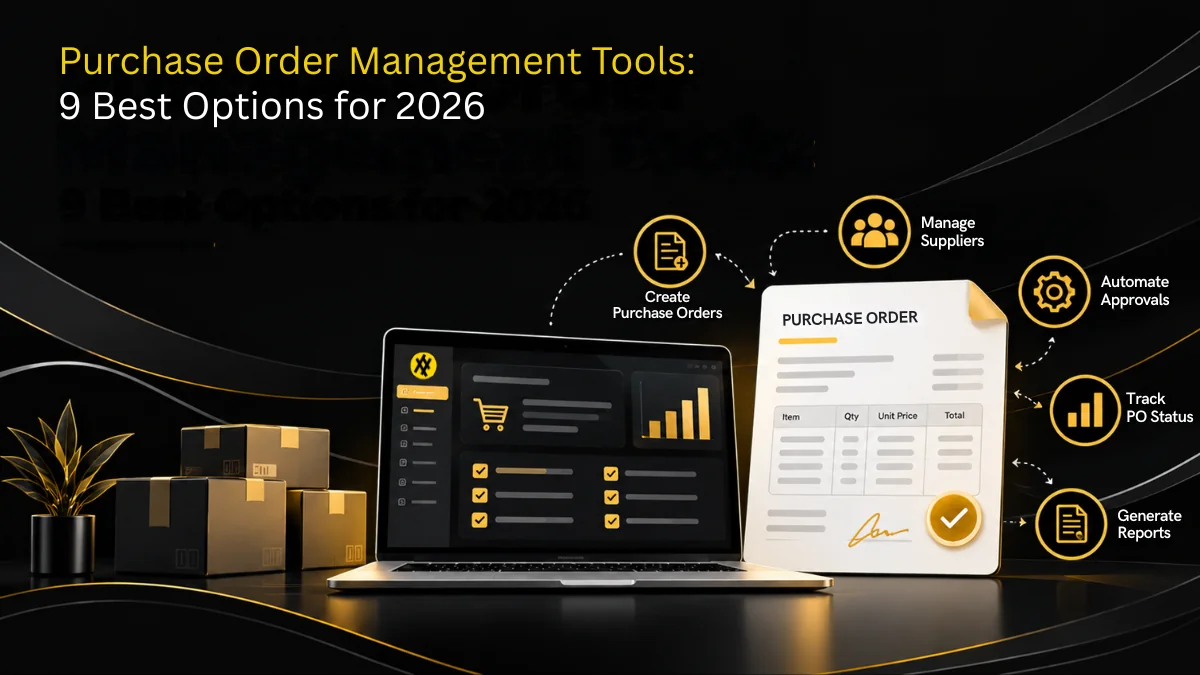
Purchase order management tools handle the full PO lifecycle: creation, approval routing, dispatch to suppliers, delivery tracking, amendments, and invoice matching. The top picks for 2026 are Zapro, SAP Ariba, Coupa, NetSuite Procurement, Procurify, Precoro, ProcureDesk, Order.co, and Spendwise.
Purchase order management tools are platforms that handle the full PO lifecycle — creating purchase orders, routing them for approval, dispatching them to suppliers, tracking delivery and goods receipt, managing amendments and partial shipments, and matching invoices against the PO and GRN. They give finance a real-time view of committed spend and eliminate the spreadsheet PO log. On high invoice volumes, this matching step is often handed off to dedicated AP Automation Software that applies the same PO-and-GRN rules automatically at scale.
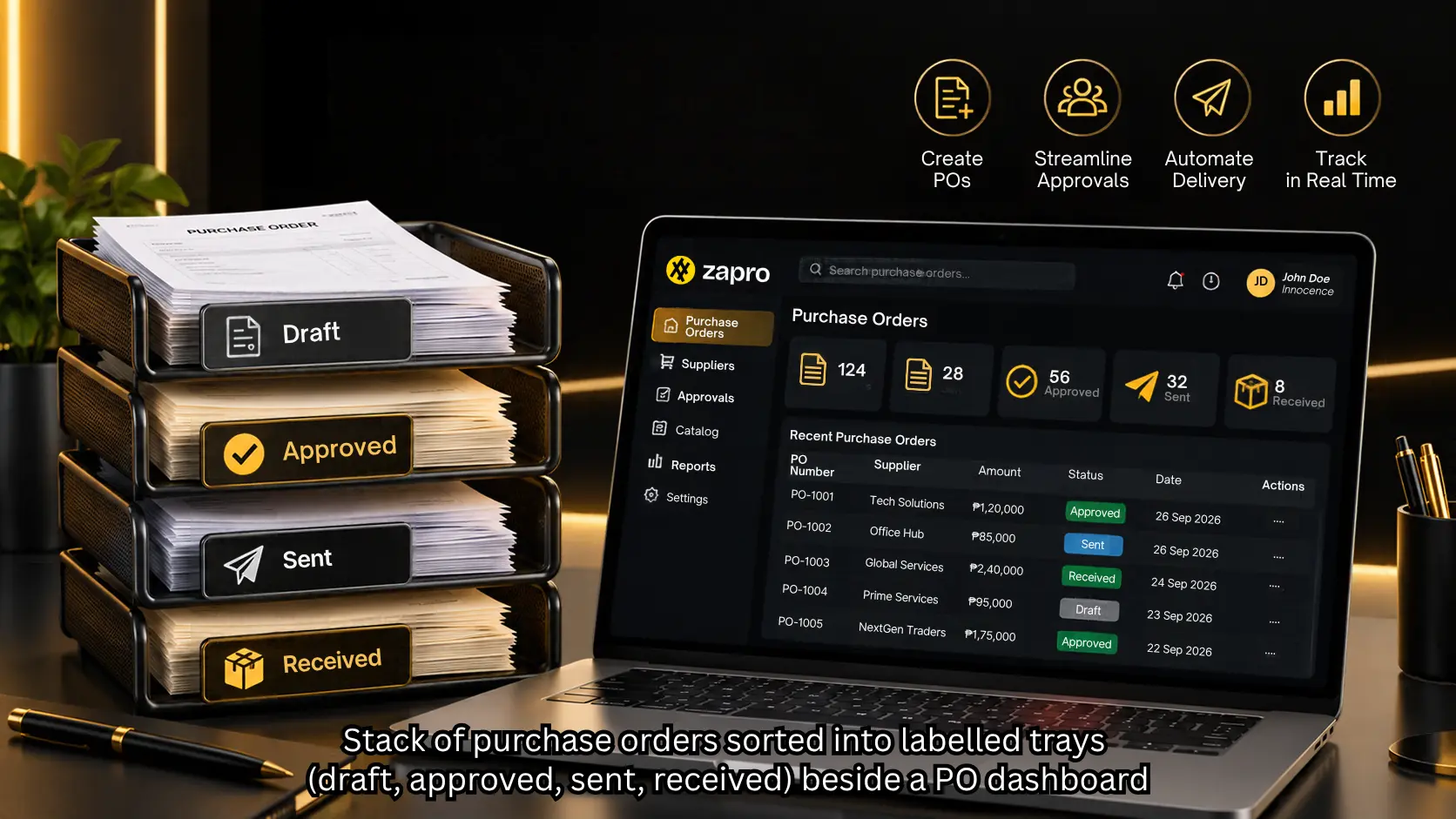
Key Takeaways:
– PO management tools cover the full lifecycle: creation, approval, dispatch, delivery tracking, amendments, receipt, and matching.
– Automated PO processes run 3-5x faster than manual workflows, and cut maverick spend by up to 40% (industry benchmark).
– Open-PO reporting (committed but not yet invoiced) is the feature finance values most and is almost always missing from spreadsheets.
– Approval routing needs to flex by value, category, and department; a single-approver rule breaks down as a company grows.
– Pick a tool based on ERP integration and team size, not raw feature count. An enterprise tool nobody adopts delivers zero ROI.
If your business is still using spreadsheets and email chains to handle purchases, you are losing money and time. In 2026, efficient spending is the key to growth, and that starts with great Purchase Order (PO) management. Purchase order management software and tools are essential because they automate the buying process, give you clear financial visibility, and help you control costs before they spin out of control. These systems are the modern answer to messy procurement.
Key Procurement Benchmark Data
- Manual Bottlenecks: Companies relying on manual PO processes take 3–5x longer per order compared to automated workflows.
- Leakage Control: Deploying PO automation reduces maverick spend by up to 40%.
- Market Expansion: The global procurement software market is growing at an 11%+ CAGR through 2030, reflecting rapid cross-industry adoption.
Stop Drowning in Manual Purchase Orders

How We Select and Review Software for Purchase Order Management Software (2026)?
Choosing the right purchase order management software is a big decision. Our selection for the top tools in 2026 is based on several key criteria that define the best purchase order system available today:
• Automation: The extent to which the manual work is removed (approvals, matching, data entry).
• Usability: How simple the system is for employees and vendors to get familiar with and use.
• Integrations: The efficiency with which it links with main accounting and Enterprise Resource Planning (ERP) systems.
• Compliance: Capability to implement internal spending regulations and meet requirements of the law.
• AI Capabilities: Implementation of artificial intelligence for anticipatory budgeting or identifying fraudulent activities.
Learn more about purchase order vs invoice.

By 2026, virtual assistants and chatbots will gain traction, as 20% of organizations use them to handle internal and vendor interactions.
– Gartner, Predicts 2024: CPOs Adjust to Technology’s Impact on Procurement
Purchase Order Management Software Comparison Table
| Tool | Best Use Case | Key Features | G2 Rating | Starting Price | Go Live Time | Compliance Support |
| Zapro | Mid-size to growing enterprises needing AI-driven control | Full P2P suite, AI spend insights, workflow automation | 4.7 / 5 | $699/mo | Weeks | Strong internal policy enforcement |
| SAP Ariba | Large global enterprises and complex supply chains | Global supplier network, advanced sourcing, supplier risk management | 4.1 / 5 | Custom Quote | Months | Excellent global regulatory support |
| Coupa | Enterprises seeking unified Total Spend Management | P2P, expense, and AP in one platform, high adoption and analytics | 4.2 / 5 | Custom Quote | Months | Robust compliance and audit trails |
| Procurify | Small to mid-sized businesses needing quick and simple spend control | Spend limits, mobile-friendly purchasing, easy approvals | 4.6 / 5 | ~$1,000/mo | Weeks | Budget and approval enforcement |
| NetSuite Procurement | Companies already using NetSuite ERP | Seamless integration with NetSuite financial suite, purchasing automation | 4.0 / 5 | Custom Quote | Varies | Full GAAP or IFRS aligned compliance |
| Spendflo | Companies managing subscription and SaaS spending | SaaS contract negotiation, renewal tracking, cost optimization | 4.7 / 5 | Custom Quote | Weeks | SaaS usage and licensing compliance |
| ProcureDesk | SMBs needing fast setup and straightforward PO workflows | Simple PO creation, approval routing, spend visibility | 4.4 / 5 | $415/mo | Weeks | Basic policy and approval compliance |
| Precoro | Growing companies requiring easy-to-use budget and vendor controls | Budgeting, catalog management, vendor tracking | 4.7 / 5 | $499/mo | Weeks | Policy validation and approval compliance |
| Order.co | Businesses focusing on automated purchasing and supplier-linked ordering | Automated reorders, supplier catalogs, spend consolidation | 4.4 / 5 | Custom Quote | Weeks to months | Contract adherence and supplier compliance |
| Spendwise | Small businesses wanting affordable purchasing and inventory tools | PO creation, basic inventory control, vendor management | 4.7 / 5 | Custom Quote | Weeks | Basic compliance and tracking |
| Tradogram | Budget-conscious teams requiring granular custom library controls | Requisition tracking, multi-level approvals, supplier portal | 4.2 / 5 | Free Tier | Weeks | Standard procurement governance |
Which Tool is Right for You?
- If you’re an SMB on QuickBooks: Procurify or ProcureDesk provides the tightest integration and fastest sync for your ledger.
- If you need a free/freemium option: Tradogram offers core PO and requisition features at zero starting cost.
- If you’re an enterprise with complex supply chains: SAP Ariba or Coupa delivers the global supplier network and cross-border architecture required for high-volume operations.
- If you need full procure-to-pay with AI: Zapro automates the entire lifecycle while delivering predictive budget alerts before spend occurs.
- If you manage SaaS spend: Spendflo consolidates software contracts, licenses, and renewals into a dedicated tracking interface.
PO Software vs. Procurement Software Explainer
A purchase order management system is software that creates, approves, sends and tracks purchase orders from requisition through delivery and invoice matching. It applies approval rules and budgets, gives suppliers a digital PO, records receipts, performs two- or three-way matching, and keeps an audit trail of every order and change.
Understanding the exact scope of your operational needs requires distinguishing between purchase order (PO) software and full procurement software:
- Purchase Order Software is a point solution dedicated specifically to the transactional phase of buying. It handles the generation, routing, approval, and tracking of specific order documents sent to suppliers, ending typically at the three-way match or invoice verification.
- Procurement Software represents an end-to-end suite that encompasses the entire lifecycle of corporate spend. This includes upstream operations like strategic sourcing, RFQ management, vendor onboarding, and contract lifecycle management (CLM), alongside downstream operations like inventory control, accounts payable automation, and comprehensive spend analytics.
Learn about Purchase Order Inventory Management System
Not sure whether you need a purchase order or a sales order for a given transaction? See our comparison, Sales Order vs Purchase Order.
For recurring purchases from the same supplier, see What Is a Blanket PO? to understand how it differs from a standard PO.
Purchase Order Features Compared Across Accounting Software in 2026
Zapro isn’t accounting software — it’s procurement software that connects to your existing accounting platform (QuickBooks, Xero, NetSuite, SAP) so purchase orders, approvals and 3-way matching happen before a bill reaches your books. If you’re comparing accounting platforms for built-in PO features, QuickBooks Online Advanced, Xero and NetSuite each offer native PO creation with limited approval-workflow depth; none match a dedicated procurement platform’s requisition routing, budget checks or vendor management. Teams outgrowing accounting-software PO limits typically pair their accounting system with a procurement layer like Zapro, and our guide to the best procurement software compares the options.
Top 10 Purchase Order Management Tools
1. Zapro
Zapro maximizes operational speed and intelligence. Its core engine utilizes AI capabilities to predict spending trends and flag potential budget variances before a purchase order is finalized, giving finance teams proactive control over cash flow. Plan tiers and what each one includes are listed on the Zapro pricing page.
- G2 Rating: 4.7 / 5
- Starting Price: $699/mo
- Real Pro: Seamlessly automates accounts payable alongside procurement workflows, minimizing manual data transcription.
- Real Con: Advanced reporting dashboard configuration options require further feature depth.
- Best For: Mid-sized to growing enterprises requiring automated policy enforcement and deep spend analytics.
Stop Drowning in Manual Purchase Orders
2. SAP Ariba
SAP Ariba acts as an enterprise-grade ecosystem built for complex, global supply chains. It manages massive vendor databases and handles intricate regulatory compliance across multiple continents simultaneously.
- G2 Rating: 4.1 / 5
- Starting Price: Custom Quote
- Real Pro: Grants immediate access to a vast, pre-vetted global supplier network for seamless enterprise sourcing.
- Real Con: Implementation requires significant financial overhead and extended deployment timelines.
- Best For: Large global enterprises requiring highly structured source-to-pay architectures.
3. Coupa
Coupa unifies business spending across procurement, expenses, and invoicing. The platform leverages community-driven data intelligence to help finance leaders optimize supplier choices and realize greater bottom-line savings.
- G2 Rating: 4.2 / 5
- Starting Price: Custom Quote
- Real Pro: Exceptionally high internal user adoption rates due to a clean, user-friendly interface.
- Real Con: The platform’s extensive configuration options make initial setup and administrative training complex.
- Best For: Enterprises aiming to centralize all business spend within a single, unified system.
4. NetSuite Procurement
For organizations running their core financials on Oracle NetSuite, this module creates a unified operational data loop. It eliminates the need for third-party financial connectors by embedding purchasing workflows directly into the native ledger.
- G2 Rating: 4.0 / 5
- Starting Price: Custom Quote
- Real Pro: Provides real-time data synchronization with your core balance sheet and general ledger without lag.
- Real Con: Functionality is highly rigid and tailored almost exclusively to the NetSuite ecosystem.
- Best For: Mid-market to enterprise companies already operating on NetSuite ERP.
5. ProcureDesk
ProcureDesk focuses on removing friction from the purchasing cycle for fast-growing companies. It coordinates employee purchase requests, converts approved requisitions to POs, and streamlines invoice matching to reduce processing cycles.
- G2 Rating: 4.4 / 5
- Starting Price: $415/mo
- Real Pro: Fast deployment allows finance teams to establish controlled spending workflows in a matter of days.
- Real Con: Lacks advanced multi-currency handling and global tax compliance structures required for complex international operations.
- Best For: SMBs looking to transition away from manual email-and-spreadsheet workflows rapidly.
6. Procurify
Procurify centers on providing clear spending visibility and flexible approval workflows. The platform gives managers real-time budget status updates via desktop or mobile before they approve a purchase, preventing accidental overspending.
- G2 Rating: 4.6 / 5
- Starting Price: ~$1,000/mo
- Real Pro: Intuitive mobile interface allows remote teams to log expenses and approve requisitions instantly.
- Real Con: The approval routing matrix can become rigid, occasionally slowing down urgent, non-standard purchasing exceptions.
- Best For: Mid-market organizations requiring fast user onboarding and reliable spend tracking.
7. Precoro
Precoro delivers clean, cloud-based purchasing automation that focuses on speed and cost control. It eliminates manual errors by centralizing catalogs, budgets, and vendor records into a highly scannable interface.
- G2 Rating: 4.7 / 5
- Starting Price: $499/mo
- Real Pro: Rapid, straightforward system deployment with minimal configuration friction.
- Real Con: Reporting customization options are baseline, requiring external tool exports for granular analytics.
- Best For: Growing businesses looking for essential purchasing automation without excessive platform complexity.
8. Order.co
Order.co acts as a central hub for indirect spend management across multiple vendors. It consolidates diverse supplier catalogs into a single digital storefront, standardizing how your business buys recurring supplies.
- G2 Rating: 4.4 / 5
- Starting Price: Custom Quote
- Real Pro: Automatically consolidates dozens of monthly vendor bills into one unified invoice, reducing accounts payable workloads.
- Real Con: Line-item tracking becomes difficult if users buy highly customized or non-catalog items outside the main network.
- Best For: Distributed businesses looking to centralize diverse vendor ordering and simplify invoice processing.
9. Spendwise
Spendwise provides an approachable, cost-effective interface for managing purchase orders and inventory tracking. It helps businesses set absolute spending boundaries, ensuring teams remain accountable to defined financial targets.
- G2 Rating: 4.7 / 5
- Starting Price: Custom Quote
- Real Pro: Straightforward, unbloated user interface that requires zero formal procurement training.
- Real Con: Lacks automated AI integrations and sophisticated accounting sync rules found in higher-tier platforms.
- Best For: Small operations needing clear spending boundaries and basic inventory controls.
10. Spendflo
Spendflo is a specialized platform designed specifically to control recurring software and subscription expenses. It maps your complete SaaS inventory, tracking license usage and automated renewal dates to eliminate redundant software overhead.
Best For: Technology-heavy companies looking to optimize and negotiate their SaaS spend profile.
G2 Rating: 4.7 / 5
Starting Price: Custom Quote
Real Pro: Delivers deep visibility into software licensing data to prevent unapproved auto-renewals.
Real Con: Features are optimized exclusively for software, making it a poor fit for physical inventory or complex material supply chains.
Learn more about procurement tools.
Key Takeaways
- Automation is Now Mandatory: Leading purchase order management software eliminates manual steps, accelerating the purchasing cycle from initial requisition to final vendor settlement.
- AI Drives Proactive Savings: AI capabilities shift software from a passive record-keeper to an active assistant that identifies spending risks and anomalous lines before money leaves the account.
- Integration Protects Data Integrity: A chosen PO management platform must sync directly with your ERP, accounting engine, and inventory databases to prevent damaging data silos.
- Compliance Defends Margins: Tighter financial governance demands procurement systems that programmatically enforce corporate approval rules and preserve immaculate audit histories.
- Scale Dictates Architecture: Enterprise operations lean naturally toward expansive suites like SAP Ariba or Coupa, whereas fast-growing mid-market companies maximize efficiency via agile solutions like Zapro, Procurify, or Precoro.
- Map Outcomes Over Features: Ensure the chosen platform specifically solves your primary operational friction point, whether that is SaaS tracking, inventory validation, or rapid workflow creation.
Conclusion
As businesses continue to push for smarter spending and tighter financial control in 2026, modern purchase order management tools have become essential rather than optional. Companies can no longer rely on outdated spreadsheets or manual email approvals when powerful automation, deeper visibility, and AI-driven insights are readily available.
Each of the platforms reviewed in this list offers unique strengths, whether you need enterprise-scale sophistication or simple and fast purchase order solutions. The right purchase order management software simplifies the entire buying cycle, reduces errors, supports compliance, and helps your teams make more informed decisions every day.
Whether your business is growing fast or operating across global supply chains, choosing the best purchase order system can transform procurement software efficiency, reduce operational risk, and unlock cost savings at scale. With the right technology, your purchasing process becomes smarter, faster, and far more controlled with a strong purchase order management system or software for purchase order automation.

Kickstart Your Smarter Procurement Journey
Experience how AI-powered platforms like Zapro bring clarity and automation to your entire procure-to-pay cycle.
Frequently Asked Questions (FAQs)
1. What is the difference between PO software and an ERP?
Essentially, ERP is a all-in-one system that manages a broad spectrum of company data such as HR, finance, manufacturing and operations, with purchasing being just one of the many modules that are connected to each other. On the other hand, PO software is a single-focused, specialized system designed solely to enhance the detailed purchasing workflow resulting in quicker employee adoption, independently customized approvals, and specific vendor collaboration features that are usually missing in standard ERPs unless heavily customized.
2. Does PO management software work for small businesses?
Certainly. Thanks to cloud technology, modern systems can be customized specifically for small teams. Getting automated controls in place at the start not only prevents your working with spreadsheets to be a total mess, but also limits unauthorized expenditures before they become a pattern and finally, it creates a financial structure that is ready for the future as the number of employees grows.
3. How long does implementation take?
Time for deployment depends on the complexity of the system architecture. Simple SaaS solutions can be completely integrated with regular accounting tools within a few weeks. On the other hand, big platforms with complicated global settings, ERP data migration, and custom vendor networks might take a few months before they are fully started.
4. How does PO management software prevent duplicate payments?
This software performs three-way matching automatically in order to compare the original purchase order, the goods receiving record, and the vendor invoice. If the quantities, item prices or unique identifiers are not matching the system will mark the transaction and block the payment execution until an administrator checks and resolves the discrepancy.
5. Can mobile workers use PO management tools?
Most recent systems, in fact, provide stand-alone mobile applications or a responsive web interface. Therefore, the staff at the sites or the managers working remotely are able to initiate purchasing requests submit delivery acknowledgment by taking a photo and approving urgent purchase requests in addition to desktops.
6. What is the best accounting software with built-in purchase orders?
Xero, QuickBooks Online Plus, and NetSuite all now bundle native purchase order creation, so “accounting software with purchase orders” is really a shortlist question: does the accounting tool’s built-in PO module cover approvals and 3-way matching, or do you need a dedicated PO layer like Zapro on top? For most teams past 20-30 POs a month, a connected PO tool that syncs to the accounting system (rather than relying on the accounting software’s basic PO screen) gives better approval control and audit trails.
Don’t miss our weekly updates
We’ll email you 1-3 times per week—and never share your information.
Ready to Revolutionize Your Purchase Order Management?
Zapro’s automated workflows save time, cut costs, and boost efficiency across every department.

About the Author

Md. Kafil


About the Reviewer

Zapro is dedicated to helping businesses of all sizes make informed decisions. We adhere to strict editorial guidelines to ensure that our content meets and maintains our high standards.
Our editorial standards help keep every article accurate, useful, and trustworthy.
Related Blogs
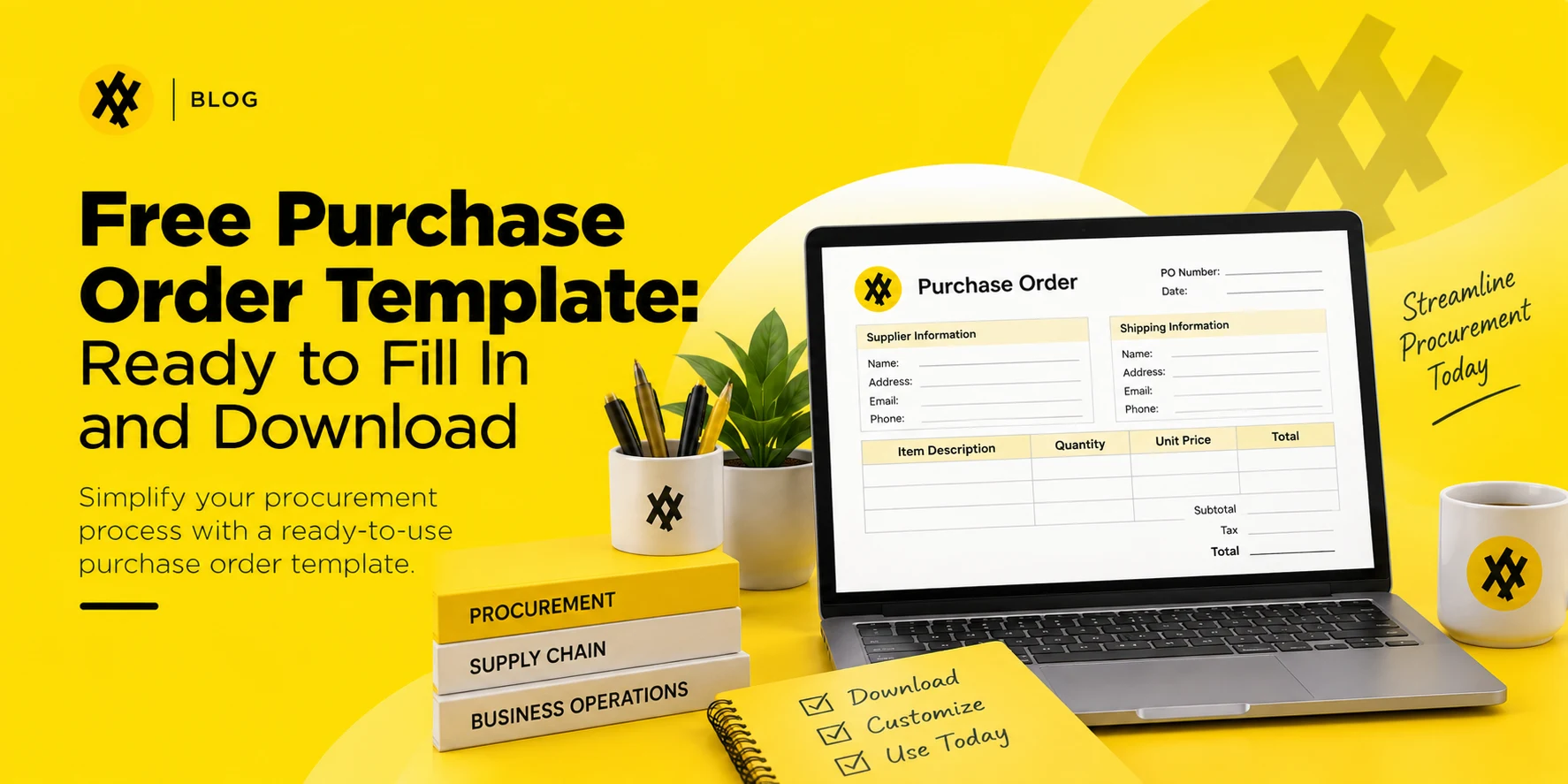
Free Purchase Order Template: Ready to Fill In and Download