


The best ServiceNow Procurement alternatives are 1. Zip 2. Coupa 3. Zapro 4. SAP Ariba 5. Zycus 6. Vertice 7. Procurify.
The best ServiceNow Procurement alternative depends on which part of the job you want to replace. For one intake front door in front of your ERP, look at Zip, or Vertice if most spend is software. Large firms replacing the full source-to-pay layer should compare Coupa, SAP Ariba and Zycus. Procurify and Zapro fit mid-sized teams.
ServiceNow procurement competitors: key takeaways
 Zip: Best for firms with many approvers that want one intake front door. Vendr buyer data shows a median of $88,856 a year.
 Coupa: Best for large firms replacing all three ServiceNow S2P products with one suite. Vendr buyer data shows a median of $94,519 a year.
 Zapro: Best for mid-market teams that want intake, POs, sourcing and contracts from $699 a month, with unlimited users. Your ERP or bank still pays suppliers.
 SAP Ariba: Best for firms on SAP ERP that want sourcing, contracts and supplier management inside the SAP stack. Ariba Snap is packaged for midsize firms.
 Zycus: Best for buying teams that want AI-led sourcing, e-auctions and contracts from draft to renewal. Its mid-market package goes live in 6 to 8 weeks.
 Vertice: Best for finance teams whose spend is mostly software, with intake, contracts and help on SaaS deals, from $30,000 for Intake-to-Procure.
 Procurify: Best for mid-sized teams that want purchasing, AP and payments to 190+ countries from one vendor. Published rollouts take 4 to 12 weeks.
ServiceNow procurement alternatives compared
ServiceNow Procurement alternatives fall into three groups. Zip and Vertice are intake tools that sit in front of your ERP. Coupa, SAP Ariba and Zycus are source-to-pay suites, and Procurify and Zapro are mid-market procure-to-pay tools. The table compares who each tool is built for, its key features, ERP integrations, starting price and G2 rating.
| Tool | Best for | Key features | ERP integrations | Starting price | Rating |
|---|---|---|---|---|---|
 ServiceNow Procurement (for reference) | Buying on a ServiceNow setup | Portal and virtual agent intake, catalog buying, POs, supplier lifecycle, AP invoice capture | SAP ECC, S/4HANA, Oracle EBS, Oracle Financials Cloud; also SAP Ariba and Coupa | Quote only | G2 4.2 (89) |
| Zip | One intake front door | AI intake, multi-team approvals, POs, AI RFx, AI contract store; Global Payments add-on | SAP S/4HANA, Oracle Fusion, Workday, NetSuite, Sage Intacct; also Coupa and SAP Ariba | Quote; Vendr buyer data: median $88,856 a year | G2 4.6 (153) |
| Coupa | Enterprise source-to-pay | Intake, sourcing, contracts, POs, 2-way and 3-way matching, payments through partners | SAP, Oracle, NetSuite, Workday, Dynamics | Quote; Vendr buyer data: median $94,519 a year | G2 4.2 (571) |
| Zapro | Mid-market intake to invoice | Intake, approvals, POs, RFI/RFP sourcing, contracts, 2-way and 3-way matching, ServiceNow and Jira tickets to requests | NetSuite, QuickBooks, Sage Intacct, SAP, Oracle, Workday, Dynamics | $699 per month, unlimited users | G2 4.7 (14) |
| SAP Ariba | Firms on SAP ERP | Sourcing, contracts, supplier lifecycle, guided buying, intake, invoicing; Snap package for midsize firms | SAP S/4HANA and SAP Cloud ERP | Quote only, through SAP or partners | G2 4.1 (818) |
| Zycus | AI-led sourcing and negotiation | eSourcing, e-auctions, ANA negotiation agent, contract lifecycle, AI 2-way and 3-way matching | NetSuite, SAP, Oracle, Epicor, Sage, Dynamics 365 | Quote; mid-market package lists setup as included | G2 3.6 (13) |
| Vertice | Software-heavy spend | Intake, approvals, contracts, SaaS price data and negotiation, POs from signed contracts | NetSuite, Xero, QuickBooks, Sage Intacct, Dynamics 365 Business Central | From $30,000 (Intake-to-Procure) | G2 4.6 (280) |
| Procurify | Mid-sized procure-to-pay | Requests, approvals, POs, receiving; AP add-on with 2-way and 3-way matching; payments to 190+ countries | NetSuite, QuickBooks, Sage Intacct, Dynamics 365 Business Central | Quote by Pro users; Vendr buyer data: median $15,000 a year | G2 4.6 (415) |
Find your ServiceNow Procurement alternative
Choose a ServiceNow Procurement alternative by the job you use it for, how much of ServiceNow you keep, your ERP and your budget. ServiceNow Source-to-Pay Operations is a buying layer on the ServiceNow platform. It sits on top of your ERP, so alternatives either replace that layer or run next to it. Pick the tab that fits you.
What you use ServiceNow for
ZipVerticeZycusCoupaSAP AribaCoupaProcurifyZaproVerticeZipHow much of ServiceNow you keep
ZaproCoupaSAP AribaCoupaSAP AribaZycusYour ERP
ZipProcurifyVerticeProcurifyVerticeSAP AribaCoupaZipProcurifyVerticeZycusBudget
ZaproVerticeProcurifyZipCoupaSAP AribaZycusWhy teams leave ServiceNow Procurement, and what fixes it
Teams look past ServiceNow Procurement for four main reasons. It needs the ServiceNow platform and specialists, its integration app centers on SAP and Oracle, and prices are quote only. These reasons come from ServiceNow's own S2P docs, read on 12 November 2026, not from review counts. Each shows the alternative that fixes it.
What ServiceNow does well: one service portal and virtual agent for employee requests. Document Intelligence reads invoices, and Supplier Lifecycle Operations covers onboarding and risk. ServiceNow Sourcing and Procurement Operations is one of three S2P products. The suite holds 4.2 on G2 from 89 reviews.
What ServiceNow Procurement doesn't cover, and who does
ServiceNow Procurement covers intake, purchasing, supplier lifecycle and AP invoice capture on top of your ERP. Its own docs describe five jobs more narrowly than the alternatives do. These are auctions, contract lifecycle, supplier payments, punch-out and ERPs beyond SAP and Oracle. The table shows which alternatives fill each gap.
| If you need | In ServiceNow Procurement | Alternatives that include it |
|---|---|---|
| E-auctions | Sourcing requests, negotiation and award | ZycusZapro |
| Contracts from draft to renewal | Contract use and compliance controls | ZipZycusCoupaZapro |
| Paying suppliers | Invoices post to the ERP for payment | ProcurifyZipCoupa |
| Amazon Business punch-out | Central catalogs for guided buying | ProcurifyZycusCoupaZapro |
| NetSuite connection | Integration app names SAP and Oracle ERPs | ZipProcurifyVerticeZapro |
The 7 best ServiceNow Procurement alternatives, reviewed
Each review below shows what the tool is built for, its key features, pros and cons, its price and the buyer it fits best. Zip and Vertice cover intake and approvals. Coupa, SAP Ariba and Zycus cover full source-to-pay with sourcing and contracts. Procurify and Zapro cover requests, POs and invoice matching for mid-sized teams.
Zip: best for one intake front door
Best for One intake front door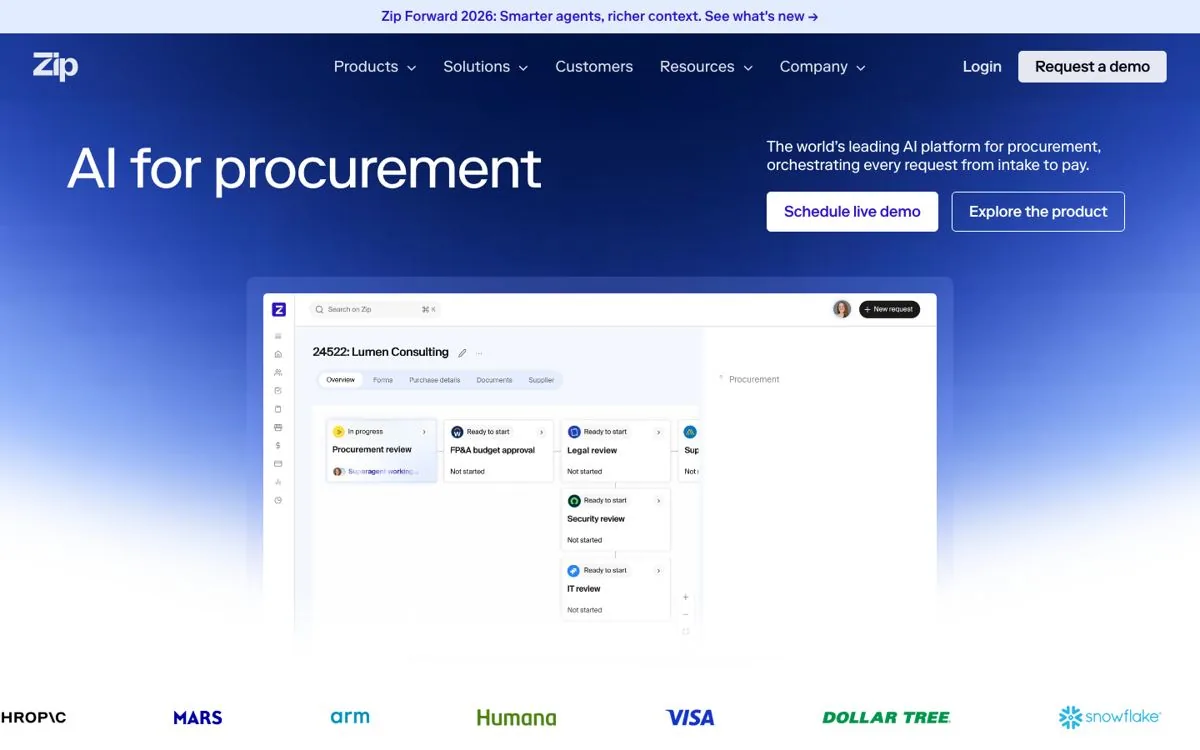
Zip fits firms with many approvers that want one intake front door instead of a platform workflow. It turns plain-language requests into completed forms. It routes them through approval flows and a legal redline agent, and adds AI RFx and a contract store. It is quote only; Vendr buyer data shows a median of $88,856 a year.
Key features 5 features
- Plain-language intake turned into completed request forms
- Dynamic approval flows, with a legal redline agent
- AI contract store with playbook-based redlines and renewal alerts
- AI RFx generation and weighted supplier scoring
- Connects to SAP S/4HANA, Oracle Fusion, Workday, NetSuite, Coupa and SAP Ariba
Pros and cons 3 pros, 2 cons
Pros
- Multi-step approvals: dynamic approval flows send each request to the right reviewers, which suits firms with many approvers per purchase
- Review base: 4.6 on G2 from 153 reviews, a solid sample for judging how it works day to day
- Suite links: it lists Coupa and SAP Ariba as well as ERPs, so it can sit in front of the systems you keep
Cons
- Quote only: there is no public price list, and Vendr buyer data shows a median of $88,856 a year across 78 purchases
- Payment add-ons: Global Payments and Vendor Cards are sold separately, so intake-to-pay costs more than intake alone
Pricing
Quote only. Vendr buyer data shows a median of $88,856 a year across 78 purchases, from $27,776 to $220,210.
Best for
Firms with many approvers across teams such as legal, IT and finance. They want one front door for buying, not a platform workflow.
Verdict
Verdict: Zip is a like-for-like replacement for ServiceNow's intake and routing. Smaller teams should weigh its Vendr median of $88,856 a year against what they need.
Coupa: best for enterprise source-to-pay
Best for Enterprise source-to-pay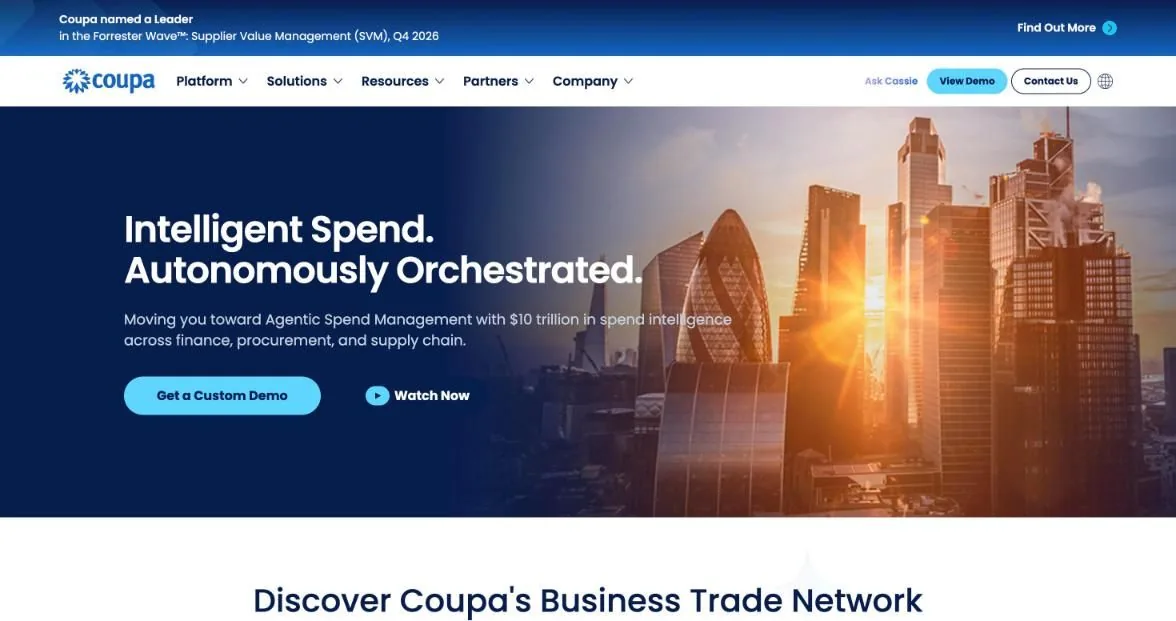
Coupa fits large firms that want to replace ServiceNow's whole S2P layer with one source-to-pay suite. It covers guided intake, sourcing, contracts, POs, 2-way and 3-way matching and payments through partners. Coupa says rollouts take a matter of months with partners. Vendr buyer data shows a median of $94,519 a year.
Key features 6 features
- Guided intake and routing
- Sourcing and advanced sourcing optimization
- Contract store enforced at the time of purchase
- Any-format invoice capture with 2-way and 3-way matching
- Payments and virtual cards through payment partners
- Open Buy and Amazon Business punch-out
Pros and cons 2 pros, 3 cons
Pros
- Broad suite: sourcing, contracts, procurement, AP and payments sit in one platform, which suits teams replacing all three ServiceNow S2P products
- ServiceNow link: ServiceNow's S2P integration app names Coupa, so the two can be connected if IT keeps the ServiceNow portal
Cons
- Long rollouts: Coupa says rollouts take a matter of months with partners, so plan for consulting fees and internal time
- Module pricing: each part of the suite is quoted separately, so the price climbs as you add sourcing, contracts or payments
- High cost: Vendr buyer data puts the median deal at $94,519 a year, before any implementation partner fees
Pricing
Quote only, sold by module. Vendr buyer data shows a median of $94,519 a year across 128 purchases, from $20,804 to $331,084.
Best for
Large firms with global entities. They want sourcing, contracts, buying, AP and payments in one suite.
Verdict
Verdict: Coupa can replace ServiceNow's whole S2P suite. Expect a multi-month rollout and an enterprise budget.
Zapro: best for mid-market intake to invoice
Best for Mid-market intake to invoice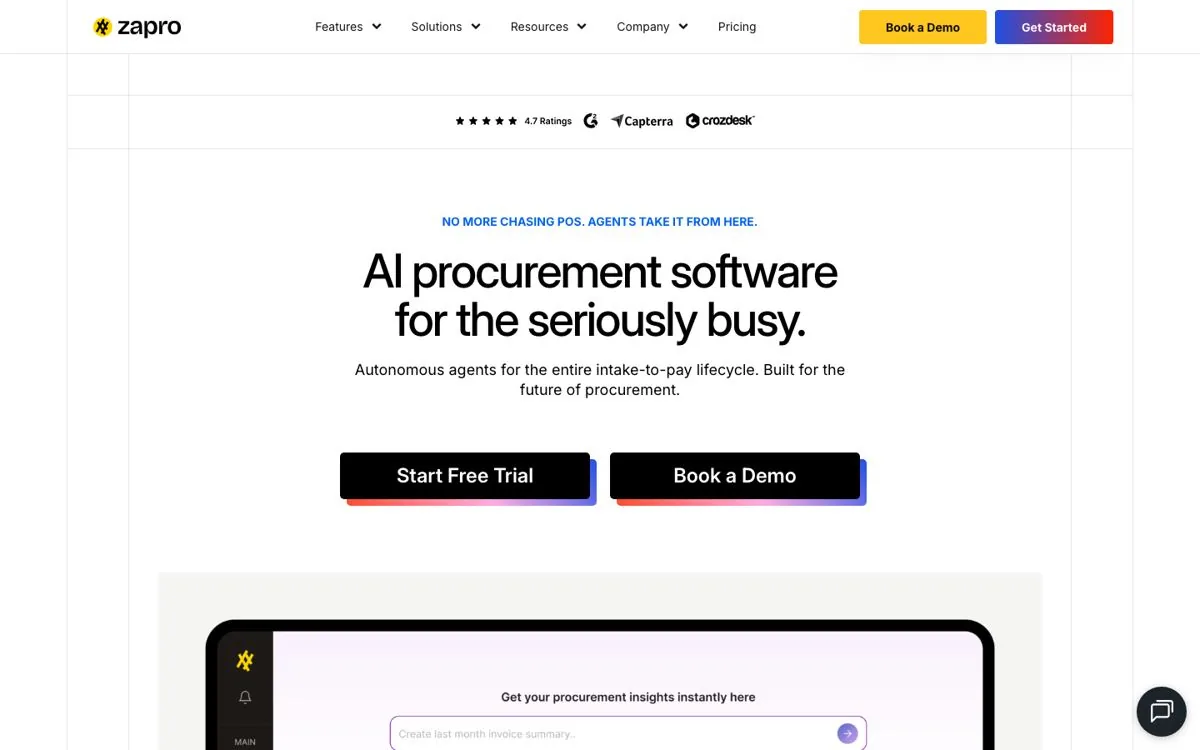
Zapro is a strong ServiceNow Procurement alternative for mid-market teams whose gap is dedicated purchasing control. This AI-native procurement software covers intake, approvals, sourcing, contracts, POs and invoice matching, with unlimited users. Plans start at $699 a month, and your ERP or bank pays suppliers.
Key features 4 features
- Approvals routed by amount, category or vendor, in series or in parallel
- 2-way and 3-way matching with an exception queue (3-way on Growth and up)
- RFI and RFP events on every plan; live and Dutch auctions on Scale
- Turn a Jira or ServiceNow ticket into a purchase request, and close the ticket when the order arrives
Pros and cons 3 pros, 2 cons
Pros
- Unlimited users: every plan includes unlimited users, so occasional requesters and approvers never add to the monthly bill
- Published prices: Spark is $699 a month and Growth $1,999, so you can budget before you talk to sales
- Supplier portal: suppliers acknowledge POs and send invoices with no network fees, so no fee is passed to your vendors
Cons
- No payments: Zapro prepares payment batches, but your ERP or bank sends the money, so keep your current payment process
- Vendor caps: Spark covers up to 50 active vendors and Growth up to 500, so teams with many suppliers need a higher tier
Pricing
Spark is $699 a month for up to 50 vendors. Growth is $1,999 a month for up to 500 vendors, and Scale has custom pricing (zapro.ai, November 2026). 3-way matching and contract authoring are in the Growth plan's AI suite.
Best for
Mid-market finance and buying teams that want dedicated purchase control. IT keeps ServiceNow for service requests.
Verdict
Verdict: Pick it if ServiceNow Procurement is more platform than your buying team needs. Stay with ServiceNow if every request already runs through it and your ERP is SAP or Oracle.
SAP Ariba: best for firms on SAP ERP
Best for Firms on SAP ERP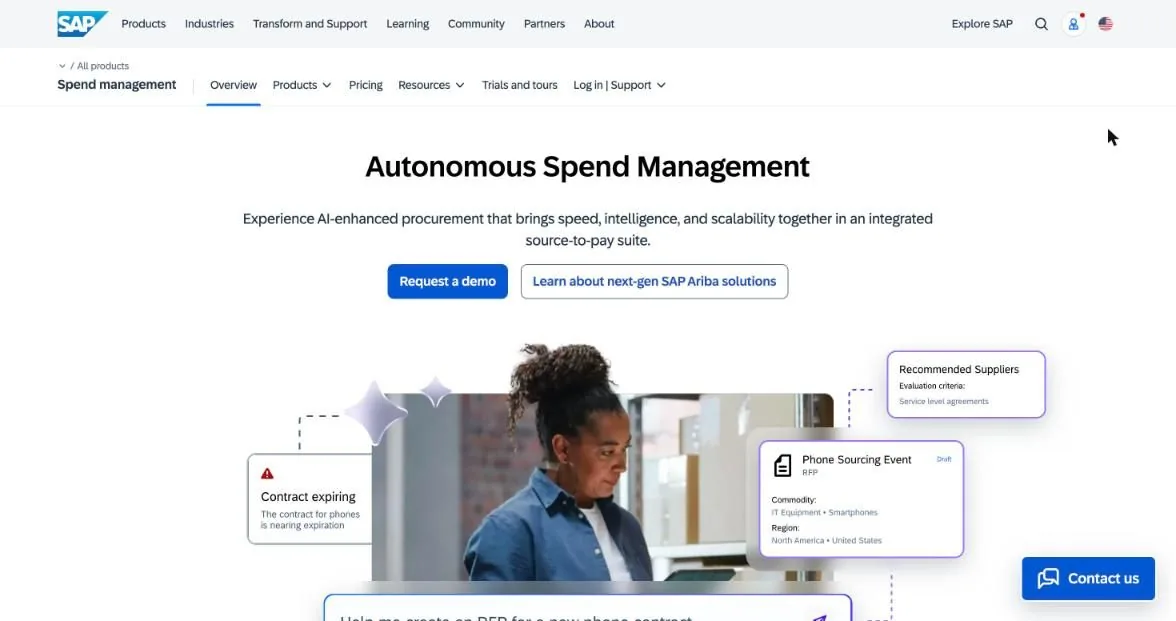
SAP Ariba fits firms that run SAP ERP and want sourcing, contracts and supplier management inside the SAP stack. It covers sourcing, contracts, supplier lifecycle, intake and guided buying, linked to the SAP Business Network. SAP announced a rebuilt next generation on SAP BTP, rolling out from 2026. Ariba Snap is packaged for midsize firms.
Key features 5 features
- Sourcing, with an AI bid analysis agent announced
- Contracts with approvals and compliance tracking
- Supplier lifecycle, performance and risk
- Intake Management and guided buying
- Joule assistants across sourcing, buying and invoicing (announced May 2026)
Pros and cons 3 pros, 3 cons
Pros
- SAP fit: Ariba is SAP's own suite for S/4HANA and SAP Cloud ERP, so SAP shops avoid a third-party connector
- Faster midsize route: SAP says Ariba Snap starts controlling spend in as few as 12 weeks, delivered through partners
- Review base: 4.1 on G2 from 818 reviews, a large sample for judging how it works day to day
Cons
- Supplier fees: enterprise-account suppliers pay subscription and transaction fees past 5 documents and $50,000 with one buyer a year, which can slow onboarding
- Platform change: SAP is rebuilding Ariba on BTP from 2026, so new customers join during a platform move
- No public prices: Ariba is quoted through SAP or partners, so your budget depends on the partner quote
Pricing
Quote only, through SAP or partners. SAP says Ariba Snap is packaged and priced for midsize firms.
Best for
Firms that run SAP S/4HANA. They want sourcing, contracts and supplier management built for the SAP world.
Verdict
Verdict: SAP Ariba is the natural pick if your ERP is SAP, and ServiceNow's integration app names it too. Non-SAP firms will find lighter options on this list.
Zycus: best for AI-led sourcing and negotiation
Best for AI-led sourcing and negotiation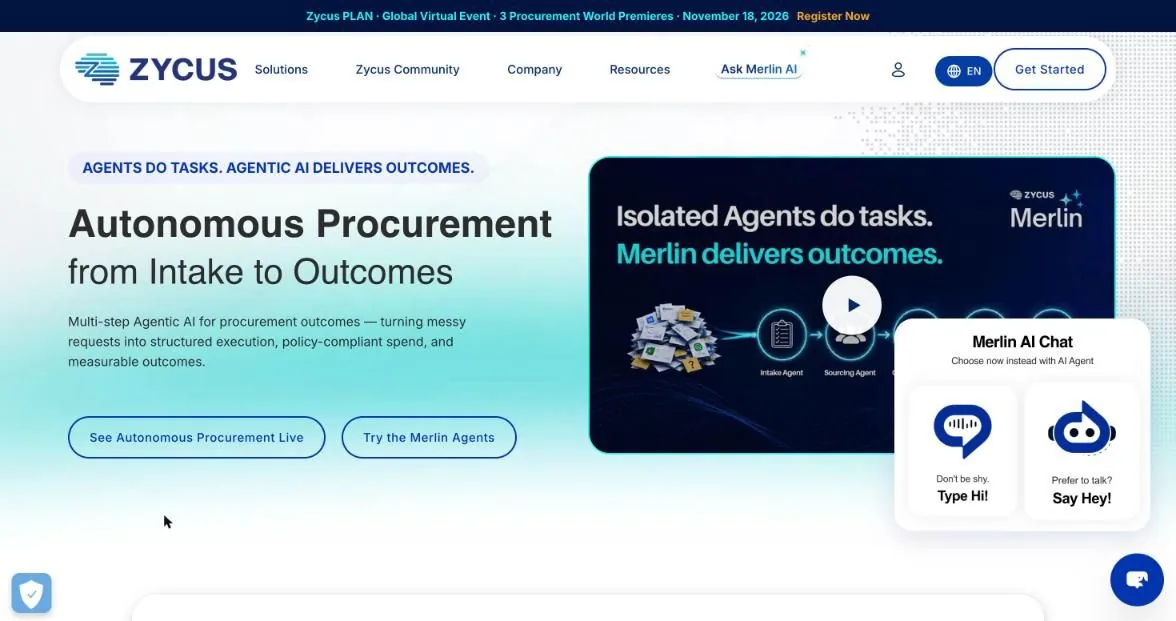
Zycus fits enterprises and upper mid-market buyers that want AI-led sourcing and negotiation. Its Merlin agents cover intake, autonomous sourcing and the ANA negotiation agent. It also runs contracts from draft to renewal and AI invoice matching. A packaged mid-market version lists setup as included and states go-live in 6 to 8 weeks.
Key features 6 features
- eSourcing and e-auctions
- ANA agent that negotiates tail spend
- Contract management from draft to renewal
- AP invoice capture with 2-way and 3-way matching
- Punch-out via cXML and OCI, including Amazon Business
- Merlin intake inside Microsoft Teams
Pros and cons 2 pros, 3 cons
Pros
- Negotiation agent: the ANA agent negotiates tail spend, which saves buyer time on many small purchases
- Packaged mid-market offer: setup is listed as included, with go-live in 6 to 8 weeks for 1 to 5 person procurement teams
Cons
- Thin review base: 3.6 on G2 from 13 reviews, so ask for customer references at your size
- Add-ons: intake and the Merlin AI agents are add-ons in the mid-market package, which raises the price of the full set
- Mixed rollout times: Zycus pages give different durations, so get a dated plan in writing
Pricing
Quote only. Zycus lists setup as included in its mid-market package.
Best for
Large and upper mid-market firms that want AI-led sourcing, price talks and contract work. They need a buying team to run it.
Verdict
Verdict: Zycus suits teams whose main gap is sourcing depth. Check its small review base and the package add-ons before you commit.
Vertice: best for software-heavy spend
Best for Software-heavy spend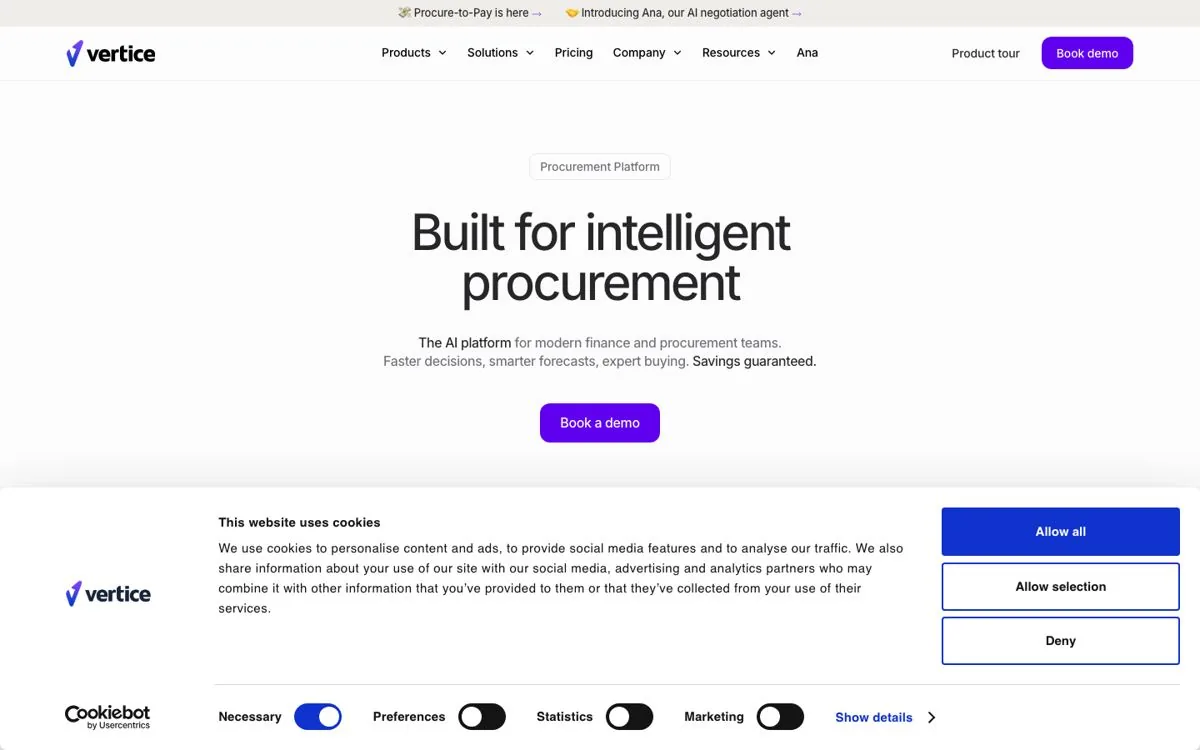
Vertice fits finance teams whose ServiceNow requests are mostly software purchases and renewals. It combines no-code intake and approvals with contract management, SaaS price data and experts who negotiate for you. It bought Vendr in June 2026. Its procure-to-pay module is new, and goods receipt is listed as a planned addition.
Key features 4 features
- Intake-to-procure with no-code approvals
- SaaS price data, plus experts who negotiate for you
- Contract and vendor risk management
- POs built from signed contracts
Pros and cons 3 pros, 2 cons
Pros
- Published starting prices: Intake-to-Procure starts from $30,000 and SaaS Purchasing from $40,000, so you can budget before a sales call
- SaaS price data: the Vendr deal added a large pricing dataset, which helps you benchmark a renewal before you negotiate
- Review base: 4.6 on G2 from 280 reviews, a solid sample for judging day-to-day use
Cons
- Software focus: two of its three products cover SaaS purchasing and cloud costs, so check fit for goods and services buying
- New P2P module: goods receipt is listed as a planned addition, so matching invoices against receipts is not available yet
Pricing
Intake-to-Procure from $30,000, SaaS Purchasing from $40,000 and Cloud Cost Optimization from $20,000, per its pricing page. The page does not state the billing period.
Best for
Teams that use ServiceNow mainly for software purchases and renewals. They want price data and help to negotiate.
Verdict
Verdict: Vertice suits teams where software is most of the spend. It is lighter on goods and services buying.
Procurify: best for mid-sized procure-to-pay
Best for Mid-sized procure-to-pay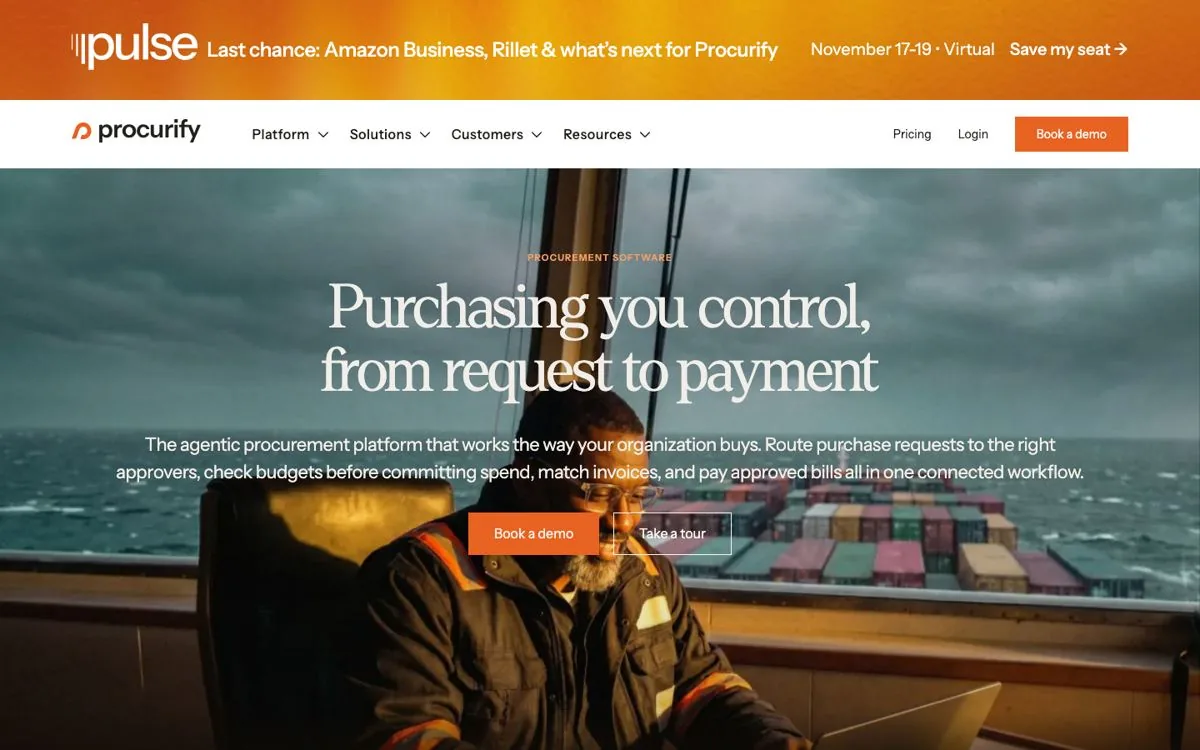
Procurify fits mid-sized teams that want purchasing, AP and supplier payments from one tool. It covers requests, approvals, POs and line-level receiving. Its AP product adds 2-way and 3-way matching and payments to 190+ countries. Every customer starts on the base Purchasing product and adds AP, contracts or intake, each priced by quote.
Key features 5 features
- Requests, approvals and POs in the base product
- Line-level receiving
- 2-way and 3-way matching in the AP product
- Payments to 190+ countries from inside Procurify
- Punch-outs to Amazon Business, Staples, Home Depot and Grainger
Pros and cons 3 pros, 2 cons
Pros
- One vendor: purchasing and supplier payments come from the same platform, so you avoid stitching two tools together
- Free Basic users: requesters on Basic seats cost nothing, so the whole company can submit requests without raising the quote
- Published rollouts: Procurify lists 4 to 12 weeks by package, so you can plan go-live before you sign
Cons
- Purchasing focus: its platform covers purchasing, AP, cards and payments, so teams that run supplier bids or RFPs need another tool
- Separate modules: AP, expenses, contracts and intake are each priced on their own, so the full set costs more than the base
Pricing
Quote only, built from products, add-ons, Pro users and integrations. Vendr buyer data shows a median of $15,000 a year, from $4,210 to $40,000.
Best for
Mid-sized firms that found ServiceNow Procurement too heavy. They want buying control with supplier payments.
Verdict
Verdict: Procurify is a lighter landing spot for purchasing and payments. Pick something else if you need sourcing events.
Also worth a look: Oracle Fusion Cloud Procurement, which is built into Oracle Fusion Cloud ERP. GEP Quantum Intelligence (formerly GEP SMART) and Ivalua are enterprise source-to-pay suites. ORO Labs and Omnea are orchestration layers like Zip; neither shows prices on its site.
ServiceNow Procurement alternatives: feature-by-feature comparison
Compare ServiceNow Procurement alternatives on the work you do every day. The columns are intake and approvals, requests and POs, sourcing and contracts, invoice capture and matching, and supplier payments. All seven alternatives cover this workflow, so each is in the table, with ServiceNow first for reference.
| Tool | Intake and approvals | Requests and POs | Sourcing and contracts | Invoice capture and matching | Supplier payments |
|---|---|---|---|---|---|
| ServiceNow Procurement | Service portal and virtual agent; platform workflows | Catalog buying; POs sent to the ERP | Sourcing requests and award; contract use controls | Document Intelligence capture; exceptions before ERP posting | Invoices post to the ERP for payment |
| Zip | Plain-language intake; routing to legal, IT, security, finance | PO generation, change orders and spend tracking | AI RFx with weighted scoring; AI contract store | AI extraction; flags duplicates and contract mismatches | Global Payments add-on, 79+ international rails |
| Coupa | Guided intake; email and mobile approvals with budget check | Requisitions and POs; Open Buy and punch-out | Sourcing and a central contract store | Any-format capture; 2-way and 3-way matching | Payments and virtual cards through partners |
| Zapro | Intake form; approvals by amount, category or vendor | PR to PO; Amazon Business punch-out | RFI and RFP on every plan; contract authoring on Growth | OCR capture; 2-way matching, 3-way on Growth | Prepares the payment batch; your ERP or bank pays |
| SAP Ariba | Intake Management with Joule Agent routing | Guided buying and requisitions in Ariba Buying | Sourcing, contracts and supplier lifecycle | Invoicing; Invoicing Assistant announced | No supplier payments module named |
| Zycus | Merlin Intake, also in Teams; add-on in Mid-Market | Requisition to PO with budget checks; cXML punch-out | eSourcing, e-auctions and contracts from draft to renewal | AP SmartDesk capture; AI 2-way and 3-way matching | No supplier payments module named |
| Vertice | No-code intake and approval workflows | POs from signed contracts; goods receipt planned | Contract management; SaaS negotiation by experts | Line-item extraction; matched to PO and contract | No supplier payments module named |
| Procurify | Order requests; approvals by department, location or amount | POs in the core product; line-level receiving | Contracts add-on; no sourcing module | AP add-on; 2-way and 3-way matching | ACH, check, wire; 190+ countries |
How ServiceNow procurement alternatives charge
ServiceNow Procurement is quote only, with no published prices for its S2P products. Zip, Coupa, SAP Ariba, Zycus and Procurify also quote, by module, seats or scope. Vertice lists starting prices per product, and Zapro publishes flat monthly plans. Compare three-year totals, for example against flat Zapro pricing.
| Tool | Pricing model | Starting price |
|---|---|---|
| ServiceNow Procurement | Quote, per product on the ServiceNow platform | Quote only |
| Zip | Quote; Vendr says a platform fee plus per-seat pricing | Vendr median $88,856 a year |
| Coupa | Quote, by module | Vendr median $94,519 a year |
| Zapro | Flat monthly plan by active vendors; unlimited users | $699 per month |
| SAP Ariba | Quote, through SAP or partners | Quote only |
| Zycus | Quote; mid-market package lists setup as included | Quote only |
| Vertice | Per product, with starting prices | $30,000 (Intake-to-Procure) |
| Procurify | Quote, by modules and Pro users | Vendr median $15,000 a year |
Questions to ask any ServiceNow Procurement alternative
Before you choose a ServiceNow Procurement alternative, ask every vendor the same five questions in writing. Can requests still start in your service portal? Which ERPs does it sync with? Who changes approval rules? How long does rollout take, and what will year three cost? Strong answers are specific, dated and shown on your own data.
| Question | Why it matters | What a strong answer includes |
|---|---|---|
| Can requests still start in our service portal? | Employees already know the ServiceNow portal. | A ServiceNow or Jira ticket that becomes a purchase request in the demo. |
| Which ERPs do you connect to, and what syncs? | ERP coverage differs widely between these tools. | Your ERP named, with POs, receipts, invoices and vendors listed. |
| Who can change approval rules? | If only developers can change rules, every update waits. | An admin changing a rule live, without code. |
| How long is rollout, and who does it? | Partner-led rollouts add cost and time. | A dated plan with vendor and partner hours. |
| What will year three cost? | Quotes by module, seat or scope change as you grow. | A written three-year quote. |
Which ServiceNow Procurement alternative should you choose in 2027?
The best ServiceNow Procurement alternative depends on how much of ServiceNow you keep. To replace the whole S2P layer, large firms should compare Coupa, SAP Ariba and Zycus. For a dedicated intake front door, look at Zip, or Vertice for software spend. Mid-sized teams that want purchasing control next to ServiceNow can look at Procurify or Zapro.
A practical shortlist: Coupa or SAP Ariba for a full suite, Zip for intake, and Procurify or Zapro for mid-market teams. Ask each vendor to start one request from a real ServiceNow ticket, then use a procurement ROI calculator to compare the cases.
Frequently asked questions
Can ServiceNow be used for procurement?
Yes. ServiceNow Source-to-Pay Operations adds procurement intake, approvals, purchase orders, supplier lifecycle and accounts payable invoice processing to the ServiceNow platform. It sits on top of an ERP. The ERP still posts invoices and pays suppliers, and the integration app names SAP and Oracle ERPs.
Who is ServiceNow's main competitor in procurement?
Zip, Coupa and SAP Ariba are ServiceNow's main procurement competitors. Zip competes for the intake front door. Coupa and SAP Ariba compete as full source-to-pay suites. In ITSM, ServiceNow has other rivals, which this buying-focused page does not cover.
What is the best alternative to ServiceNow Procurement?
Zip is the best alternative if you mainly use ServiceNow for intake and approvals. Large firms replacing the full suite should compare Coupa, SAP Ariba and Zycus. Mid-sized teams often look at Procurify, or at Zapro, which publishes its plan prices and includes unlimited users.
Who are ServiceNow procurement competitors?
Zip, Coupa, SAP Ariba, Zycus, Vertice and Procurify are the ServiceNow procurement competitors compared on this page. Oracle Fusion Cloud Procurement, GEP, Ivalua, ORO Labs and Omnea also compete, mainly for enterprise buyers or as orchestration layers.
What do ServiceNow procurement reviews say?
Zip and Procurify both rate 4.6 on G2, above ServiceNow Source-to-Pay Operations at 4.2 from 89 reviews. Coupa matches it at 4.2 and SAP Ariba sits at 4.1 from 818 reviews. Read reviews from firms of your size and on your ERP before you decide.
What are cheaper alternatives to ServiceNow for procurement?
Procurify, Vertice and Zapro are the alternatives whose cost you can check before a sales call. Vendr buyer data puts Procurify's median at $15,000 a year. Vertice lists $30,000 for Intake-to-Procure, and Zapro starts at $699 a month. ServiceNow publishes no S2P prices, so compare written quotes.
Purpose-built procurement, next to ServiceNow
See how Zapro can turn a Jira or ServiceNow ticket into a purchase request, and close the ticket when the order arrives, then run approvals, POs and invoice matching with unlimited users on every plan.
Sources: ServiceNow S2P Operations overview; ServiceNow S2P third-party integration; ServiceNow Source-to-Pay Operations on G2; Zip buyer data on Vendr; Vertice pricing; Zycus mid-market.