


An ideal procurement policy may look perfect on paper but still fail in practice. Prices may be agreed upon, contracts signed and budgets approved, yet employees may still struggle to purchase the software, office supplies and equipment they need. When the procurement process is slow or difficult to navigate, even well-designed policies can create delays and frustration.
That is where operational procurement becomes important. It turns procurement plans into consistent buying activities by managing requests, approvals, purchase orders, deliveries, invoices and payments.
For companies with high purchase quantities, different departments or a dispersed workforce, efficient operational purchasing helps save time and eliminate unnecessary paperwork.
Key Takeaways
- Operational procurement manages the day-to-day execution of business purchases.
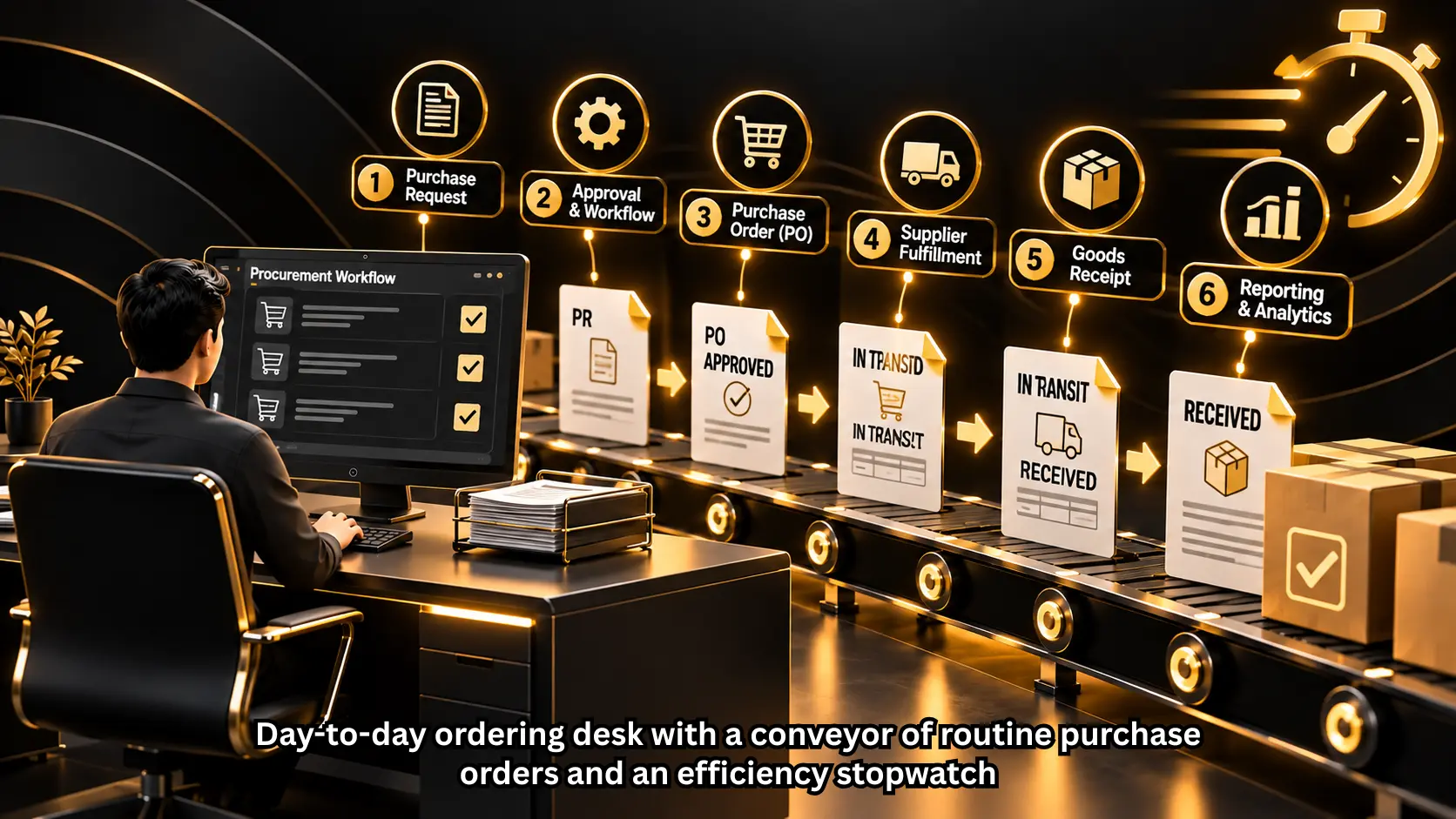
- The process generally moves from purchase requests and approvals to purchase orders, receipt, invoice matching and payment.
- Strong procurement operations connect purchasing, finance, suppliers and business users through standardized workflows.
- Automation can reduce manual data entry, approval delays and invoice exceptions.
- Useful performance measures include purchase order cycle time, invoice processing time, compliance and supplier performance.
- An effective procurement operations strategy combines process standardization, automation, data visibility and continuous improvement.
What Is Operational Procurement?
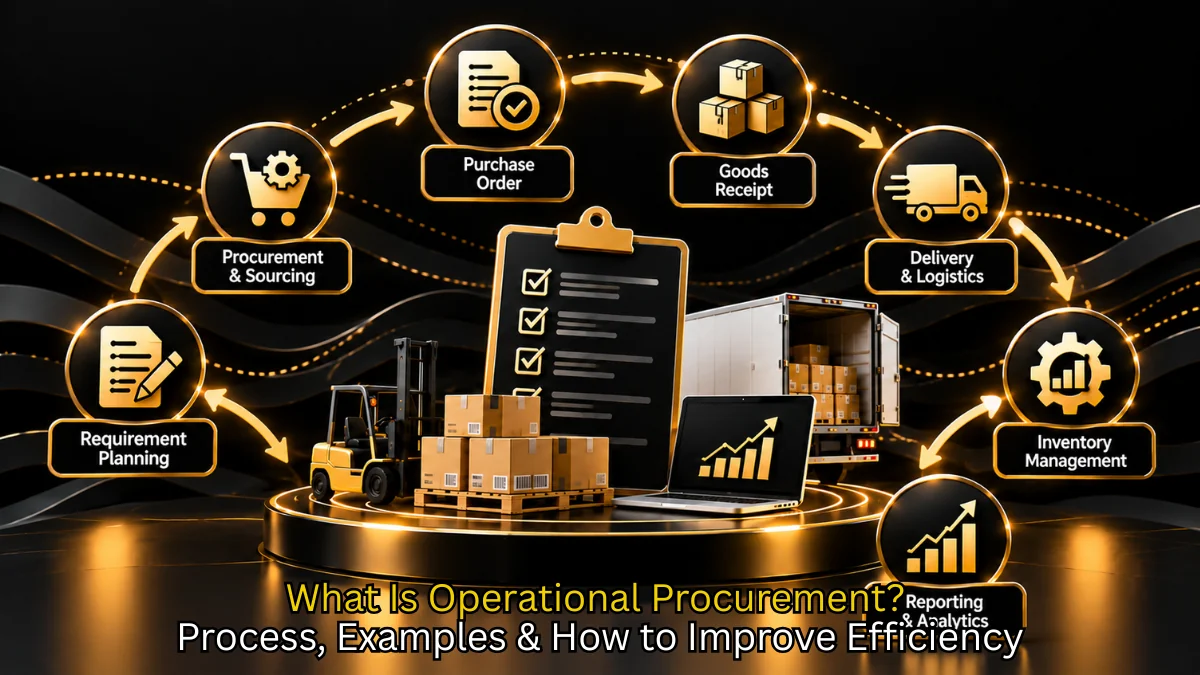
Operational procurement covers the day-to-day purchasing activities that keep a business running smoothly. It includes handling purchase requests, creating purchase orders (POs), tracking deliveries, confirming received goods or services and processing supplier invoices.
Unlike strategic procurement, which focuses on supplier selection, contract negotiations and long-term purchasing decisions, procurement operations focus on putting those decisions into action. The goal is to ensure employees receive what they need, purchases follow company policies, and suppliers are paid accurately and on time.
Core Objectives of Operational Purchasing
- Keep Business Operations Running: Ensure essential goods and services arrive on time so production, services and everyday business activities are not disrupted.
- Follow Purchasing Policies: Route purchases through approved suppliers, negotiated contracts and the right approval processes.
- Reduce Administrative Work: Simplify repetitive purchasing tasks, and minimize the time required to process each purchase.
- Keep Inventory Records Accurate: Match deliveries with purchase orders and inventory records to maintain accurate stock levels and avoid unnecessary shortages or excess inventory.

By 2029, 80% of human decisions will be augmented by generative AI, transforming procurement operations.
– Gartner
What Is the Difference Between Operational and Strategic Procurement?
The difference becomes clearer when looking at the objectives and time horizon of each function.
| Strategic Procurement | Operational Procurement |
|---|---|
| Focuses on long-term business requirements | Focuses on daily purchasing activities |
| Develops sourcing strategies | Processes purchase requests |
| Selects strategic suppliers | Places and tracks orders |
| Negotiates contracts and commercial terms | Ensures purchases follow approved terms |
| Evaluates supply market risks | Handles transaction-level issues |
| Looks at long-term value | Measures execution speed, accuracy and compliance |
This operational vs strategic procurement distinction does not mean the two functions operate separately. They depend on each other.
For example, a strategic team may negotiate a three-year software agreement with a preferred supplier. On the other hand, the operational team will ensure that employees file their requisitions in the right way and that approval is done according to company policy.
Without effective execution, strategic savings can become difficult to realize.
What Is the Operational Procurement Process?
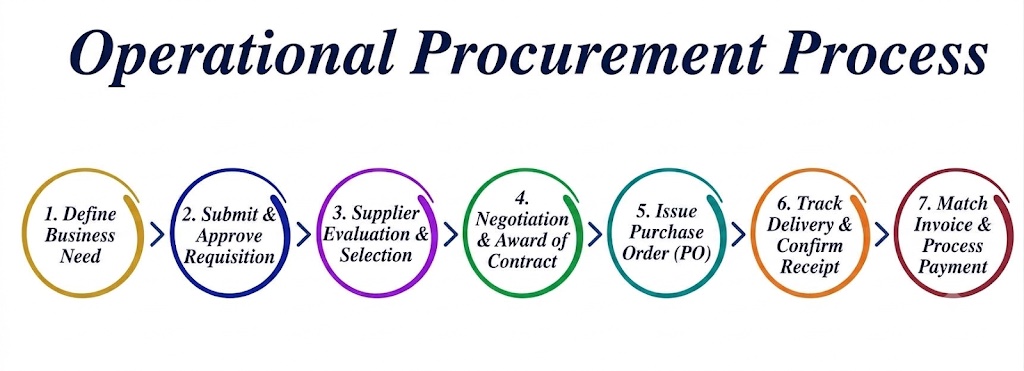
The operational procurement process covers the steps a business follows to buy goods and services, from identifying a need to paying the supplier. The process may vary by company, but most businesses follow seven basic stages.
1. Identify the Business Need
The process starts when a team identifies something the business needs to operate effectively.
For example, the marketing team may need design software, the IT team may need laptops or the operations team may need replacement equipment.
The purchase requisition should include basic information such as:
- What product or service is needed
- Quantity required
- Reason for the purchase
- Required delivery date
- Department requesting the purchase
- Estimated cost
- Preferred supplier, if there is one
Providing these details at the start helps the purchasing team understand the requirement and avoid unnecessary back-and-forth.
2. Submit the Request and Get Approval
The employee or department submits the purchase request through the company’s purchasing system or another approved process.
The appropriate manager or team then reviews the request. The approval may depend on the purchase amount, department budget, type of product or service and company purchasing rules.
The approval process plays a major role in helping to avoid delays and ensure that procurement is carried out within the set budget.
3. Choose the Supplier
After the purchase is approved, the organization has to choose an appropriate supplier.
In the case of repeat purchases, the organization will probably have an approved supplier or a list of products available at agreed prices. For new or high-value purchases, the procurement department might compare quotes from different suppliers.
Here, the operational purchasing function works along with strategic sourcing decisions. If an appropriate supplier or suitable agreement is already available, the procurement department uses these agreements rather than repeating the entire supplier selection process.
4. Create and Send the Purchase Order
Once the product has been approved, a purchase order (PO) is generated. It shows what the company wishes to buy and the terms that have been negotiated.
A purchase order usually includes:
- Supplier name and details
- Product or service description
- Quantity
- Agreed price
- Delivery details
- Payment terms
The PO gives both the buyer and supplier a clear record of the order. It can also help prevent misunderstandings about price, quantity or delivery requirements.
5. Receive the Goods or Services
After the supplier receives the order, the business tracks the delivery or completion of the service.
The receiving team checks whether the correct products arrived in the expected quantity and condition. For services, the relevant employee may confirm that the agreed work has been completed.
Recording this information helps the business keep accurate purchasing and inventory records.
6. Check the Supplier’s Invoice
After delivering the products or services, the vendor shall provide an invoice for payment.
The finance or purchasing team checks the invoice against the purchase order and delivery records. They confirm that the product or service, quantity and price match what was ordered.
For example, if a company ordered 50 office chairs but the invoice lists 60, the difference needs to be checked before payment.
This simple check can help prevent incorrect payments, duplicate payments and billing errors.
7. Make the Payment and Record the Purchase
Once the invoice has been checked and approved, the finance team makes the payment according to the agreed payment terms.
The business also records the completed purchase. This information can later help teams understand how much they spend, which suppliers they use most often and where delays or recurring problems occur.
A well-managed process therefore does more than complete individual purchases. It creates reliable information that can help improve procurement operations, control spending and make future purchasing decisions more efficient.
Quick Tip
Review each stage of the process regularly. If purchase requests remain pending for too long, suppliers frequently submit incorrect invoices or employees struggle to find approved suppliers, these are signs that the process may need improvement.
Examples of Operational Procurement
Operational procurement appears in almost every business function.
Example 1: Software Subscription
An employee needs a project management platform.
The employee submits a request → manager approves it → procurement checks the preferred supplier → PO or approved purchasing method is used → the subscription is activated → invoice is matched → payment is processed.
Example 2: Office Equipment
An office needs 20 monitors.
The facilities team submits the request → procurement checks the approved catalog → the request goes through the required approval workflow → the supplier receives the PO → delivery is confirmed → invoice details are matched → payment is released.
Example 3: Professional Services
A company needs an external design agency for a product launch.
The department submits the request → procurement verifies the supplier and commercial terms → the required approvals are completed → a PO or contract-backed order is issued → project milestones are confirmed → invoices are checked against the agreed terms.
These examples show why purchasing operations extend beyond simply placing an order. They involve the complete flow of information, approvals, supplier interactions and financial records.
What Are the Main Challenges in Operational Procurement?
Even mature procurement teams can face execution problems.
Manual approvals
Email-based approvals can create uncertainty about who needs to approve a purchase and whether the request has been reviewed.
Fragmented systems
When purchasing data is spread across spreadsheets, emails, ERP applications, and supplier portals, people often have trouble accessing precise and uniform data.
Maverick spending
Employees may bypass approved purchasing channels when the standard process is too slow, complex or difficult to follow.
Invoice exceptions
Incorrect quantities, prices, missing POs and duplicate invoices can create additional work for procurement and accounts payable.
Limited real-time visibility
If transaction data arrives late, procurement leaders may find it difficult to understand current spending or identify problems early.
APQC recommends measuring procurement through multiple dimensions, including cycle time, staff productivity, process efficiency and cost effectiveness rather than relying on a single metric.
Transform Your Procurement Process with Ease

How to Improve Operational Procurement Efficiency?
Improving operational procurement is not about adding more steps to the purchasing process. It is about making everyday buying easier, faster and more consistent while maintaining proper spending controls. The most effective improvements focus on a few practical areas:
1. Create a Clear Purchasing Process
Start by mapping the process from purchase request to supplier payment. Define who can request a purchase, which purchases need approval, which suppliers are preferred and how purchase orders, receipts and invoices should be handled.
A standardized process reduces confusion, limits unnecessary delays and gives teams a consistent way to measure performance.
2. Automate Repetitive Tasks
Use automation for routine activities such as approval notifications, purchase order creation, invoice checks and status updates. The OECD’s 2025 research identifies data analytics, AI and machine learning and robotic process automation among the emerging technologies being used to support procurement activities.
Automation needs to assist humans rather than make judgments on behalf of humans. Human beings should be kept involved in the decision-making process when purchases require exceptions.
3. Make Purchasing Simple for Employees
Employees are more likely to follow operational purchasing policies when the approved process is easy to understand. Provide simple request forms, approved product lists and clear supplier options. Reducing unnecessary steps can also help prevent employees from making purchases outside approved channels.
4. Connect Purchasing and Finance Data
Connect purchase requests, purchase orders, delivery records and invoices so teams can see what has been requested, ordered, received and paid. Better-connected data helps finance and procurement identify errors, track committed spending and resolve invoice issues faster.
5. Track the Right Performance Measures
A practical procurement operations strategy should measure more than cost savings. Useful measures include:
- Purchase request-to-PO cycle time
- Percentage of electronically approved POs
- Invoice exception rate
- Supplier delivery performance
- Supplier setup time
- Purchase orders processed per procurement employee
- Percentage of purchases through approved channels
6. Find Where Delays Actually Happen
Do not assume that all problems are associated with approvals. Problems may arise during supplier set-up, PO process, shipment receipt or invoicing process stages. According to APQC, the median cycle time for supplier set-up in 3,047 companies is 3 days.
Review each stage to identify the actual bottleneck. This makes procurement operations improvements more targeted and measurable.
7. Review and Improve Regularly
An effective procurement operations strategy should evolve as business needs change. Review purchasing data, recurring errors, supplier issues and employee feedback regularly. Then update workflows, approval rules and supplier processes based on evidence.
The goal is simple: make procurement operations faster, easier to follow and easier to measure while keeping appropriate controls in place.
How Can Zapro AI Support Operational Procurement?
Zapro AI helps businesses simplify operational purchasing by bringing purchase requests, approvals, budgets, suppliers and invoices into one connected workflow. Instead of relying on emails, spreadsheets and other manual processes, purchasing departments can automate mundane tasks while retaining greater control over their daily spend.
1. Simplifies Purchase Requests
Zapro AI captures purchase requests and turns them into structured information. It can check approved suppliers, existing contracts and purchasing rules before sending requests to the right approvers. This reduces manual entry and helps employees follow the correct purchasing process.
2. Provides Budget Visibility
Teams can see how much budget is left before making purchases. Combining purchasing information with financial management systems enables teams to detect possible over-budgeting before receiving invoices.
3. Automates Invoice Checks
The Zapro AI system can extract invoice details and check for discrepancies between invoices, purchase orders, and receipts for prices and quantities before payment.
4. Simplifies Supplier Management
Zapro AI brings supplier information, documentation, and communication for the suppliers into one database. This process will help streamline the supplier onboarding process.
By connecting these activities, Zapro AI helps businesses reduce manual work, improve purchasing visibility and create more efficient procurement operations.
Improve Operational Procurement With Smarter Workflows
Efficient operational procurement helps businesses manage everyday purchases with fewer delays, errors and manual tasks. A clear process connects purchase requests, approvals, suppliers, deliveries and invoices while giving teams better control over business spending.
To improve efficiency, businesses should develop standardized purchasing procedures, make it easier to approve purchases, and use approved suppliers along with automating processes. The metrics that will indicate areas for improvement include PO cycle time, invoice errors, and supplier performance.
Looking to improve procurement efficiency? Zapro AI helps streamline purchasing workflows, automate routine procurement tasks and provide greater visibility into spend. Explore Zapro AI to build a more efficient and connected procurement process.

Get Started with Procurement the Zapro Way
Simplify purchasing with Zapro — procurement made smarter and effortless.
Frequently Asked Questions
What is operational procurement?
Operational procurement is the execution of day-to-day purchasing activities, including requisitions, approvals, purchase orders, delivery tracking, invoice matching and payment.
What is the difference between operational and strategic procurement?
Operational vs strategic procurement can be understood through their different roles. Strategic procurement focuses on long-term sourcing, supplier relationships, contracts and commercial strategy. Operational procurement focuses on executing approved purchases accurately and efficiently.
How can procurement operations be improved?
Procurement operations can be improved through standardized workflows, automated approvals, approved supplier catalogs, integrated systems, better data and continuous KPI monitoring.
What are procurement operations services?
Procurement operations services are outsourced or managed services that support day-to-day procurement activities such as requisition processing, supplier administration, purchase order management, invoice support and procurement analytics.
What KPIs measure procurement efficiency?
Common KPI measures include PO cycle time, procure-to-pay cycle time, invoice exception rate, supplier lead time, electronic approval rates, use of approved suppliers, and procurement productivity. APQC tracks procurement benchmarks in all of these areas.
Don’t miss our weekly updates
We’ll email you 1-3 times per week—and never share your information.
Let’s Streamline Your End-to-End Procurement
We’ll unify your P2P process and empower your team to work smarter.

About the Author

Md. Kafil


About the Reviewer

Zapro is dedicated to helping businesses of all sizes make informed decisions. We adhere to strict editorial guidelines to ensure that our content meets and maintains our high standards.
Our editorial standards help keep every article accurate, useful, and trustworthy.
Related Blogs
Wait! Don't Leave Without This Free Guide
How AI Is Replacing Manual Procurement And What Your Team Should Do Next