

The vendor payment process is the sequence of steps a business follows to pay a supplier after goods or services are delivered, from matching the invoice against the purchase order and receipt through to approval and disbursement. It typically runs through three-way matching, approval routing, and a payment method such as ACH, wire, or check.
To protect operating margins and sustain a healthy supply chain, corporate finance teams must maintain absolute control over out-flowing capital. When a company manages its financial data across fragmented systems, it opens the door to costly data entry mistakes, payment backlogs, and strain on supplier partnerships. Developing a highly secure workflow for vendor payments ensures your business operations scale smoothly while protecting cash assets.
A vendor payment process is really the financial half of vendor management as a whole, which is why some finance teams run both from a single AI Vendor Management platform instead of stitching together separate payment and relationship tools.
What Is a Vendor Payment Process?
The vendor payment process is the end-to-end accounting workflow that begins the exact moment an invoice is received from an external supplier and finishes when the cash payment is executed and reconciled inside the company’s general ledger.
This transactional pipeline acts as the core of Accounts Payable (AP). Managing it requires balancing strict corporate compliance rules, absolute financial data precision, and operational velocity to ensure suppliers are compensated accurately and on time.
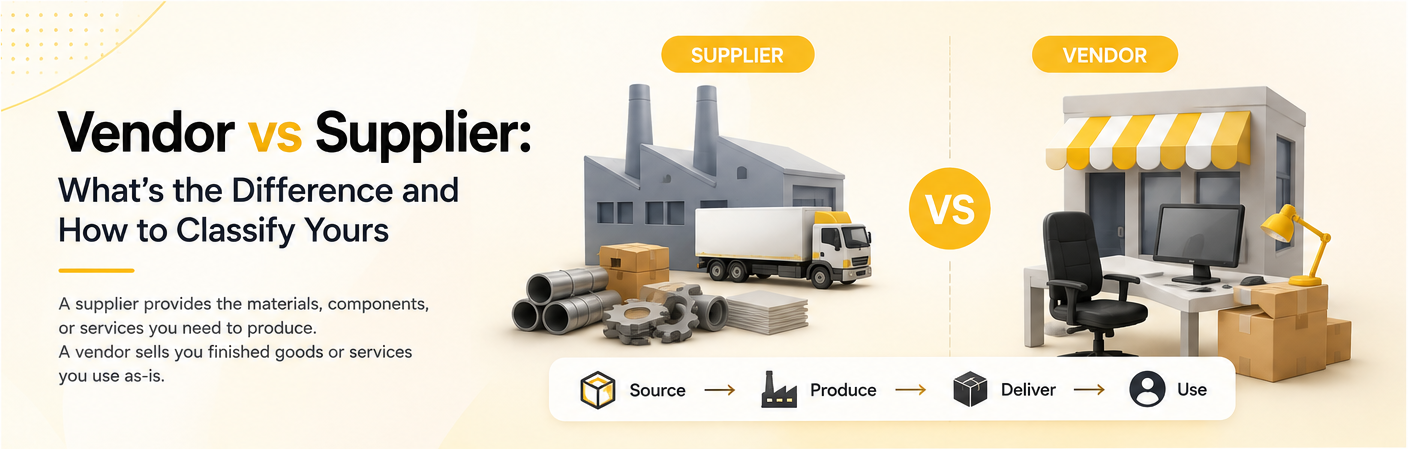
The process itself doesn’t change based on what you call the other party, but the controls around it should. A supplier tied to production usually carries stricter terms and penalty clauses, because a missed payment can stall your own delivery, while a standard vendor rarely carries that leverage — worth checking against vendor vs supplier before your next terms negotiation.
Learn about Vendor Payment Terms Optimization
Watch Invoices Go From Inbox to Paid

5-Step Vendor Payment Process
Processing an inbound invoice involves five systematic accounting stages:
[1. Invoice Capture] ⇒ [2. 3-Way Matching] ⇒ [3. Approval Routing] ⇒ [4. Payment Execution] ⇒ [5. Ledger Reconciliation]
Step 1: Invoice Capture and Receipt
The cycle opens when a supplier transmits a bill for completed services or delivered inventory. Modern accounting departments utilize automated OCR (Optical Character Recognition) engines to extract line-item figures, tax information, billing codes, and payment due dates, eliminating manual typing.
Step 2: Invoice Validation and Matching
Once captured, the document undergoes a validation check known as three-way matching. The software cross-references the invoice details against the original internal purchase order (PO) and the warehouse goods received note (GRN). This structural check ensures that item quantities, item numbers, and unit prices match before releasing any capital.
Invoice validation typically means matching the invoice against the original purchase order and goods receipt, which goes faster when that PO data already lives in the same AI procurement software that created it.
Step 3: Routing and Approval Workflows
Validated invoices must clear internal corporate spending limits. The request routes automatically through conditional matrix paths based on the department, project budget, or dollar threshold, triggering instant notifications to designated team managers for sign-off.
Step 4: Payment Scheduling and Funding
Approved invoices move into the scheduling queue. Sourcing leaders review the pre-negotiated payment terms (such as Net-30 or Net-60) and schedule the transaction to maximize cash flow performance, taking advantage of early-payment discounts while retaining working capital as long as possible.
Step 5: Payment Execution and Reconciliation
The financial settlement is sent to the supplier using their preferred transaction tool. As the cash clears the bank, the software matches the transactional bank data with the general ledger automatically, closing out the open account payable file and creating a clear audit trail. Payment is the entry that closes the loop: payables debited, cash credited. Draw it as a T-account once and the direction stops being confusing.
Learn about Vendor Payment Software
Common Vendor Payment Methods
Selecting the proper settlement tool directly impacts your operational transaction costs, processing speeds, and vulnerability to corporate payment fraud.
ACH Payments
Automated Clearing House (ACH) transactions move funds electronically between domestic banking networks. This method represents the industry gold standard for regular domestic vendor processing because it offers low transaction costs, high digital security, and seamless automation capabilities.
Wire Transfers
Wire transfers are electronic fund movements designed for high-priority or international B2B transactions. While wire routing executes almost instantly, financial institutions apply steep individual processing fees, making this method expensive for low-value, high-volume transactions.
Virtual Credit Cards (ePayables)
Virtual credit cards assign a unique, single-use 16-digit card number to a specific invoice payment. This digital approach provides elite security control, prevents supplier overcharges, simplifies payment tracking, and allows finance teams to secure lucrative cash-back rewards.
Paper Checks
Relying on paper checks requires manually printing documents, securing physical signatures, and paying postage fees. This manual method introduces severe operational delays, increases delivery risks, and remains highly vulnerable to intercept check fraud.
Key Challenges in Vendor Payment Processing
Failing to modernize your accounting infrastructure leaves your business exposed to costly back-office bottlenecks:
- Manual Data Entry Bottlenecks: Human typing mistakes on complex invoice sheets lead to incorrect ledger entries and severe reporting inaccuracies.
- Lengthy Internal Approval Loops: Stagnant email threads drag out verification cycles, resulting in missed deadlines and late-payment penalties.
- Duplicate and Unauthorized Payments: Fragmented tracking pipelines can cause companies to accidentally pay the exact same supplier bill twice.
- Payment Fraud Exposure: Weak verification protocols make finance teams vulnerable to phishing attempts and fake vendor invoicing schemes.
4 Strategies to Improve Your Vendor Payment Process
1. Implement Accounts Payable Automation
Transitioning away from manual processing blocks financial errors at the front door. Introducing vendor payment automation software allows systems to read inbound documents, run immediate matching rules, and flag processing errors without human effort.
2. Integrate Business Systems
Bridge the data divide between your procurement workflows, invoice processors, and main financial ERP dashboards. A unified ecosystem ensures that your financial commitments match your general ledger codes in real time without manual CSV exports.
3. Optimize Payment Methods
Actively incentivize your supplier network to transition away from paper checks toward digital electronic settlements like ACH or secure virtual cards. This transition lowers processing fees, simplifies reconciliation, and speeds up your payment processing speed.
4. Enhance Vendor Communication
Give your business partners a single, structured workspace. Providing a self-service vendor panel eliminates unnecessary status emails, allowing suppliers to review their own transaction records and view active invoice approvals.
Best Practices for Vendor Payment Management
To build an accounting infrastructure capable of supporting rapid business scale, incorporate clear operational guidelines:
- Enforce a Strict No-PO, No-Pay Rule: Inform all business partners that an inbound invoice will face automatic rejection unless it references an approved, numbered purchase order document.
- Enforce Clear Segregation of Duties: Ensure that the individual team member who approves a new vendor profile is never the same accountant who executes the final cash payment.
- Conduct Systematic Vendor Ledger Audits: Run routine quarterly database cleanups to identify duplicate files, update outdated banking details, and remove old vendor listings to reduce compliance risks.
How Zapro Streamlines Your Vendor Payment Process
Managing high-volume supplier transactions across fragmented systems leaves your corporate capital vulnerable to hidden leaks. Zapro provides an intelligent, automated source-to-pay platform designed to remove all the administrative complexity from vendor payment processing and accounts payable.
[Inbound Vendor Invoice] ⇒[AI OCR Engine Extracts Line Data Automatically] ⇒[System Executes Precise 3-Way Match Validation] ⇒[Dynamic Approval Chains Route Based on Budget] ⇒ [Automated ERP Sync & Secure Digital Settlement]
Zapro elevates your financial operations through advanced automation features:
- AI-Powered OCR and Data Capture: Say goodbye to typing entry errors. Zapro’s intelligent document engine reads, extracts, and codes inbound supplier bills instantly.
- Automated Three-Way Matching: Eliminate financial validation friction. Zapro automatically checks the incoming bill details against the original purchase order parameters and the warehouse receiving files to flag price variations.
- No-Code, Dynamic Approval Routing: Construct custom, multi-stage approval pathways based on project budgets, departments, or specific cost thresholds, removing internal email backlogs.
- Self-Service Supplier Collaboration Portal: Improve transparency. Zapro’s secure portal allows business partners to manage their own billing setup, upload tax documentation, and trace active payment milestones in real time.
- Native ERP and Ledger Synchronization: Maintain complete financial data integrity. Zapro integrates directly with leading platforms like NetSuite and QuickBooks Online, ensuring actual spending matches active corporate budgets automatically.
Ready to eliminate accounting mistakes, speed up your approval workflows, and implement comprehensive vendor payment management? Schedule a custom Zapro demo today.

Pay Vendors Faster, Without the Errors
Automate invoice capture, matching, and approvals so every payment goes out accurate, on time, and audit-ready.
FAQ Questions
1. What is a vendor payment process?
The vendor payment process is the end-to-end accounting pipeline that starts when an invoice is received from an external supplier, moves through verification and approval stages, and concludes when payment is executed and reconciled.
2. What are the steps in the vendor payment process?
The five core operational steps are: 1) Invoice capture and receipt, 2) Invoice validation and three-way matching, 3) Internal routing and approval workflows, 4) Payment scheduling and funding, and 5) Final payment execution and general ledger reconciliation.
3. What is the most efficient vendor payment method?
ACH payments are widely considered the most efficient option for domestic supplier settlements. They feature incredibly low processing fees, high digital security protocols, and sync easily with automated accounts payable software.
4. What is 3-way matching in vendor payments?
Three-way matching is an automated verification method that cross-references three distinct records—the original purchase order, the warehouse goods received log, and the inbound vendor invoice—to verify that pricing and quantities match perfectly before capital is sent.
5. How does vendor payment automation help?
Automation software dramatically eliminates manual typing data errors, cuts invoice approval processing speeds, prevents costly duplicate transactions, enforces internal corporate policy compliance, and builds flawless audit records automatically.
6. What KPIs should finance teams track for vendor payments?
Accounts payable teams should closely monitor explicit key performance indicators (KPIs), including the Average Cost per Invoice Processed, Invoice Processing Cycle Time, On-Time Payment Rate, and the Percentage of Inbound Bills requiring manual review.
7. How do we handle vendor payments and avoid late payment problems?
Late payment is usually an approval problem rather than a treasury problem. Find where invoices sit longest, which is typically waiting for a coder or approver who has no deadline. Automate matching so clean invoices that agree with the purchase order and receipt need no human touch, and route only exceptions for review. Set escalation on approvals that age past a threshold. Giving suppliers visibility of invoice status also removes a large share of chase emails, which is time your AP team gets back.
Don’t miss our weekly updates
We’ll email you 1-3 times per week—and never share your information.
Tired of Chasing Down Invoice Approvals?
Get expert guidance on automating your vendor payment process and eliminating duplicate payments with Zapro.

About the Author

Md. Kafil


About the Reviewer

Zapro is dedicated to helping businesses of all sizes make informed decisions. We adhere to strict editorial guidelines to ensure that our content meets and maintains our high standards.
Our editorial standards help keep every article accurate, useful, and trustworthy.
Related Blogs
Vendor Onboarding: What It Is, Why It Matters & How to Do It Right
Vendor Management Challenges and How to Overcome Them