

In the early stages of a business, purchasing is often a “wild west” affair. A marketing manager buys a SaaS subscription on a corporate card; the facilities lead orders furniture from a local shop; the IT team brings in a new hardware vendor. While this feels fast, it inevitably leads to a fragmented, expensive, and risky mess of data.
As companies scale into 2026, the shift toward a centralized procurement system has become the gold standard for financial control. By consolidating the power to spend into a single hub, organizations can move from reactive buying to strategic sourcing. This guide explores the centralized purchasing definition, the mechanics of the process, and how modern technology is solving the traditional friction points of this model.
What Is Centralized Purchasing?
To understand the centralized purchasing definition, think of it as a hub-and-spoke model. Centralized purchasing is a procurement management structure where a single, dedicated department—usually the procurement or finance team—is responsible for managing all acquisitions of goods and services for the entire organization.
Instead of every department head acting as an amateur procurement officer, the needs are funneled to a group of specialists. These specialists are trained in negotiation, risk assessment, and contract management. The primary goal is to leverage the company’s total spending power to get better prices, ensure compliance, and maintain a “single source of truth” for all vendor data.
How a Centralized Procurement System Works
A centralized procurement system isn’t just about a room full of people; it’s about a digital infrastructure that connects every corner of the company to a central brain.
Core Components
- Central Procurement Team: A group of professionals who define the buying strategy and manage high-value negotiations.
- Standardized Supplier Base: A “Preferred Vendor List” that limits where employees can spend money, ensuring quality and negotiated rates.
- Unified Approval Workflows: A digital path that every request must follow, ensuring that no dollar is spent without the right eyes on it.
- Centralized Data & Reporting: A dashboard that aggregates spend across all departments, locations, and subsidiaries.
Learn more about procurement software.
Centralisation is far easier to enforce when every request enters through one system. E-procurement platforms are built for exactly that – see the seven leading options compared.

By 2027, 50% of organizations will support supplier contract negotiations through the use of AI‑enabled contract risk analysis and editing tools.
– Gartner
The Centralized Procurement Process (Step-by-Step)
This centralized procurement process ensures that every purchase is intentional and documented:
- Purchase Request Submission: An employee identifies a need and submits a request via a central portal.
- Approval Workflow: The system automatically routes the request to the correct budget owner and procurement specialist.
- Supplier Selection: The central team checks if the item can be sourced from an existing preferred vendor to leverage bulk discounts.
- PO Creation: A formal Purchase Order is generated, linking the request to the contract terms.
- Invoice Matching & Payment: When the bill arrives, the system performs a “3-way match” (PO + Goods Receipt + Invoice) before releasing funds. This step is exactly what dedicated AP Automation Software is built to handle, capturing incoming invoices and running the three-way match automatically instead of relying on a manual review.
Centralized Purchasing vs. Decentralized Purchasing
Choosing the right model depends on your organizational maturity and scale.
| Factor | Centralized Purchasing | Decentralized Purchasing |
| Control | High (Top-down oversight) | Low (Fragmented) |
| Cost Savings | Strong (Volume discounts) | Limited (Local pricing) |
| Compliance | Enforced (Built-in checks) | Inconsistent (High risk) |
| Speed | Structured (Can be slower) | Fast (But high “Maverick” spend) |
| Visibility | Real-time & Holistic | Fragmented & Delayed |
The Hybrid (Center-Led) Model: Many modern enterprises now use a hybrid approach. Whichever model you choose, a comparison of the best procurement software helps match a platform to how your teams actually buy. The central team sets the strategy, negotiates the big contracts, and provides the software, while individual departments have the autonomy to place orders against those pre-negotiated contracts.
Automate purchase requisitions and approvals

Benefits of Centralised Procurement
Why should a CFO prioritize the benefits of centralised procurement? The ROI is found in the math of consolidation.
1. Cost Savings Through Volume Purchasing
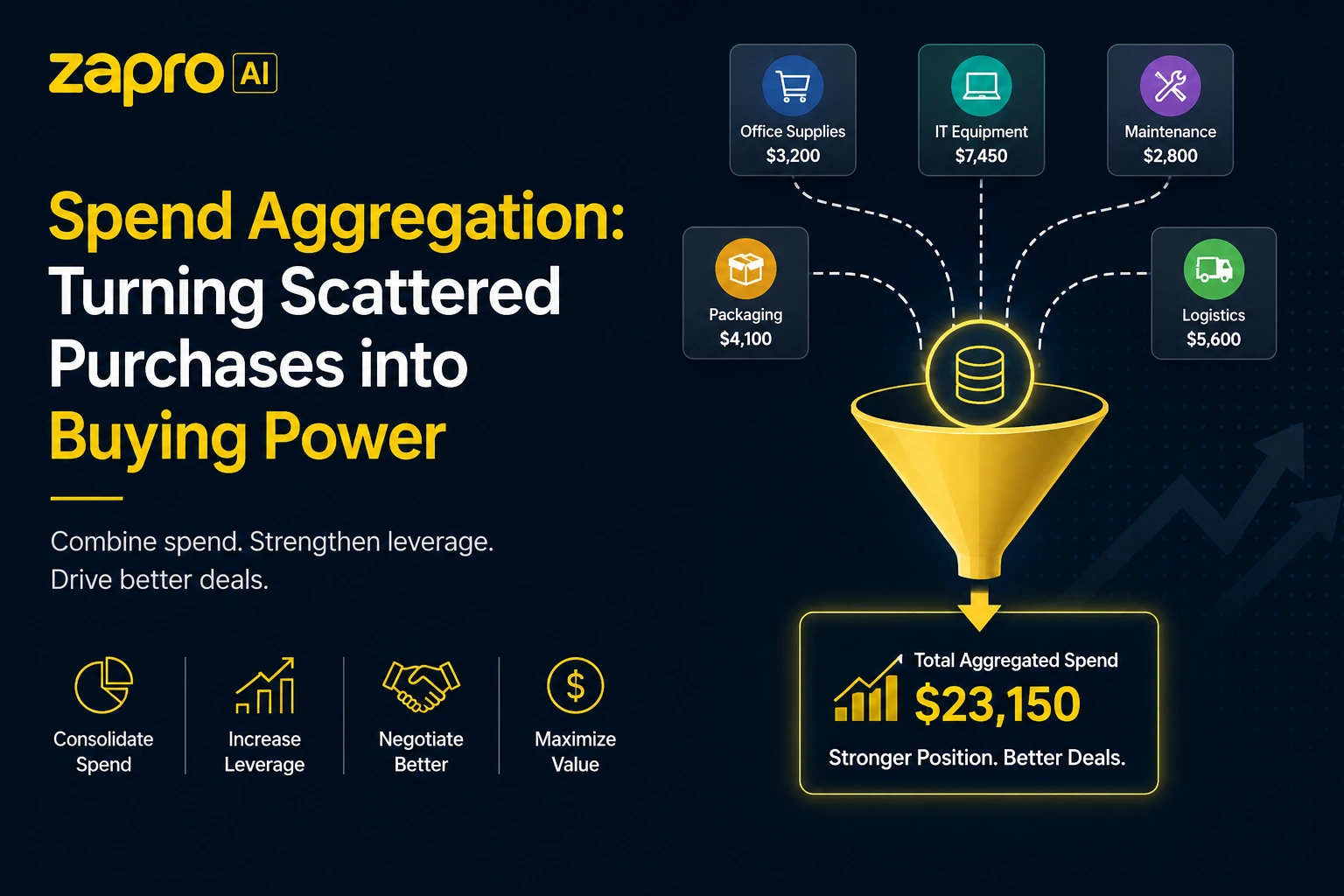
When you buy for ten offices instead of one, your leverage increases. You can use the volume savings formula to quantify this:
$$S = Q \times (P_{old} – P_{new})$$
Where $S$ is Savings, $Q$ is Total Quantity, and $P$ is the Unit Price. Centralization is the only way to accurately calculate and capture $Q$.
2. Improved Spend Visibility
You cannot manage what you cannot see. A centralized system allows you to see “Spend Clusters”—identifying that you are paying for five different project management tools across five departments.
3. Stronger Supplier Negotiation
Suppliers take you more seriously when you represent the entire company. You become a “Strategic Account” rather than a “One-off Buyer,” leading to better SLAs and priority support.
4. Better Compliance & Audit Readiness
In regulated industries, centralization is a requirement. It ensures that every vendor has been vetted for SOC 2, GDPR, or ESG standards before a single cent is spent.
5. Reduced Maverick Spending
“Maverick spend” occurs when employees buy outside of the approved system. Centralization closes the loopholes, ensuring that 100% of spend goes through approved channels.
Challenges of Centralized Purchasing (And How to Solve Them)
The traditional knock against centralized systems is that they are “slow” and “bureaucratic.” This is where Zapro differentiates itself.
- Challenge: Slower Approvals.
- The Zapro Solution: Automated approval workflows. By using AI to route requests based on value and category, 80% of routine requests can be approved in minutes, not days.
- Challenge: Stakeholder Resistance.
- The Zapro Solution: Self-service portals. We make the “official” way to buy so easy and intuitive that employees actually prefer it over using their own credit cards.
- Challenge: Scalability Issues.
- The Zapro Solution: Role-based access. As you grow into new regions, Zapro allows you to maintain central oversight while giving local managers the specific permissions they need to move fast.
When Should Businesses Use a Centralized Procurement Model?
While every company can benefit from some level of control, a fully centralized procurement system is essential for:
- Mid-size & Enterprise Companies: Where spend is too high for manual oversight.
- Multi-location Businesses: To stop local offices from overpaying for the same items.
- Regulated Industries: Where a single unvetted vendor can lead to a legal catastrophe.
- High Vendor Volume Organizations: Where the sheer number of invoices requires automated 3-way matching.
Centralized Procurement System Best Practices
To succeed, your procurement transformation strategy should follow these rules:
- Define Governance Early: Clearly state who can buy what, and at what price point a central specialist needs to get involved.
- Standardize Supplier Onboarding: Use a single portal for all vendors to submit their tax and security documentation.
- Automate the “Boring” Stuff: Let AI handle the data entry and invoice matching so your team can focus on the negotiations.
- Maintain Real-Time Dashboards: Don’t wait for month-end reports. Use real-time data to spot spend anomalies the day they happen.
How Zapro Enables a Scalable Centralized Procurement System
Zapro was built to give finance leaders the control of a centralized system without the “speed tax” of old-school bureaucracy.
- Centralized Vendor Onboarding: A unified intake for all global suppliers.
- Approval Automation: Smart routing that eliminates bottlenecks.
- AP & Invoice Control: 100% accuracy in 3-way matching.
- Analytics Dashboard: A bird’s-eye view of every dollar spent across the organization.
Centralising procurement typically pays for itself through consolidated vendor rates alone. See ai-powered procurement pricing and plans to model the break-even for your spend volume.
Centralisation only sticks if approval routing stays flexible enough for every department. See centralised approvals in a demo before you redesign the policy.

Effortless Vendor Management
Keep vendor data organized, onboard suppliers easily, and track performance in one place.
FAQs
1. What is a centralized procurement system?
A centralized procurement system consolidates purchasing authority, supplier contracts and transaction processing into one function and one platform across all business units. Instead of each site or entity buying independently, requirements are aggregated, negotiated centrally and executed through shared policy and workflow.
2. What are the benefits of centralized procurement?
Centralized procurement delivers stronger negotiating leverage through aggregated volume, consistent policy and compliance, a single supplier master, standardised data for spend analysis, and lower duplicated effort across entities. It typically improves contract coverage and reduces price variance for the same item across sites.
3. What are the drawbacks of a centralized procurement system?
Centralized procurement can slow local decisions, ignore site-specific supplier needs and create bottlenecks if approval capacity is under-resourced. Many organisations therefore adopt a hybrid model: central strategy, contracts and systems, with delegated local execution inside defined thresholds and categories.
4. When should a company centralize procurement?
Centralize procurement when the same categories are bought independently by multiple entities, when price variance for identical items is significant, when supplier counts are growing faster than spend, or when consolidated reporting for the board is impossible. Multi-entity growth is the usual trigger.
5. How do you implement a centralized procurement system?
Implement by first consolidating vendor master data and spend taxonomy, then defining a global approval matrix with delegated thresholds, migrating top categories to central contracts, and rolling the platform out entity by entity. Data standardisation before rollout determines whether reporting actually consolidates.
Don’t miss our weekly updates
We’ll email you 1-3 times per week—and never share your information.
Ready to take control of your procurement?
One platform. Smarter procurement. Get a personalized walkthrough and pricing details tailored to your business.

About the Author

Md. Kafil


About the Reviewer

Zapro is dedicated to helping businesses of all sizes make informed decisions. We adhere to strict editorial guidelines to ensure that our content meets and maintains our high standards.
Our editorial standards help keep every article accurate, useful, and trustworthy.