



1. Bring together all procurement data and operations
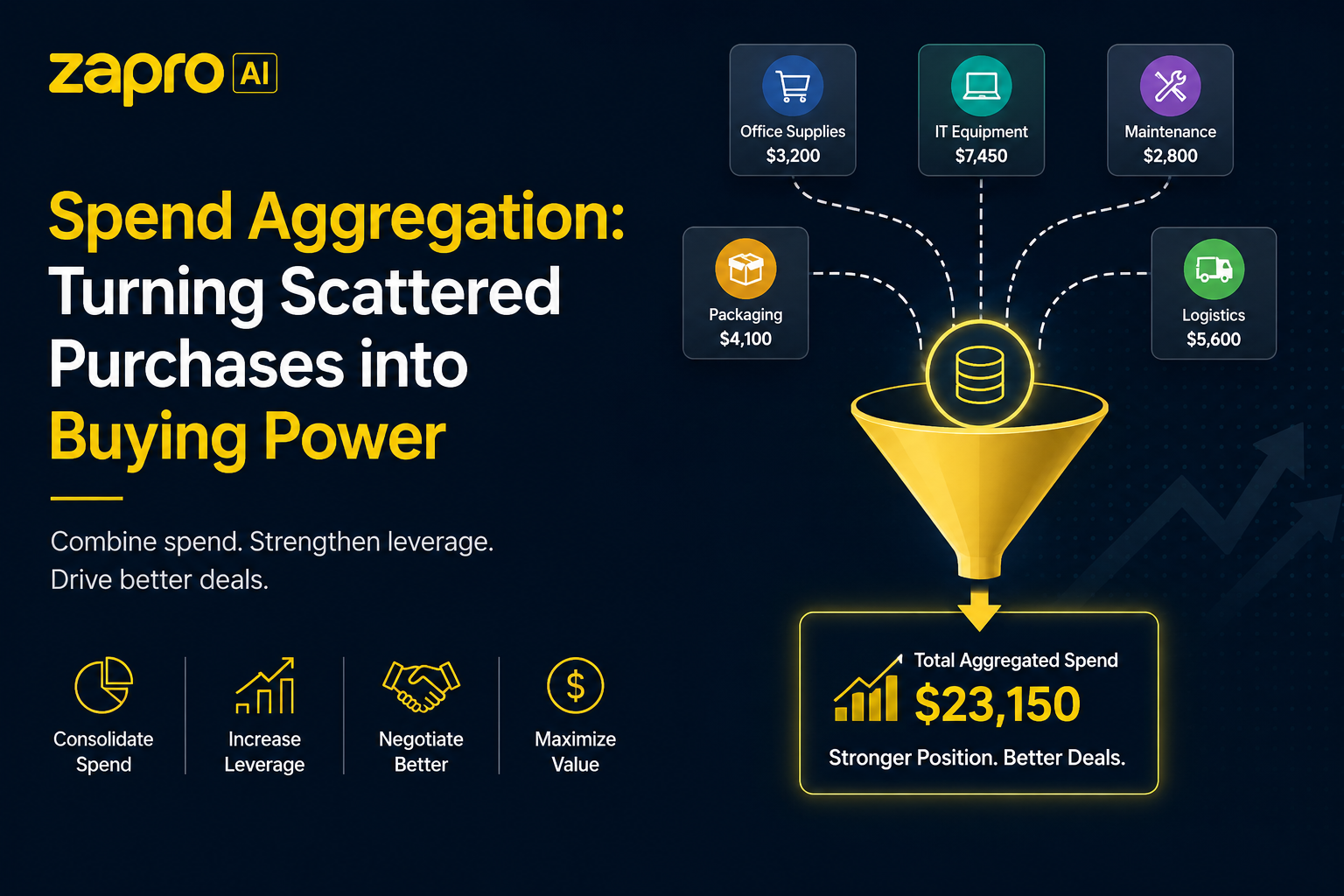
Teams that win rely on a single source of their procurement truth as part of best practices in procurement. All the vendor data, contracts, approvals, invoices, and communications are kept in one place, not scattered across different spreadsheets and emails.
Bringing data together offers higher transparency, lowers the chances of duplication, and facilitates compliance, which is a core element of procurement process best practices. Besides, it also opens the way for accurate spend and supplier performance analysis.
Moreover, without consolidated data, even the most well-thought procurement strategy would be doomed to fall apart, especially for teams following strategic procurement best practices.
2. Put procurement policies and workflows on a consistent basis
Procurement policies determine the particular guidelines on issuing, approving, and reviewing purchasing decisions. High-performing teams take the time to document, standardize, and enforce these policies across departments as part of a procurement best practices checklist.
It also comprises:
- Approval thresholds
- Preferred supplier lists
- Contract requirements
- Compliance checks
Consistent workflows limit misunderstandings, speed up approval even without the use of an escalation process, and eliminate unauthorized expenditures without eliminating the possibility of exceptions, aligning with modern procurement best practices.

A solid procurement strategy maps supply risk, internal needs, and value opportunity—then aligns them.
– Andrew Bartolini
[Founder, Ardent Partners;]
3. Make your first priority that the supplier sourcing is strategic, not a spot buying
Strategic sourcing refers to a well-thought-out supplier selection process that is value-driven, reliable, and considers the risks just like the price, forming the foundation of strategic procurement best practices.
High-performing teams in procurement:
- Carry out spend category analysis
- Bring supplier number down through rationalization
- Establish long-term contracts
- Look at suppliers beyond just cost
Spot buying may work for your short-term needs, but strategic sourcing will provide you with steady cost-savings and supplier stability, reinforcing procurement governance best practices.
4. Creating supplier partnerships that are strong and lasting
Suppliers are the partners who help the business to create value, not just the vendors. They are your true collaborators, which is central to supplier relationship management.
Leading procurement teams make an investment of their time in:
- clear and honest communication
- performance reviews
- collaborative problem solving
- long-term joint working
Transactional relationships, as opposed to collaborative ones, limit both parties’ value. On the contrary, collaboration leads to innovation, improved customer service, and preferential pricing, which reflects procurement best practices for SaaS companies and enterprises alike.
5. Put data and spend analytics first in procurement decision-making
Procurement decisions are supposed to be data-driven rather than assumption-based, following procurement process best practices.
Top-of-the-line teams make it a habit of digging deep into:
- spend breakdown by category and supplier
- contract utilization
- price variance
- compliance gaps
This kind of understanding goes a long way in taking advantage of cost-cutting opportunities, mitigating risks, and making your forecasting more accurate as part of cost reduction strategies in procurement.
Data turns procurement from a cost center into a strategic advisor function, which is a hallmark of modern procurement best practices.
Let’s Transform Procurement Together

6. Replace manual, repetitive procurement tasks with the automated ones
Procurement teams suffer from sluggishness caused mainly by their manual processes, which, in addition, are error-prone. Therefore they automate the excellent ones where it is possible, aligning with procure-to-pay best practices.
Automation is commonly applied in such areas as:
- Purchase requisitions and approvals
- Invoice matching and processing
- Vendor onboarding
- Contract reminders
Thanks to automation, procurement professionals could devote themselves more to strategy, supplier management, and business alignment work rather than chasing paperwork, supporting best practices in procurement.
7. Achieving compliance without causing setbacks to the workforce
Being compliant is a must, but a lot of overly restrictive controls may lead to discontent among the internal stakeholders.
High-performing teams in procurement disagree on this through the act of compliance embedding into workflows, which is a principle of procurement governance best practices. The rules are automatically enforced rather than person-initiated research after the fact.
Such an internal control system without causing over-burden on procurement personnel has the dual benefits of:
- achieving policy adherence
- being audit-ready
- risk reduction
It does so while procurement remains agile and thus, friendly to business.
8. Forming a triad with finance, legal, and operations departments
The procurement department lives and thrives depending on how much it is aligned with other departments since it does not function in isolation, a core theme in procurement process best practices.
A procurement function that is successful collaborates with:
- finance in matters of budgets and cash flow control
- legal for contract governance
- operations for demand planning
This interplay of different functions guarantees that procurement supports the wider business objectives through its decisions, reinforcing strategic procurement best practices.
9. Continuously measure and improve supplier performance
You wouldn’t leave the supplier performance haphazard, would you? High-performing teams put various metrics under the microscope such as:
- On-time delivery
- Count of quality issues
- Cost compliance
- Supplier responsiveness
Frequent supplier reviews serve as a means of risk location and development, through which it becomes possible not only to forewarn a supply disruption but also to substantiate the improvement plan, aligning with supplier relationship management best practices.
Proper performance evaluations at each stage of the supplier lifecycle help contain your business operations and hold your suppliers accountable.
10. Focus on your people, technology, and process improvement
Excellence in procurement is not a matter of one shot project. Rather, it is a continuous path followed by high-performing teams.
High-performing teams:
Train procurement staff regularly
Adopt modern procurement tools
Review processes and KPIs periodically
With a focus on going forward, procurement is not the business breaker, but the business provider, reflecting 10 Procurement Best Practices for High-Performing Teams. Most of the practices above are far easier to enforce systematically than manually. See pricing and plans for a procurement platform that builds them into the workflow.
5. Conclusion
Procurement best practices are not about piling up red tape. They are about bringing clarity, control, and predictability to the procurement process through procurement process best practices.
High-performing procurement teams adhere to well-planned procedures, utilize data, cultivate solid supplier relationships, and harness automation to scale up their operations effectively. Even if everyone’s journey is unique, the guidelines are common to all and align with strategic procurement best practices.
With procurement operating as a best practice-driven function, the business growth engine gets even a greater boost than it did before.
Ten practices are a lot to roll out by hand. See these practices in action in a demo where the workflow enforces them by default.

Build Your Winning Procurement Strategy Today
FAQs
1. What are procurement best practices?
Procurement best practices refer to proven techniques and procedures through which an organization can effectively control its purchasing decisions, supplier relations, and expenditures, as well as reduce risk and cost, forming a practical procurement best practices checklist.
2. Why are procurement best practices important?
Practices that are well established through experience enhance cost control, compliance, supplier performance, and operational efficiency and thus help procurement become more strategic and predictable.
3. What are the most common procurement challenges companies face?
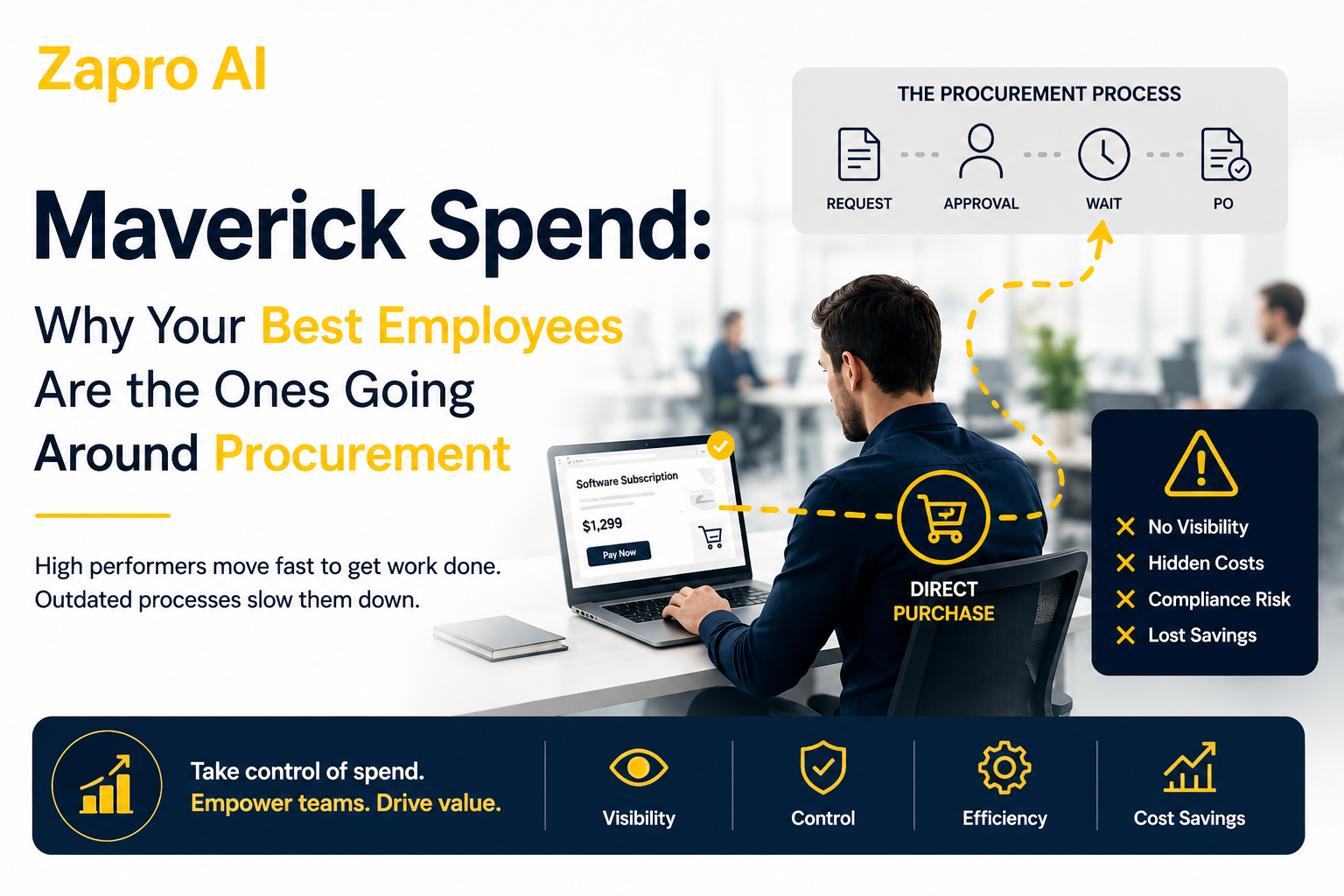
Most companies experience procurement challenges in the form of a lack of visibility, manual processes, maverick spending, poor supplier management, and slow approvals.
4. How do procurement best practices reduce costs?
They reduce costs through strategic sourcing, spend analysis, supplier consolidation, automation, and better contract management, which are core cost reduction strategies in procurement.
Don’t miss our weekly updates
We’ll email you 1-3 times per week—and never share your information.
Talk to Our Procurement Experts
Get personalized insights to optimize your procurement strategy.

About the Author

Md. Kafil