Vendor Management
 End-to-End Procurement
 Strategic Sourcing
 Spend Analytics
 AP Automation
 Inventory Management
 ERP Integrations
 Blogs
Blogs Procurement Guide
 Healthcare
 Financial Services
 Technology
 Venture Capitalist
 Chief Procurement Officer
 Chief Financial Officer
 About Us
 Vendor Management Guide

Sourcing is just another way that people talk about the process of strategically finding, assessing, and choosing suppliers. Procurement, on the other hand, is more about putting those choices into work through things like buying, making agreements, arranging for delivery, and handling payments.
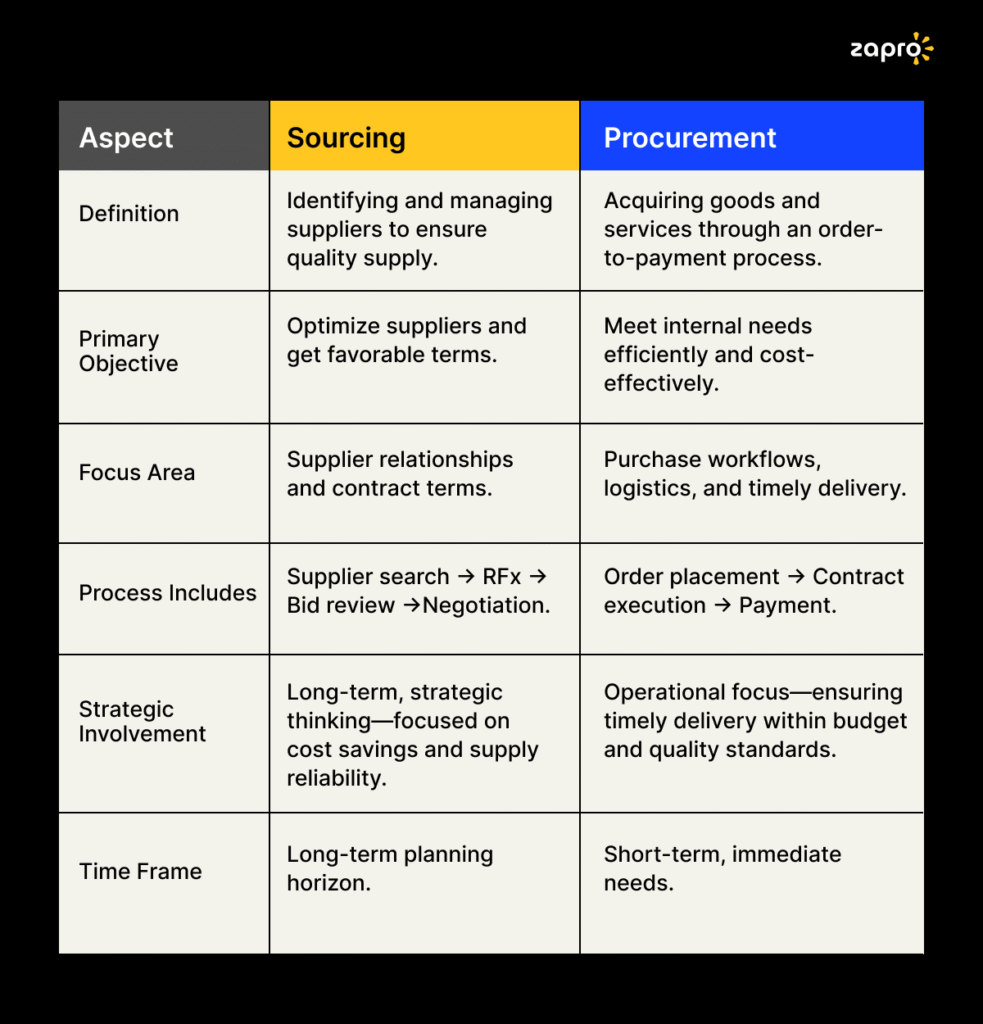
For CFOs, the ability to discern these differences can significantly enhance strategic decision-making, allowing for a proactive approach in mitigating risks such as supply chain disruptions and cybersecurity threats. By harnessing an understanding of sourcing vs procurement, CFOs can implement sophisticated tools to streamline both processes, facilitating technology adoption and innovation.
- Sourcing: Encompasses the evaluation of suppliers and the establishment of strategic alliances that align with tech-specific objectives such as innovation and cost efficiency.
- Procurement: Involves the practical aspects of requisition, purchase orders, and ensuring timely delivery and payment of technological assets.
By leveraging these key differences, CFOs can address challenges like talent shortages and slow procurement processes, ultimately transforming potential obstacles into opportunities to enhance procurement efficiency and create value through strategic partnerships and technology insights.
What is Sourcing?
Sourcing is far more than discovering suppliers. It is a strategic discipline focused on selecting vendors who align with rapidly evolving technological requirements.
In the technology sector, sourcing is foundational to managing supply chain volatility, vendor risk, and cybersecurity exposure. While procurement executes decisions, sourcing determines which decisions are worth executing in the first place.
Through structured RFP and RFx processes, suppliers are evaluated not only on cost, but also on:
- Technical capability
- Innovation readiness
- Risk management posture
- Compliance and security standards
By integrating analytics and market intelligence into sourcing, CFOs gain insight-driven clarity that enables better supplier selection. Ultimately, effective sourcing optimizes procurement by balancing cost efficiency with the agility required to keep pace with technological change.
The use of technology and analytics in sourcing equips CFOs with the insights needed to make strategic decisions, ensuring that procurement efforts deliver maximal value. Ultimately, effective sourcing optimizes procurement processes, balancing cost efficiency with the agility needed to stay abreast of technological advancements.
What is Procurement?
Procurement is often mistakenly equated with purchasing, but it is, in reality, a strategic asset. Procurement is known as the orchestration layer that transforms sourcing decisions into measurable business outcomes.
For CFOs, procurement extends across:
- Planning and budgeting
- Contract negotiation and compliance
- Supplier relationship management
- Risk mitigation and governance
Whereas sourcing focuses on supplier selection, procurement ensures those relationships deliver value over time.
Modern procurement must be agile. It supports fast decision-making, rapid technology adoption, and operational continuity. By leveraging e-procurement platforms and automation, CFOs reduce friction, control costs, and align procurement with broader corporate responsibility and compliance goals.
In essence, procurement empowers organizations to acquire technology responsibly, efficiently, and strategically, positioning leaders to turn complexity into competitive advantage.

Sourcing scouts talent; procurement manages the team. It’s strategy first, execution second.
Differences Between Sourcing vs Procurement
Here, we provide a comprehensive breakdown of their key differences between sourcing vs procurement to help you navigate these essential functions with greater clarity and efficiency.
Learn more about Procurement vs. Strategic Sourcing.
The Critical Role of Procurement Software in Modern Business
For CFOs navigating technology procurement, procurement software is the linchpin that converts uncertainty into control. While the tech landscape shifts rapidly, procurement platforms provide the stability required to respond intelligently.
However, by integrating advanced procurement software, CFOs can mitigate risks associated with rapid technological shifts by leveraging AI-driven insights for smarter, data-backed decision-making.
Adapting to Global Supply Chain Disruptions
Global supply chain disruptions, whether due to natural disasters or geopolitical developments, remain formidable concerns. A robust procurement platform offers real-time data visibility that empowers CFOs to swiftly adapt to changes, maintaining a steady flow of technology resources. It helps prepare for unforeseen events and ensures continuity in tech supply.
Whereas traditional systems react late, modern procurement platforms anticipate and adapt.
Strengthening Cybersecurity in Procurement
An ideal procure-to-pay system not only safeguards data but also offers collaborative tools to work closely with IT security teams to incorporate risk mitigation strategies seamlessly into the procurement process. This alignment is vital for introducing new technology without opening security loopholes.
Addressing Talent Shortages
Procurement software also addresses talent shortages in the procurement domain by allowing CFOs to streamline operations, thus making the process less reliant on large teams. It optimizes workflows and approval processes, reducing friction between employees and enhancing collaboration, which helps make technology adoption faster and smoother.
Enhancing Innovation and Cost Efficiency
Through automation, spend analytics, and e-procurement systems, CFOs can cut costs while improving agility. While challenges persist, procurement technology unlocks innovation and operational excellence simultaneously.
Building Strategic Partnerships
Furthermore, CFOs can build strategic partnerships with suppliers using these tools. The procurement software facilitates stronger connections, unlocking benefits like preferential pricing and early access to emerging innovations. By fostering these relationships and investing in a skilled procurement team, CFOs are better positioned to navigate complexities in tech procurement.
Diversifying and Risk Management
Diversifying supplier bases is critical to resilience. Procurement technology helps CFOs identify alternative suppliers, assess risk exposure, and build layered defenses against disruption.
Features of a Top-Tier Procurement System
A modern procurement system simplifies complexity while delivering insight. Platforms like Zapro combine automation, analytics, and collaboration to elevate both sourcing and procurement outcomes.
Let’s explore how these features can transform your sourcing vs procurement landscape, ensuring you remain competitive in an ever-evolving marketplace.
- Effortless Sourcing and Onboarding: Simplify the technology procurement process with intuitive features that adapt to rapid technological changes and ensure your team stays current.
- Complex Requirements Made Easy: Seamlessly integrate intricate approval flows to guarantee robust procurement processes, addressing the slow purchasing challenges and streamlining the adoption of emerging technologies.
- AI-Driven Insights for Smart Decisions: Utilize advanced AI to keep abreast of market trends and identify optimal sourcing strategies, effectively managing cybersecurity risks and ensuring informed technology procurement decisions.
- Flexible Bidding at Your Fingertips: Customize and adapt your bidding strategies to swiftly navigate supply chain disruptions and enhance agility in procurement operations.
- Nudge Supplier Twice a Day: Enhance supplier engagement with timely reminders, fostering strategic partnerships that secure favorable pricing and early access to innovation.
- Choose Suppliers or Initiate Bidding: Easily select from existing suppliers or initiate competitive bidding processes to combat talent shortages, maintaining procurement efficiency and service levels.
- Make Risk and Compliance Integral: Incorporate crucial risk management and compliance measures into your awards, effectively mitigating supply chain and cybersecurity risks.
Learn about Procurement vs contract management.
Why Choose Zapro: A Game Changer in Procurement
Zapro is built to simplify, streamline, and scale procurement. It enables organizations to identify the right suppliers, manage RFx processes, execute contracts, and control procurement end to end from a single platform.
While sourcing identifies opportunity, Zapro ensures procurement converts opportunity into results.
From RFI to RFP, live auctions to contract catalogs, Zapro supports both strategic and tactical buying with precision and speed.
Simplify, Streamline, and Succeed
Zapro empowers your procurement team to identify needs and overcome the challenges of supplier selection accurately. Whether you’re sourcing something as straightforward as a water bottle or navigating more intricate procurement scenarios, Zapro ensures you efficiently discern procurement costs and essential details, thus simplifying what can often be a daunting journey.
Streamlined Approval Workflow
Procurement requests with Zapro travel through a streamlined managerial workflow, typically moving from managerial approvals to the procurement team seamlessly. Meanwhile, senior roles have the flexibility to expedite the process by directing requests straight to procurement, resulting in an efficient and accelerated approval process.
Engaging the Procurement Process
The procurement process at Zapro empowers teams to engage deeply in the quotation phase. This stage involves exploring diverse manufacturing options, gaining clarity on specifications such as size and functionality, and effectively communicating these requirements to suppliers. The meticulous quotation process ensures alignment with all essential criteria.
The Sequential Steps: RFI to RFP
Beginning with the RFI (Request for Information) process, Zapro helps identify suppliers who meet specific requirements, leading into the RFQ (Request for Quotation) phase. This progresses to the RFP (Request for Proposal), where proposals are customized and new contracts initiated, culminating in a new catalog of signed agreements.
Master Strategic and Tactical Buying
Master both strategic and tactical buying processes with Zapro’s ability to host live auctions, enabling suppliers to present their best offers. Whether managing vast networks or tailored purchasing needs, Zapro supports live bidding events that encourage competitive proposals, ensuring you remain agile and responsive in both strategic and tactical scenarios.
The Future of Sourcing and Procurement
As a CFO navigating the complexities of technology procurement, you’re tasked with overcoming unique challenges in this ever-evolving industry. Rapid technological shifts make it difficult to keep pace with trends, requiring informed and agile procurement decisions.
Additionally, global supply chain disruptions pose significant risks, necessitating proactive strategies to ensure your company maintains access to essential technologies. Cybersecurity is another concern, demanding collaboration with IT security teams to safeguard against potential threats.
The scarcity of skilled procurement professionals adds another layer of complexity, while inefficient purchasing processes can stymie your organization’s innovation and agility. Also, friction between employees and the procurement team can impede progress due to misaligned priorities and misunderstandings.
However, these challenges also present strategic opportunities. However, you cannot tap into these opportunities without a tactical procurement system like Zapro.Say goodbye to manual paperwork and embrace the efficiency of Zapro’s sourcing solutions.
From managing all supplier interactions to streamlining strategic sourcing, procurement, contract management, inventory management, and more, Zapro integrates essential capabilities such as AP automation and spend analytics to offer a holistic procurement experience.
Schedule a demo of Zapro today to level up your procurement capabilities, driving efficiency and value creation in your organization.
Streamline both sourcing and procurement with Zapro – all in one place.

FAQs
What is the difference between sourcing and procurement?
Sourcing and procurement hold distinct roles within the technology supply chain. While sourcing is centered around identifying the right suppliers and negotiating strategic partnerships, procurement is called as the function that manages the execution, logistics, and integration of those decisions into day-to-day operations.
How does sourcing support procurement?
Sourcing is the first step that picks out the best suppliers. Procurement is the stage that handles the work, and sourcing is the one that makes sure the activities done are in line with the overall strategy, innovation, and risk management.
Is sourcing a part of procurement?
Of course! The sourcing process is often referred to as an essential upstream component of procurement. It provides the necessary information for procurement decisions; meanwhile, procurement takes care of the supplier’s lifecycle and the delivery of operational outcomes.
When should you use sourcing vs procurement?
Use sourcing if you are deciding in a strategic way, who you want to partner with and how you want to set these partnerships up.
Don’t miss our weekly updates
We’ll email you 1-3 times per week—and never share your information.
Talk to Our Procurement Experts
Our team is here to guide you through your sourcing and procurement needs.

About the Author

Mohammed Kafil